
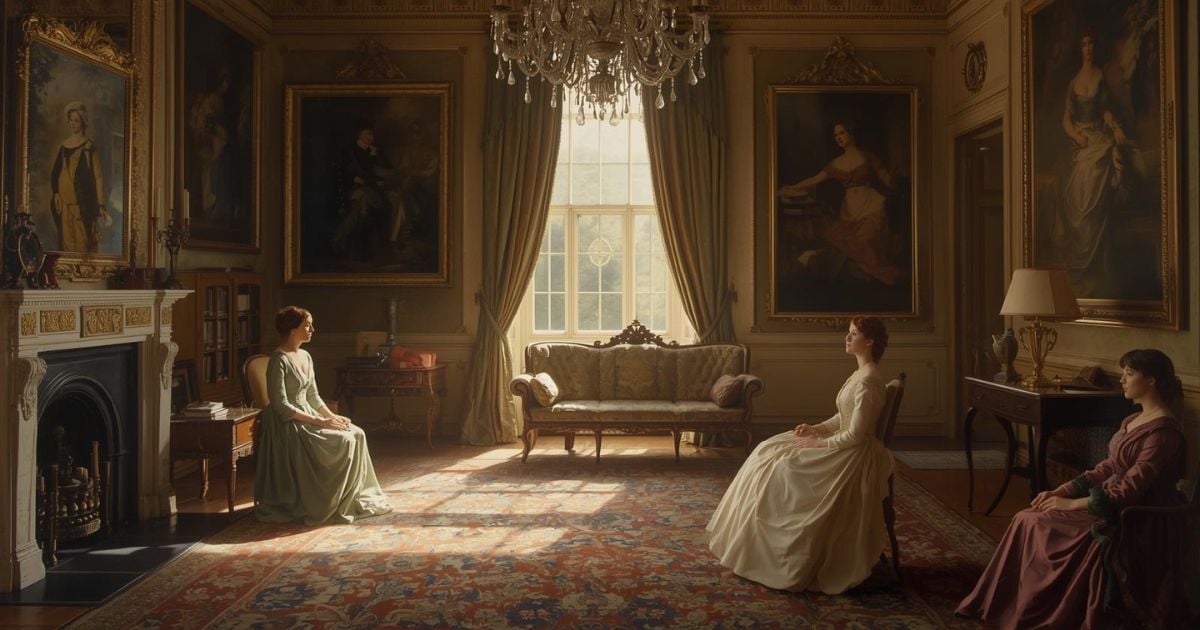
Elinor repeats what Brandon told her. Marianne does not question it. She listens, makes no objection, and attempts no defence. She no longer avoids him, and she speaks to him with a kind of compassionate respect. She is not less wretched. The loss of Willoughby's character weighs more than the loss of his heart. Miss Williams, and the doubt of what his designs on herself might once have been, stay unspoken even to Elinor.
Their mother writes that Marianne should be anywhere but Barton, where everything would set Willoughby before her as he used to be. Do not shorten the visit. It was expected to last at least five or six weeks. Now that his friends must drop him, she is as safe in London as in the country, and chance is weaker in a crowd than at Barton, where a marriage visit to Allenham might put him in her way. Their brother will be in town before the middle of February. Marianne submits, though she thinks the decision wrong, and though it takes from her the one comfort she wanted, her mother. She is consoled that the stay may be good for Elinor. Elinor, who doubts she can avoid Edward, accepts it for Marianne's sake.
Before Marianne, his name is not spoken. Before Elinor, it is spoken every day. Sir John would not speak another word to him, not if they were kept watching for two hours beside Barton covert. Mrs Palmer hates him so much that she is resolved never to mention his name again, and she will tell everybody she sees how good-for-nothing he is. Sir John remembers offering him one of Folly's puppies the last time they met. Mrs Palmer can name the coachmaker, the painter, and the warehouse where Miss Grey's clothes may be seen. Lady Middleton says, about once a day, that it is very shocking indeed, and is soon able to forget the matter far enough to leave her card on Mrs Willoughby. Early in February, within a fortnight of the letter, Elinor tells Marianne that he is married. Marianne has been examining the papers every morning, and the first notice must not come from them. She receives it with resolute composure, and at first sheds no tears. Then they come, and the rest of the day is hardly less pitiable than the first expectation. The Willoughbys leave town as soon as they are married. Elinor hopes that, with no danger of meeting either of them, Marianne may by degrees go out again. Will saying it once be enough, while those papers are still there every morning?
Edward's dilemma reveals how manipulators weaponize virtue. Lucy Steele didn't trap Edward with threats or force - she used his own decency against him. She recognized his integrity and made it the chain that binds him. This pattern appears constantly in life on a wage. The boss who guilts dedicated employees into unpaid overtime by saying 'I thought you cared about this place.' The family member who uses 'but we're family' to justify endless financial demands. The partner who responds to legitimate complaints with 'I thought you loved me.' These aren't appeals to genuine values - they're manipulation tactics that exploit our best instincts. The most dangerous manipulators aren't the obvious villains. They're people like Lucy who understand that good people will sacrifice themselves rather than appear selfish or disloyal. They create situations where breaking free requires actions that feel wrong to decent people. Edward can't leave Lucy without seeming like a cad, even though staying makes him miserable and dishonest. The tragedy isn't that Edward lacks courage - it's that his courage is being misdirected. Real honor sometimes means disappointing people who have weaponized your sense of duty. When someone consistently uses your values to control your choices, that's not love or friendship - it's manipulation disguised as moral obligation.
Explore this chapter with AI to uncover deeper meaning and practical takeaways.
AI Discussion