
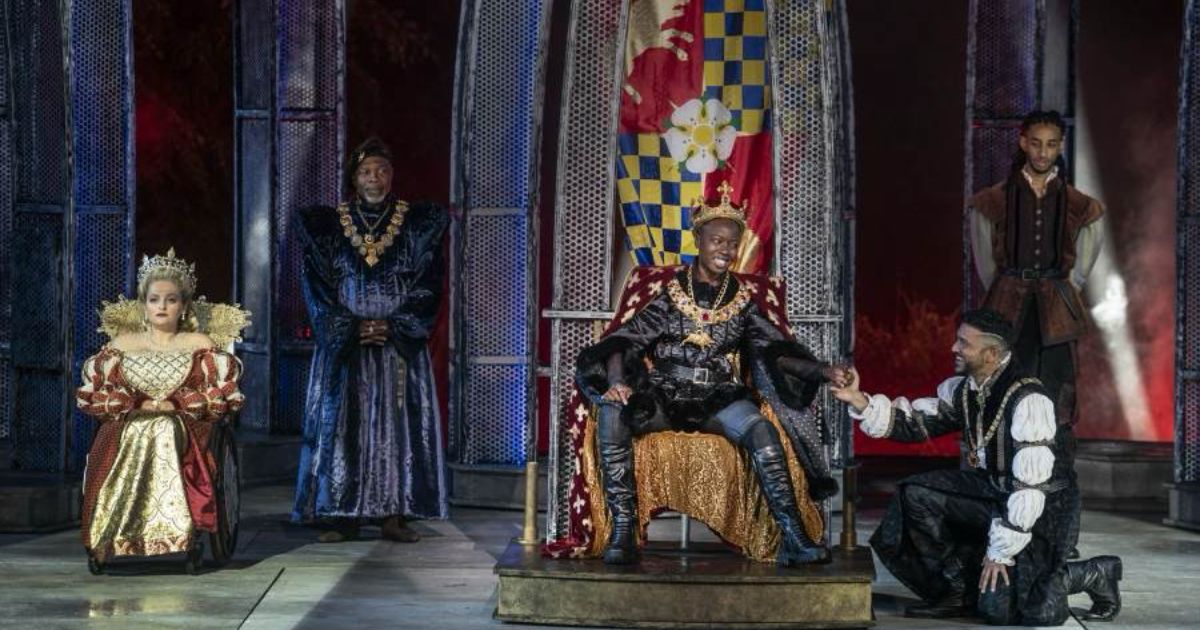
Richard cries a horse, a horse, my kingdom for a horse. Catesby offers to withdraw and help him to one. Richard calls him slave. He has set his life upon a cast, and he will stand the hazard of the die. He thinks there are six Richmonds in the field. Five he has slain today instead of the man he wants. Then he cries for the horse again.
Alarums bring Richard and Richmond on together. They fight. Richard is slain, and nobody speaks over the body. A retreat sounds, then a flourish. Richmond enters with the other lords while Derby carries the crown.
That crown comes off the dead temples before Richmond has said the day is his, and before he has asked whether young George Stanley lives. Catesby's horse was the last way off the field. Richard refused it. Five men who looked like Richmond are already dead, and the real Richmond is the one still standing when Richard falls.
He begs for a horse and, in the same breath, insults the man who offers to fetch one. The cast is already made. Withdrawal would admit the day is lost, so he stays in the hazard and keeps hunting the wrong faces until Richmond himself meets him. Derby's entrance with the crown is the answer to the bargain Richard shouted: the kingdom is no longer his to trade.
Richard reaches the kill point with no horse and no retreat.
The pattern is **The Cast Gamble**. Richard cries kingdom for a horse, hears Catesby offer withdrawal, and answers with slave, cast, and hazard of the die. Five Richmonds slain today instead of him shows misread battlefield math while pride replaces logistics.
The final clash can strip rhetoric down to need, refusal, and transfer. Richard cries kingdom for a horse, rejects Catesby's withdrawal, stands the hazard of the die, is slain fighting Richmond, and Derby bears the crown before Richmond speaks. Read rescue refused, repeated desperation, and crown in motion as one verdict, not a crisis test essay.
Explore this chapter with AI to uncover deeper meaning and practical takeaways.
AI Discussion