
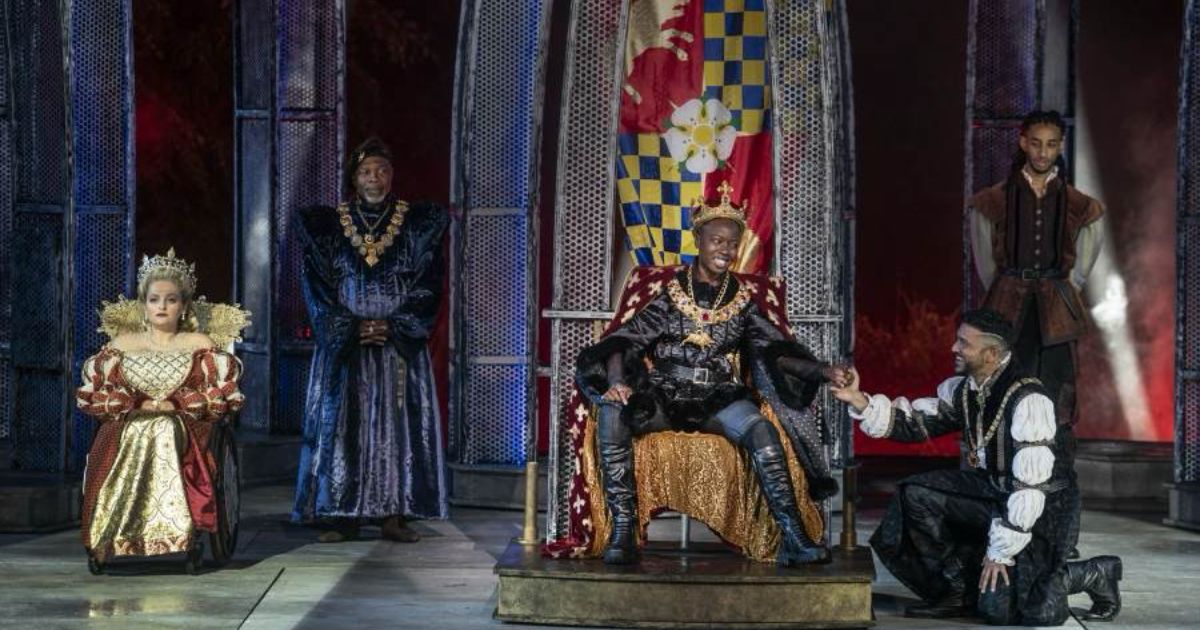
Norfolk answers Richard's what think'st thou with a note found on his tent: Jockey of Norfolk, be not so bold, for Dickon thy master is bought and sold. Richard calls it enemy device, tells dreams not affright souls, and declares conscience a word cowards use while strong arms be conscience and swords law. If not to heaven, then hand in hand to hell. He rouses troops against vagabonds and a milk-sop Richmond who never felt cold over shoes in snow.
Drums sound. Stanley's messenger says he doth deny to come. Richard orders off with George's head. Norfolk says the enemy is past the marsh and asks to let George Stanley die after the battle. Richard claims a thousand hearts within his bosom, advances standards, and calls Saint George and fiery dragons as victory sits on their helps.
Alarums run. Catesby cries rescue Norfolk: the king enacts more wonders than a man, daring an opposite to every danger, his horse slain, all on foot fighting and seeking Richmond in the throat of death, or else the day is lost. More alarums. Enter Richard.
He calls Richmond a milksop who never felt snow above his shoes, then hunts that one man on foot after the horse is gone.
Richard answers the last warning by choosing force and hell.
The pattern is **The Hell March**. Norfolk brings the bought-and-sold note; Richard calls it enemy device, rejects conscience as coward's talk, and names swords as law before hand in hand to hell. The troop speech insults Richmond as milk-sop and vagabond while drums answer.
The last charge can expose philosophy under pressure. Richard dismisses Norfolk's bought-and-sold note, calls conscience coward's talk, orders George's head when Stanley denies, and enters on foot seeking Richmond while Catesby cries rescue. Connect note dismissal, hell speech, hostage reuse, and solo hunt as one march, not separate moods.
Explore this chapter with AI to uncover deeper meaning and practical takeaways.
AI Discussion