
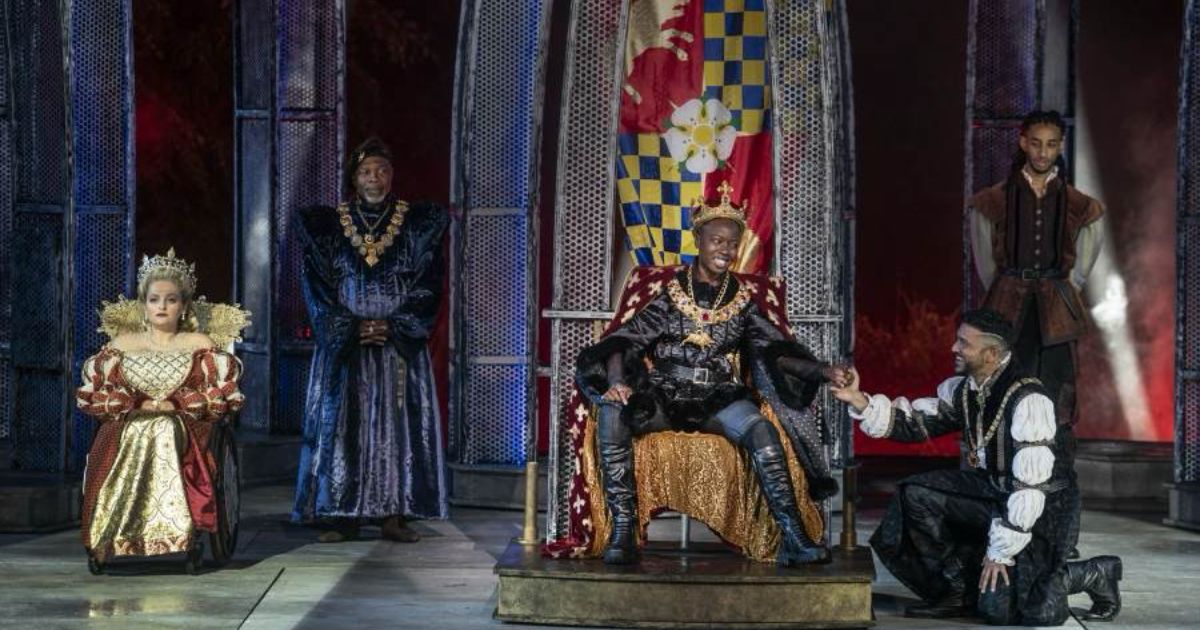
Anne follows Henry VI's coffin and curses his killer with deformed children and a miserable widow's fate. Richard stops the procession beside the corpse, orders the bearers down, and turns Anne's grief into a duel. She calls him devil and foul deformity, sees Henry's wounds bleed afresh at his arrival, and spits when he names himself her suitor.
The argument sharpens into a courtroom of wit. Anne demands he admit the murders; Richard first blames Edward for her husband's death, then grants killing Henry, and reframes both slaughters as beauty's fault. He weeps, bares his chest, and lends her his sword, daring her to strike while blaming her face for each stab. She drops the blade. He presses for peace, offers his ring, and wins a promise to meet at Crosby House while sending the corpse to White Friars instead of Chertsey.
Alone, Richard marvels that he won a widow at her husband's bier with curses still on her lips and God, conscience, and the bleeding body against him. He calls the conquest an experiment, not love, vows he will not keep her long, and jokes that he now needs a mirror and tailors because she has convinced him he is handsome.
Richard's seduction of Lady Anne is one of literature's most chilling scenes because he makes her complicit in her own manipulation while the corpse still lies between them.
The pattern is **The Confession Gambit**. Richard admits facts Anne already knows, then reframes motive around her beauty so she stops being a mourner and becomes the supposed cause. The middle of the scene proves how the gambit works in real time: he first blames Edward for her husband's death, grants killing Henry, offers his sword, and dares her to strike while blaming her face for each stab.
Explore this chapter with AI to uncover deeper meaning and practical takeaways.
AI Discussion