
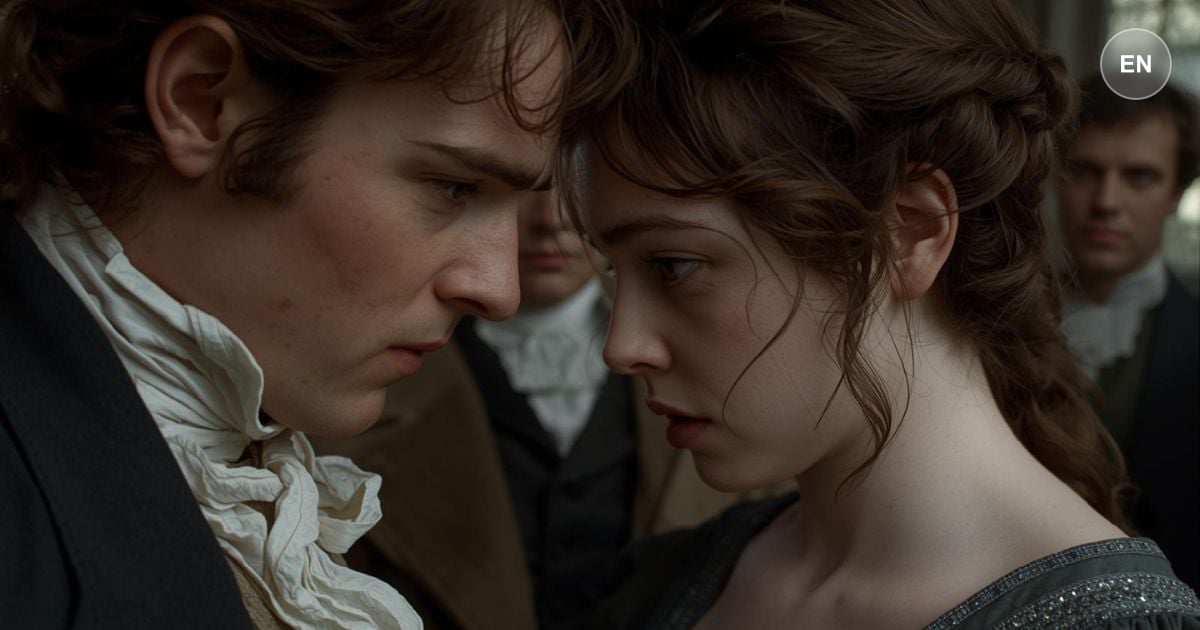
When speech has failed, the powerful put their case in writing and embed the evidence in the chapter itself. The morning after the proposal Elizabeth cannot think of anything else and walks to exercise, but she avoids the grove Darcy favors and turns up a lane instead. He meets her at the park gate anyway, hands her a letter with haughty composure, asks whether she will do him the honour of reading it, bows, and disappears into the plantation.
With strongest curiosity and no expectation of pleasure, she opens two close-written sheets dated from Rosings at eight o'clock. Darcy assures her there is no renewal of last night's offers, only what his character requires. He answers her two charges: separating Bingley from Jane and ruining Wickham. On Jane he narrates Netherfield, Sir William Lucas's gossip, his belief in her indifference, the family's want of propriety, the London trip with Bingley's sisters, and the concealment of Jane's presence in town, which he calls beneath him.
On Wickham he relates his father's patronage, the church living resigned for three thousand pounds, Wickham's idleness, his renewed plea for the living refused, and last summer's design on fifteen-year-old Georgiana at Ramsgate through Mrs. Younge's connivance, an elopement stopped when Darcy intervened. He appeals to Colonel Fitzwilliam as witness, explains why he could not speak last night, and ends with God bless you, signed Fitzwilliam Darcy, leaving Elizabeth holding the full written case before she has rendered any verdict.
Chapter 35 is unusual: most of it is Darcy's letter. The framing is brief but vivid. Elizabeth's avoidance, the gate, his haughty bow. The letter's opening disarms a second proposal and demands justice. The Bingley section is Austen's cold sociology: Jane's manner, mother's impropriety, sisters, concealment of Jane in London, the one act Darcy calls beneath him. The Wickham section inverts everything Elizabeth believed: patronage, three thousand pounds, law pretence, living refused, Ramsgate, Mrs. Younge, Georgiana's fortune. Fitzwilliam as witness is plot machinery and moral backup. Chapter ends at the signature; Chapter 36 supplies reaction, rage, disbelief, and the famous re-readings. Teaching this chapter as 'Elizabeth's turning point' misplaces the turn, that is the next chapter's work.
Explore this chapter with AI to uncover deeper meaning and practical takeaways.
AI Discussion