
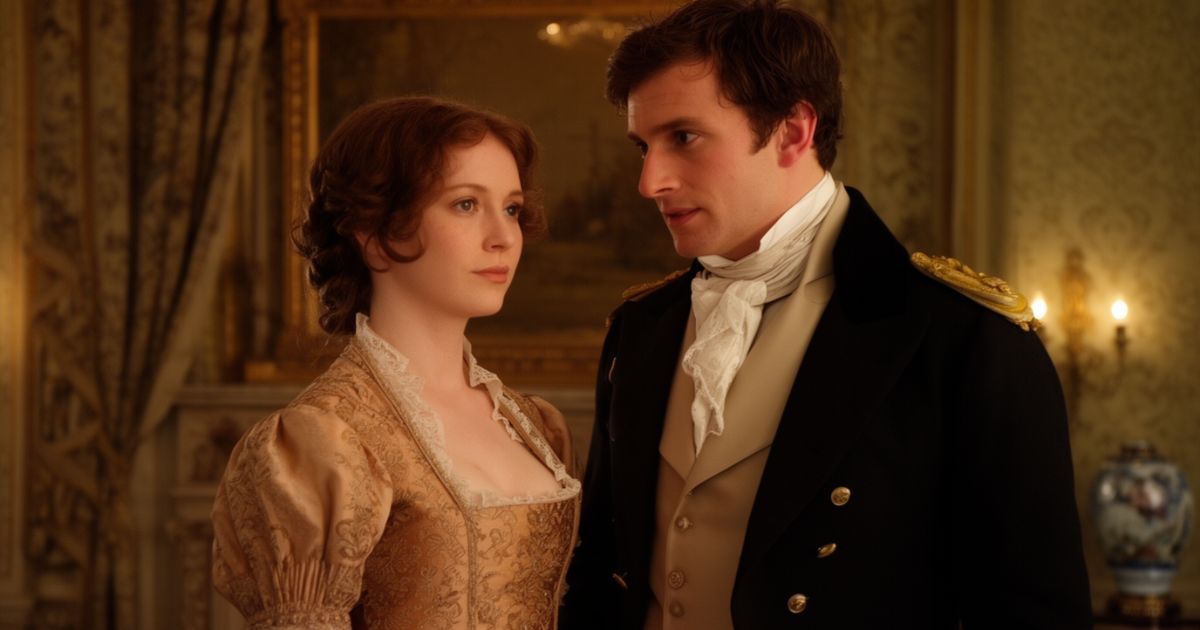
Captain Wentworth puts off a visit to his brother and is at Uppercross almost every day. Charles Hayter, the curate who had seemed attached to Henrietta, comes back to altered manners and to a captain in the way. The zeal she had shown for his getting Dr Shirley's curacy is gone. Louisa watches the window, and Henrietta listens with only half a mind.
Charles gives the preference to Louisa, Mary to Henrietta, and Mary likes the sound of Lady Wentworth. She wants Hayter dropped, looking down on his family. Charles calls that nonsense: an eldest son with Winthrop to come is no contemptible match, if Louisa can have Wentworth. Anne had stayed home from the dinner, pleading a headache and the child, glad to avoid Wentworth and the role of umpire. She cares less which sister is chosen than that he decide soon enough to spare them, and his own honour.
One morning he walks into the Cottage drawing room, expecting the Miss Musgroves, and finds only Anne and little Charles on the sofa. The surprise strips his ease. He starts, says he thought the girls were there, and goes to the window. Anne would leave if the child did not keep her kneeling beside him. Charles Hayter comes in, takes up the newspaper, and ends any attempt at talk. Then little Walter climbs onto Anne's back and will not be ordered off, nor will he go to his cousin. Someone lifts him away before she knows the hands are Wentworth's. She cannot thank him. He makes a studious noise with the child, as if her conversation were the last thing he wanted. When Mary and the girls enter, Anne leaves, ashamed of being so overcome by a trifle, and she needs a long solitude before she can recover.
Chapter IX widens the romantic geometry around Wentworth while Anne stays analytically quiet. Charles Hayter's displacement, Henrietta's wavering, and Mary's baronet fantasies treat marriage as social arithmetic. The chapter's heart is the Cottage scene: Wentworth enters expecting the Musgrove sisters, loses composure when Anne is alone with the invalid child, and endures Charles Hayter's sullen presence at the window. Walter's assault on Anne's back creates the crisis that forces contact. Wentworth removes the child silently, refuses her thanks, and resumes play as if to prove her conversation is unwanted. Austen makes the gesture almost nothing and everything. Anne flees ashamed of her own feeling, which tells us the estrangement is not emotional indifference but emotional regulation. The chapter prepares the walk to Winthrop by showing that Anne still responds to him physically while he still cannot speak honestly to her.
Explore this chapter with AI to uncover deeper meaning and practical takeaways.
AI Discussion