
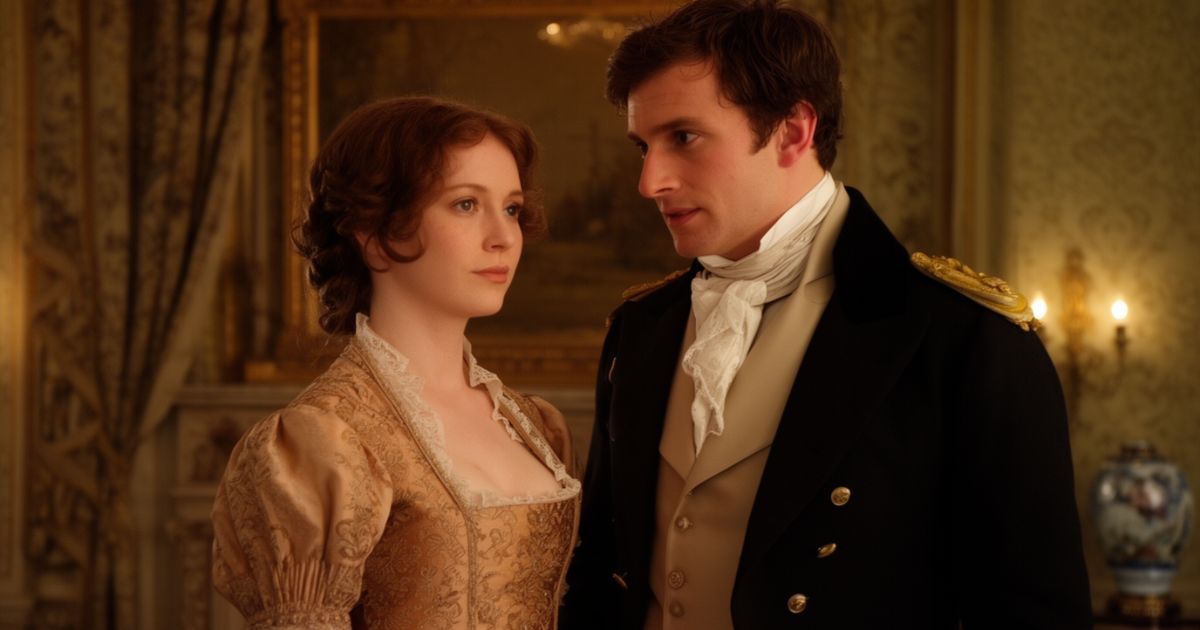
Anne is often with all four now, and too wise to give a verdict at home. She thinks Louisa rather the favourite, and she does not think Wentworth in love with either sister. What they feel for him is a fever of admiration that may become love. He shows no triumph, and he is wrong only in accepting two young women at once. Charles Hayter then quits the field, refuses a dinner, and is said to be studying himself to death. Mary hopes for a dismissal. Anne feels only that Hayter is wise.
A fine November morning brings a long walk. Mary insists on going, and Anne goes too, hoping to turn back with Mary and lessen the interference. The men return early and join them. Anne means to stay out of the way, yet she hears Louisa tell Wentworth she would rather be overturned by the man she loved than driven safely by anyone else. He says he honours her.
Their destination is Winthrop. Mary will not go down, so Charles and Henrietta run to the house while Louisa draws Wentworth into the hedge for nuts. Anne sits on a bank and hears them through holly. Louisa boasts she made her sister go, because a made-up mind is not turned by interference. Wentworth praises that firmness, holds up a glossy hazelnut that has outlived the storms, and says those who would be happy must be firm. Louisa adds that Charles once wanted to marry Anne, that she refused him, and that Lady Russell is blamed. Anne hears how he judges her character, and she cannot move until the feeling eases.
Henrietta and Hayter come back devoted to each other, and Louisa walks with Wentworth, while Anne stays with Charles and Mary. At the lane the Crofts offer a seat. Wentworth clears the hedge, and without a word he puts the tired Anne into the gig. She understands him. He cannot forgive her, yet he cannot see her suffer and do nothing. It is friendship he does not acknowledge. The Admiral is sure Frederick will choose one of the girls. Mrs Croft takes the reins at a dangerous post, and Anne is set down at the Cottage.
Chapter X is Persuasion's cruelest eavesdropping scene. The walk to Winthrop rearranges couples, reunites Henrietta with Charles Hayter, and leaves Anne tired on a bank while Louisa and Wentworth gather nuts nearby. Louisa's speech about not being easily persuaded becomes Wentworth's sermon on firm character, complete with the glossy hazelnut that outlived autumn storms. Then Louisa mentions Anne's refusal of Charles Musgrove and Lady Russell's role, giving Anne the community narrative of her weakness while she remains hidden. Austen balances condemnation with counter-evidence: Wentworth clears the hedge to insist Anne take the Crofts' carriage, placing her with his hands and will though he barely speaks. The narrator names the split: he cannot forgive her, yet cannot be unfeeling. Anne must live inside both truths. The chapter turns abstract regret into a doctrine she is judged by publicly and cared for privately.
Explore this chapter with AI to uncover deeper meaning and practical takeaways.
AI Discussion