
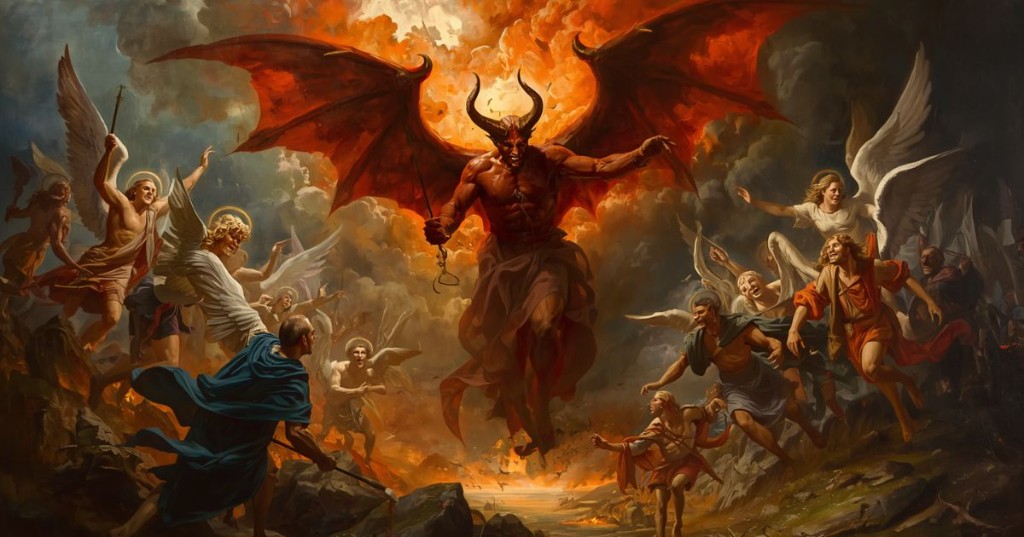
Milton invokes Urania, the heavenly Muse, and turns from cosmic war to the visible world Adam can know and steward. He asks for safe descent from empyreal heights, warns against barbarous dissonance, and frames Raphael's next tale: how this floried Earth and moving heavens first arose after apostasy was driven back and could not mix with blessedness. Half the poem remains, but bounded now by earth and mortal voice.
Adam, still grateful for Raphael's warning about rebellion, asks how Heaven and Earth began, what moved God to build in Chaos, and what happened before his own memory. He promises to magnify the Maker rather than pry into strictly strictly forbidden secrets, and even offers to hold day and night in suspense while the angel sings the generation of nature from the deep, asking only what may help posterity know, obey, and give thanks.
Raphael grants the request with caution: knowledge is food and needs temperance, and some truths remain sealed. After Satan's fall the Father resolves to create another world and a race of men who may, through long obedience, rise toward Heaven. The Son rides into Chaos, stills the waves, draws the world with compasses, and speaks light into being; firmament, gathered seas, and green earth follow as each day ends with angelic praise. Heaven opens her gates as the Word rides forth with chariots and cherubim to behold creation.
On the fourth day sun and moon take their courses for man's seasons; waters swarm with fish and birds while leviathan moves like a living promontory. The fifth day fills creeks with shoals of fish and skies with song; on the sixth day cattle, lions, and insects rise from earth before God speaks let us make Man in our image, forms Adam from dust, breathes life, and plants him in Eden with one prohibition against the tree of knowledge. All is pronounced entirely good; the Creator ascends in triumph, hallows the seventh day, and choirs sing that to create is greater than to destroy; Raphael closes by telling Adam his question is fulfilled if he asks nothing beyond human measure.
Adam's questions to Raphael reveal something profound about human nature: we can pursue knowledge either to grow or to prove ourselves superior. Adam asks about creation because he wants to understand his place in the world. His curiosity comes from humility, not pride. He accepts boundaries and warnings about the limits of knowledge. This stands in stark contrast to the rebellious angels who sought knowledge as a weapon against authority. In our daily lives, this pattern plays out constantly. Think about workplace meetings where someone asks probing questions. Sometimes you can tell they genuinely want to understand the decision or process. Other times, their questions feel like challenges designed to make the speaker look foolish. The difference isn't always in the words but in the spirit behind them. The same question - 'Why did you choose this approach?' - can either open a productive dialogue or start a confrontation. Milton understood that knowledge itself isn't dangerous, but the motivation behind seeking it can be. When we approach learning with genuine humility and respect for boundaries, doors open. When we use questions as weapons or pursue knowledge to feed our ego, we often find ourselves shut out. The irony is that humble curiosity actually leads to more knowledge, while prideful questioning often leads to less.
Explore this chapter with AI to uncover deeper meaning and practical takeaways.
AI Discussion