
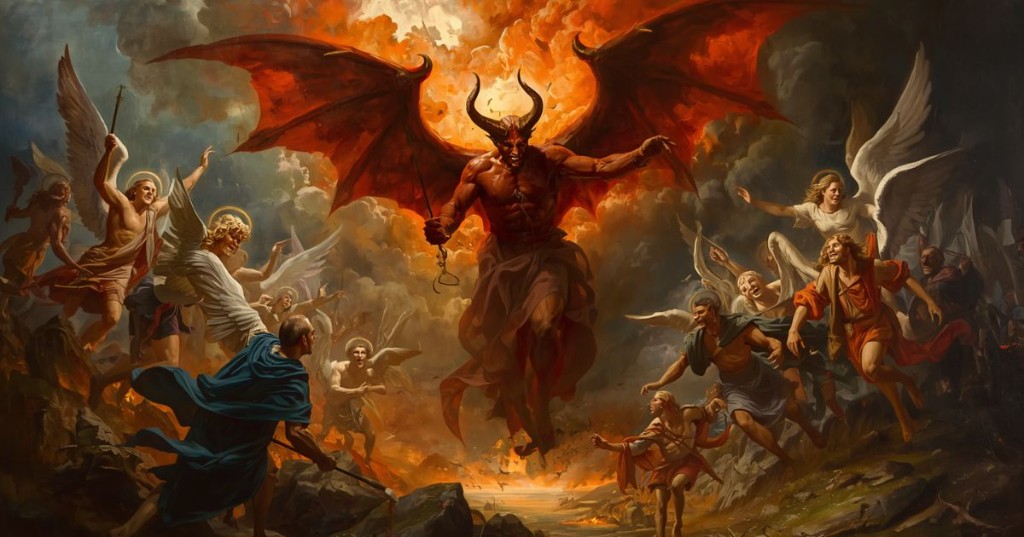
Michael pauses where Adam's sight fails and narrates what remains: post-flood peace under paternal rule until Nimrod hunts men, Babel's tower earns confused tongues, and tyranny replaces fraternal law though God may subject outward liberty when nations decline from reason. Abraham leaves Ur by faith, receives Canaan, and in his seed all nations shall be blest; Moses leads Israel through plagues and parted sea to Sinai, where law and sacrifice typify the Seed who shall bruise the serpent and require a Mediator greater than Moses. Adam rejoices yet asks how God can dwell among sinful nations under many laws; Michael explains law stirs sin to show its power, then points to imputed righteousness and a better covenant from shadow to spirit.
Kings and prophets follow: David's throne, Solomon's temple, idolatry, exile, return, priestly strife, and Messiah born of virgin while a star guides sages and angels sing to shepherds. Michael unfolds the passion: obedience fulfilled, death endured, resurrection on the third day, ascension with victory, Satan dragged in chains, Comforter promised to the faithful, wolves corrupting the church, truth persecuted while worldly rites satisfy the rest, and final judgment raising new heavens and earth where the just dwell. Adam wonders whether to repent the fall or rejoice that good will spring from evil; grace shall abound over wrath though persecution must come first.
Adam learns obedience with love and fear, accepts a paradise within happier far than Eden lost, and will add faith, virtue, patience, temperance, and charity to knowledge rather than aspire beyond what his mortal vessel can hold. Michael bids him wake Eve, share the promise of her seed, and descend from speculation to action; she already dreamed prophetic good, knows God speaks in sleep, and vows the Promised Seed will restore what she lost through wilful crime, choosing exile with Adam over safety without him.
Cherubim advance with flaming sword; angels lead them eastward down the cliff as the temperate clime parchers beneath God's brand. They look back at guarded Paradise with dreadful faces thronging the gate, drop natural tears soon wiped, and walk hand in hand into the wide world with Providence their guide. The epic ends not in despair but forward motion together through Eden's solitary way, the first humans stepping into history with sorrow honored and hope inwardly secured.
Milton understood something brutal about human nature: the smarter you are, the more elaborate your self-deception can become. Lucas wasn't cast out for being stupid—he was cast out for being brilliant but wrong, and too proud to admit it. This pattern shows up everywhere in modern life. The nurse who's worked the floor for twenty years but refuses to learn the new computer system because 'the old way was better.' The mechanic who insists the diagnostic computer is wrong because he can 'feel' what's wrong with an engine. The manager who doubles down on failed strategies because admitting error feels like admitting incompetence. Intelligence becomes a trap when it's tied to ego. We use our smarts to build better excuses instead of better solutions. The most dangerous person in any workplace isn't the obvious incompetent—it's the smart person who can't be wrong. They'll rationalize, blame systems, attack critics, and burn everything down rather than say 'I made a mistake.' Milton shows us that even angels fall this way. The pattern isn't about intelligence—it's about what happens when being right becomes more important than being effective. The smartest people often have the hardest time learning because they've built their identity around always having the answer. Recognition is the first step toward wisdom.
Explore this chapter with AI to uncover deeper meaning and practical takeaways.
AI Discussion