
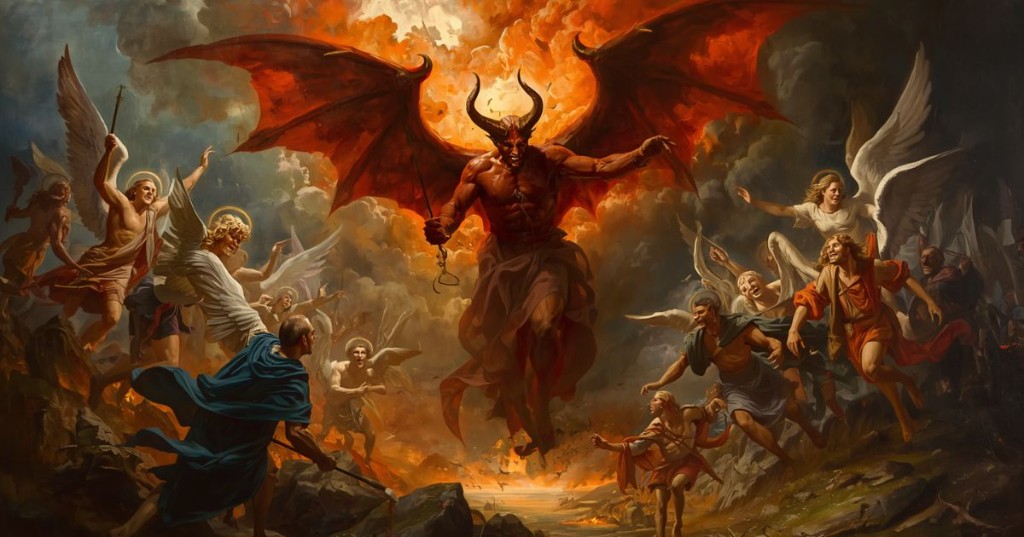
Heaven already knows the despiteful act in Paradise: nothing escapes God's eye, yet Man fell with free will intact and could have repulsed the foe. Angels return sad from Eden, wondering how Satan entered unseen; the ethereal host gathers while guards account for their watch and are approved. The Father says he foretold this tempter without necessitating sin, insists decree did not force the fall, and sends the Son as Judge and Mediator with mercy colleague to justice rather than the instant stroke Adam feared. Man should have remembered the high injunction whoever tempted; incurring penalty was just, yet forbearance will not mean acquittance forever. The Son accepts judgment, promises to temper justice with mercy, names Satan condemned by flight, and descends alone while Thrones and Dominations minister at Heaven-gate as Eden lies in prospect below.
The Son arrives at evening cool as mild Judge and Intercessor, his voice walking in the garden while day declined. Adam and Eve hide among trees, love gone from their looks, apparent guilt and hate in place of love; called forth, Adam admits fear and nakedness, then blames the Woman God gave him before confessing he ate. God asks whether she was Adam's God or guide superior; Eve simply says the serpent beguiled her. The serpent is cursed to dust and enmity; the Woman's seed shall bruise his head, an oracle Milton links to Christ; Eve receives sorrow in childbirth; Adam receives thorns, sweat, and return to dust. Death is delayed though denounced that day; the Son clothes them in skins, covering inward shame with righteousness, and returns to Heaven with sweet intercession while angels sing that God's ways are just and the heavenly audience answers Halleluiah.
Meanwhile Sin and Death, spawned at Hell's gate, feel Satan's success through secret sympathy and build a pontifical bridge over Chaos to the new world, Death petrifying the path while Sin guides, paving easy passage for infernal traffic as Xerxes bridged the Hellespont. Satan meets them at the bridge, praises their work, sends Sin and Death to reign on Earth and make Man their thrall, and enters Pandemonium in disguise expecting applause for conquering Man with an apple and giving Hell a spacious world little inferior to native Heaven. He claims he toiled through unbounded deep while they paved his march, recounts seduction and shame in Paradise, then asks the council to possess the new realm with him and enter full bliss.
Instead his host hiss him into serpent form; all his peers become serpents chewing bitter ashes from illusion fruit in a grove that mocks Paradise, yearly humbling their pride. Triumph turns to public scorn; Satan boasted that enmity and a bruised heel were cheap for a world, yet now wears the shape he sinned in while Scorpion, Asp, and Hydra swarm the hall. Sin and Death reach Paradise; Death hungers for all life; God calls them his hell-hounds to lick pollution Man's sin shed on what was pure until the Son casts them back and renews heaven and earth, while angels adjust sun, moon, winds, and poles so seasons, storms, and harsh climes replace perpetual spring after the tasted fruit turned the sun's course and unleashed Boreas, Notus, and their kin.
Discord enters irrational creation: beast preys on beast and flees Man; Adam sees outward miseries and worse within. Through the black night he laments being miserable of happy, dreads propagating curse to posterity, and argues whether death must end wrath or whether spirit and body perish together. Conscience drives him from deep to deeper fear until he wishes the earth would swallow him, questions why sentence delays, and accuses Justice of moving slowest for cries. He curses creation, accuses tardy Death, and rejects Eve as serpent, blaming her sex and God's creation of woman with bitter catalogues of future marital woe until she kneels, weeps, and offers to bear all guilt or seek death together so Death shall be deceived his glut.
Adam relents, rejects suicide and childless despair, recalls the seed's promise against the foe, and proposes prayer, labor, fire, and return to the judgment seat rather than rage without repair. He remembers the Judge's mild face when angry most severe, hopes for pity if they confess, teaches Eve to seek warmth and shelter against the mounting storm, and leads her back to the place of sentence with humiliation meek rather than mutual accusation. They end prostrate where they were judged, confessing faults and begging pardon with tears watering the ground and sighs filling the air while winds shatter the graceful locks of Eden's trees. Both feel remorse at last; contrition replaces the blame cascade that opened the chapter; mercy is not yet fully spoken aloud, but the posture of return makes Book XI's prevenient grace possible when prayer ascends faster than oratory.
Milton understood something about human psychology that modern research confirms: when our choices blow up, our first instinct is always to make it someone else's fault. Adam immediately attacks Eve not because she forced his decision, but because blame temporarily relieves the unbearable weight of responsibility. This isn't weakness—it's how our brains protect us from psychological overwhelm. The problem comes when we get stuck there. In Milton's time, this pattern played out in religious contexts—sinners blaming Satan, circumstances, even God himself. Today, we see it everywhere: the worker who gets fired blames their supervisor's favoritism rather than their own attendance issues. The parent whose teenager gets arrested rages at the school system instead of examining their own parenting choices. The spouse caught cheating blames their partner's emotional distance. The mechanism is identical across centuries because it serves the same psychological function—deflecting unbearable shame. But Milton shows us something crucial: blame is just the first stage, not the final destination. After blame comes despair—the swing toward total self-destruction. Eve suggests they end their lives rather than face their consequences. This too is avoidance, just in the opposite direction. Real healing only begins in the third stage: accountability. When Adam finally stops blaming Eve and starts focusing on what they can actually do now, that's when redemption becomes possible. The question isn't whether we'll hit the blame stage—we will. The question is how quickly we can move through it toward taking responsibility for our choices.
Explore this chapter with AI to uncover deeper meaning and practical takeaways.
AI Discussion