LIVE
OCD← Home
North and South cover
1854
North and South
Elizabeth Gaskell · First Impressions and Class Divides
Chapter 7
Ch. 6
Reading
Ch. 7
Ch. 8
Loading audio...
0:000:00

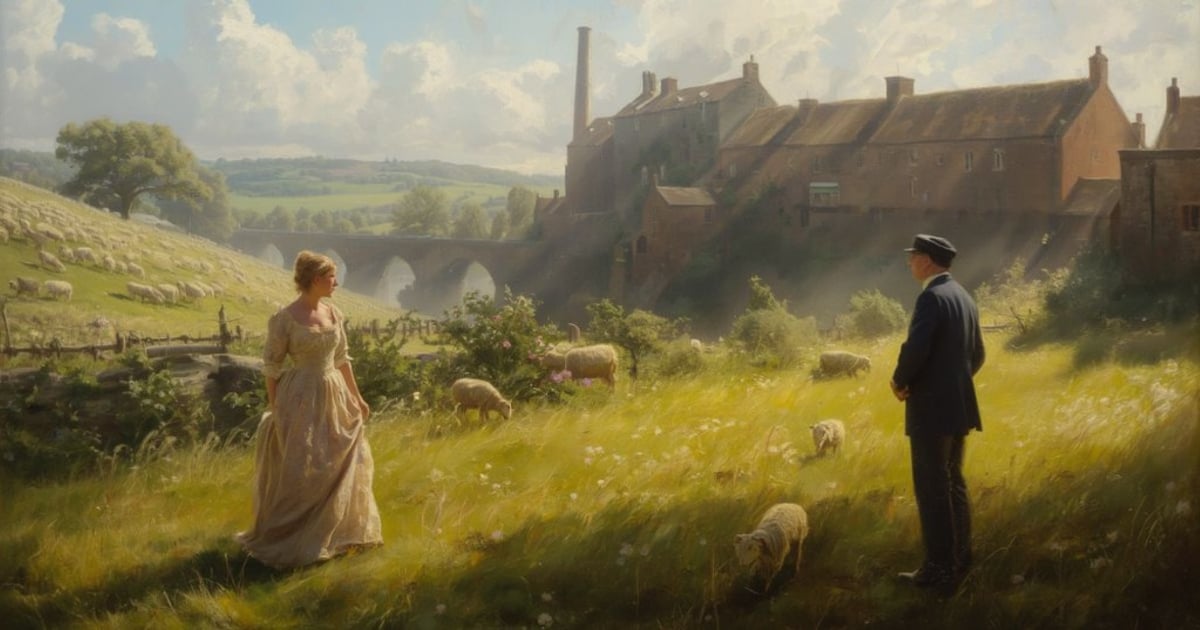
Margaret and her father venture into Milton-Northern to find housing, and the industrial town immediately assaults their senses with its smoky air, crowded streets, and utilitarian atmosphere. Everything feels foreign compared to their genteel southern England background, the people dress differently, move with purpose rather than leisure, and even the colours seem greyer and more enduring. Their house-hunting proves challenging as their modest budget of thirty pounds yearly buys far less space and comfort than it would in Hampshire. They settle on a house in Crampton with gaudy wallpaper that Margaret finds vulgar but accepts as necessary.

The chapter's pivotal moment comes when Margaret meets Mr. Thornton, the mill owner who will become central to her story. Their first encounter crackles with mutual misunderstanding, she appears haughty and dismissive to him, while he seems rough and ungentlemanly to her. Both judge based on surface impressions shaped by their different worlds. Margaret's natural dignity and beauty intimidate Thornton, making him feel self-conscious about his lack of refinement, while her cool politeness strikes him as condescension.

This meeting establishes the central tension between industrial power and traditional gentility that will drive much of the novel. The chapter ends with a small but significant gesture, Thornton quietly arranges for the offensive wallpaper to be replaced, showing his growing interest in the Hales while revealing how industrial wealth can accomplish what genteel poverty cannot. This sets up the complex dance of attraction, misunderstanding, and social navigation that will define Margaret and Thornton's relationship.

Amplified Discussion
The Stories We Write in Seconds

Margaret and Thornton's disastrous first meeting reveals something universal about human nature: we create entire narratives about people within moments of meeting them, then defend those stories even when they're wrong. This wasn't just about class differences in 1854, it's about how our brains work under pressure. When we feel uncertain, overwhelmed, or judged, we rapidly categorize people as threats or allies based on surface signals. Margaret felt displaced in this industrial world, so she retreated into familiar social categories. Thornton felt exposed by her obvious education and polish, so he armored himself with assumptions about her snobbery. Both used their snap judgments as shields against vulnerability. This exact pattern plays out in modern workplaces, neighborhoods, and relationships. The new supervisor seems 'stuck-up' because she doesn't chat by the coffee machine, but maybe she's overwhelmed. Your teenager's friend appears 'disrespectful' because he doesn't make eye contact, but maybe that's how his culture shows respect. We write stories about people's motivations based on moments, then treat those stories as facts. The cost is enormous: missed connections, unnecessary conflicts, lost opportunities for understanding. Gaskell shows us that the antidote to defensive judgment is curiosity, the willingness to wonder what's really happening beneath someone's surface behavior.

Explore this chapter with AI to uncover deeper meaning and practical takeaways.

AI Discussion
Why it matters

Reading New Environments Without Ranking Them

Every new environment comes with operating rules different from the ones you arrived with, and the first skill is to notice what is different without assuming it is worse. Margaret arrives in the north and finds that everything looks more 'purpose-like' than the south she has left, then meets John Thornton unprepared and must decide in a moment how to treat someone whose social register she has not yet learned to read. When you enter a new context, resist the impulse to rank it against the one you came from and instead ask what it is organized to do that yours was not.

Lessons

PracticeThis week, notice when someone seems rude or dismissive, ask yourself what they might be protecting themselves from before you write them off.

Psych reading

The Defensive Judgment Trap

We create protective stories about people in moments of uncertainty, then defend those stories instead of discovering who they really are.

In the mind

Margaret and Thornton's disastrous first meeting reveals a universal pattern: we create entire narratives about people in seconds, then defend those stories even when they're wrong. Margaret sees Thornton's directness and assumes he's crude. Thornton sees her reserve and assumes she's snobbish. Both are protecting themselves by creating distance through judgment. This pattern operates through our brain's survival mechanism.

When we feel uncertain or threatened, we rapidly categorize people as 'safe' or 'dangerous,' 'like us' or 'other.' Margaret feels overwhelmed by this foreign industrial world, so she retreats into familiar class distinctions. Thornton feels exposed by her obvious gentility, so he armors himself with assumptions about her arrogance. Each uses their snap judgment as a shield against vulnerability. This exact dynamic plays out everywhere today. At work, the new supervisor seems 'stuck-up' because she doesn't chat by the coffee machine, but maybe she's just shy or overwhelmed.

The doctor appears 'cold' because he doesn't make small talk, but maybe he's concentrating or dealing with difficult news. Your teenager's friend seems 'disrespectful' because he doesn't make eye contact, but maybe that's how his family shows respect. We write entire stories about people based on moments. When you catch yourself creating instant narratives about someone, pause and ask: 'What story am I telling myself, and what am I protecting myself from?' Look for the fear underneath the judgment. Are you feeling insecure, overwhelmed, or out of place?

Then get curious instead of defensive. Ask questions. Give people three chances to show you who they really are before you decide. Margaret and Thornton's story would have been completely different if either had paused to wonder what was really happening in that first moment. When you can name the pattern, predict where it leads, and navigate it without losing your judgment or your boundaries, you keep control instead of letting pride or fear write the next move.

Find the right chapter

Each mood maps to a life skill. Each skill connects to the patterns in classic literature.

😔How do you feel😊

Personalize your match

Optional—life stage, what you need today, and what you're navigating help us pick chapters that fit—not generic lists. You may also freeform using the feeling search below.

Sign in to save your profile

Choices stay on this device until you sign in.

Browse the Full Library
4,582Chapters
118+Books
86Authors