
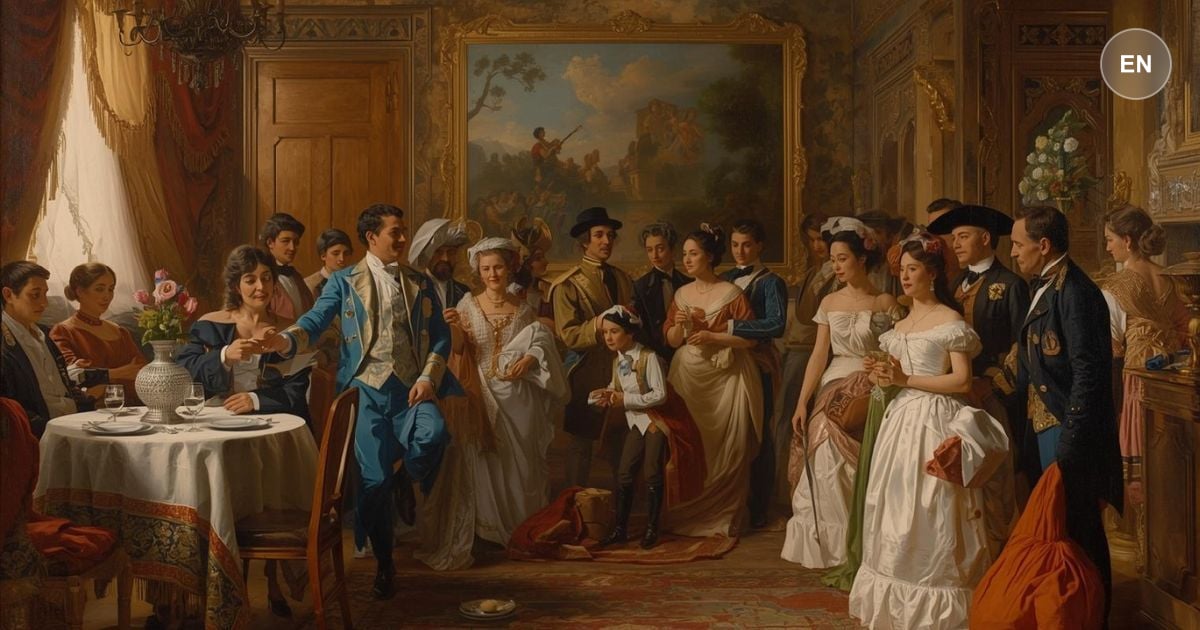
Capitan Tiago, untouched by arrests, credits virgins and Linares's Madrid connections while whispering Ibarra will hang and the schoolhouse was a fort. Victorina pushes Andalusian speech and a Linares marriage; sordid bargains send Maria Clara to her room while the house prepares celebration over ashes, while Tiago counts indulgences and guests count gossip, and Victorina rehearses Castilian pride for a wedding built on threats.
At the engagement fiesta Guevara says prosecutors used her letter and a forged outlaw confession; Salvi avoids his gaze. Maria Clara, called prudent for surrendering it, collapses after flowers fall, and the crowd mistakes coercion for modesty while friars toast a match built on blackmail, while Linares smiles unaware his bride carries another man's farewell on her lips.
Elias rows escaped Ibarra to the moonlit azotea where she reveals Damaso as her father, shows her mother's cursed letters traded for his, and swears faithfulness without love to Linares. They kiss farewell as he flees. Rizal's weaponized secret shows shame and blackmail steering marriage while love survives only in stolen midnight truth before dawn separates them forever, and Maria Clara returns to a fiesta that smells of forced lilies, knowing her body will obey even when her heart rows away with Crisostomo, leaving only the convent or the altar as rooms where her obedience will be displayed.
Maria Clara's devastating choice reveals how institutional power operates through shame and secrecy. She couldn't expose her illegitimate birth without destroying multiple reputations, so she sacrificed her love instead. This pattern, collecting vulnerabilities and forcing impossible choices, remains a primary tool of control in modern institutions. Healthcare workers stay silent about unsafe conditions because administrators threaten to expose past disciplinary actions. Immigrants avoid reporting workplace violations because employers weaponize documentation status. Students don't challenge grade manipulation because professors threaten recommendation letters. The mechanism is always the same: discover what someone desperately wants to protect, then force them to choose between that protection and their principles. What makes this particularly insidious is how it transforms victims into apparent collaborators. Maria Clara looks like she betrayed Crisostomo, when actually she was trapped by a system that offered no good choices. This dynamic explains why systemic problems persist even when individual people want change, the system doesn't just resist reform, it forces good people to become unwilling enforcers. Understanding this pattern helps us recognize when we're being manipulated and when others might be trapped rather than truly disloyal. The question becomes: how do we build solidarity across these manufactured divisions?
Explore this chapter with AI to uncover deeper meaning and practical takeaways.
AI Discussion