
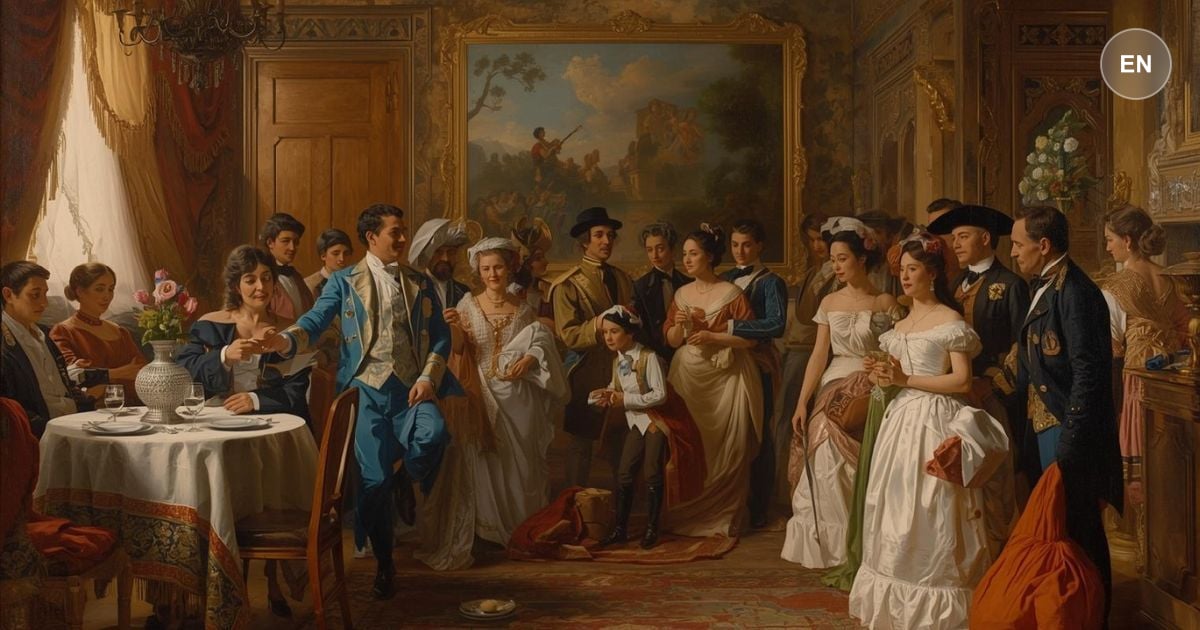
Families wail as prisoners load into an ox cart for Manila. Doray clutches her baby; Capitana Maria watches twins in silence, and the plaza becomes a theater where grief must choose a villain because the crowd cannot stone an entire system, so it chooses the man who built the schoolhouse and paid the taxes.
The crowd blames Ibarra, demands he be bound like the rest, and pelts him with stones crying accursed. Friends hide; he passes his smoking ancestral home and weeps that he has no country, love, or future, learning exile begins in the faces of neighbours he fed, and stones feel lighter than gratitude remembered, while Doray's baby wails for a father in the cart, and the twins Capitana Maria carries will grow up without his name cleared.
Old Tasio, too weak to reach the jail, watches from a hill and dies on his threshold next day. Rizal's scapegoating cycle turns shared grief into rage at one visible target while authorities escape blame and the sage dies alone with his books unread by the mob below, his last lesson unheard in the stone pelting a neighbour, while friars in Manila already draft sermons praising order restored, and Tasio's unread books mock the crowd's certainty.
Rizal understood something brutal about human nature: when we're hurt and powerless, we don't attack the source of our pain, we attack whoever's within reach. The townspeople know the Spanish authorities destroyed their lives, but they can't touch those authorities. They can hurt Ibarra, so they do. This isn't stupidity; it's psychology. Blaming the system feels impossible and dangerous. Blaming the individual feels manageable and safe. We see this everywhere today. When hospitals cut staff, nurses blame the charge nurse who announces layoffs, not the executives who decided. When schools fail, parents attack the principal trying to fix things, not the politicians who defunded education. When factories close, workers rage at union leaders who fought for them, not boards who moved jobs overseas. The pattern is always the same: pain flows upward from the powerless, but blame flows downward toward the accessible. Recognizing this pattern protects you from becoming the convenient target and helps you direct your own anger more effectively. The next time you feel the urge to join a pile-on, ask yourself: who actually has the power to fix this problem? That's usually not the person everyone's blaming.
Explore this chapter with AI to uncover deeper meaning and practical takeaways.
AI Discussion