
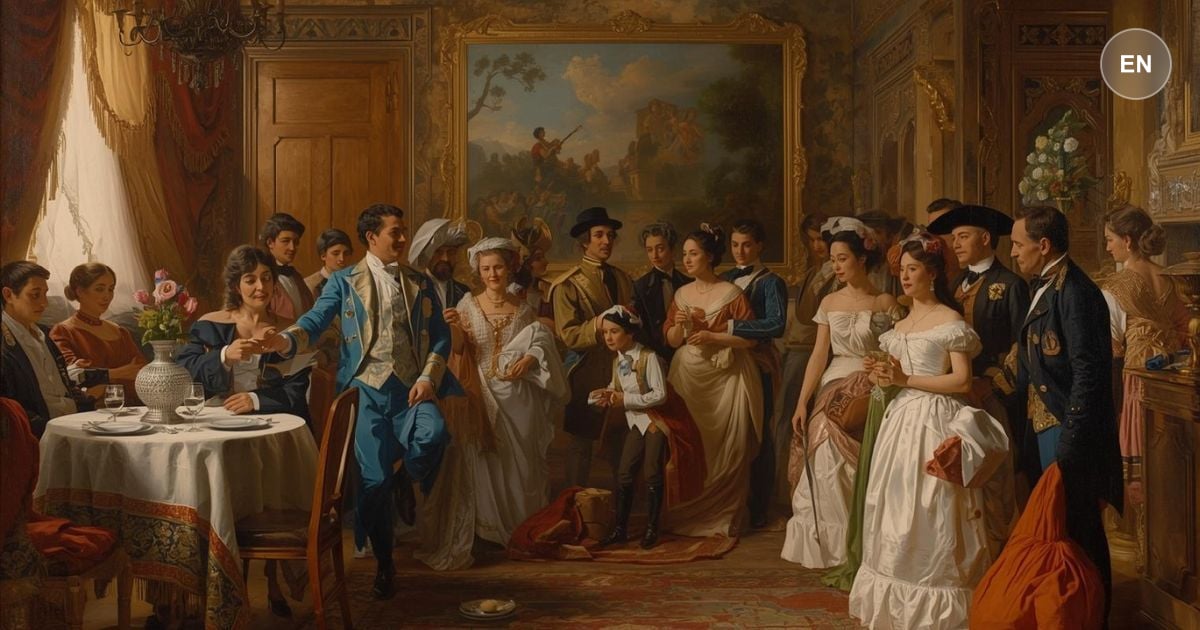
At vesper bells Salvi rushes to the alferez revealing a confessional tip: at eight tonight rebels will seize barracks, loot the convento, and murder Spaniards. The alferez gloats over crosses while Salvi demands credit, and two predators share a map drawn from whispers and spite, each planning to survive the blood they helped schedule, and the barracks load rifles for a revolt they invented, while Ibarra trusts law until law comes with shackles at the very hour Maria Clara opens her window, not knowing Elias has already fled cursing their shared blood.
Elias bursts into Ibarra's laboratory ordering him to burn papers and flee; dupes were told Ibarra paid them. While sorting letters Elias finds Don Pedro Eibarramendia, the Basque who framed his grandfather, was Ibarra's great-grandfather. Rage nearly drives him to stab Crisostomo before he flees muttering what was I about to do, the alliance shattered by genealogy at the worst hour.
Rizal's inherited rage hijack shatters the alliance precisely when conspiracy closes on the reformer, proving blood memory can wound faster than any friar's plot and leaving Ibarra alone with eight o'clock approaching and no pilot left to warn him which papers to burn first, because even allies may become assassins when history repeats.
Rizal understood something profound about how grievances travel through generations. In this chapter, Elias carries his grandfather's shame and anger like a physical weight, and when he finally identifies its source, rational thinking shuts down completely. His hand moves toward violence before his mind can process consequences. This isn't just a historical curiosity - it's a pattern that shapes modern workplaces, neighbourhoods, and families every day. Consider how many workplace conflicts are really about past management decisions that hurt someone's family member. How many community disputes stem from old zoning decisions or business closures that destroyed someone's livelihood decades ago. How many family feuds perpetuate grievances that the original participants barely remember. The emotional inheritance is real and powerful. When someone's reaction seems wildly disproportionate to the present situation, there's often family history driving the intensity. The key insight isn't to dismiss these inherited grievances as irrational, but to recognize their power and address them strategically rather than emotionally. Sometimes breaking the cycle of inherited anger is the most radical act possible. The question becomes: how do we honour past wounds without letting them destroy present opportunities?
Explore this chapter with AI to uncover deeper meaning and practical takeaways.
AI Discussion