
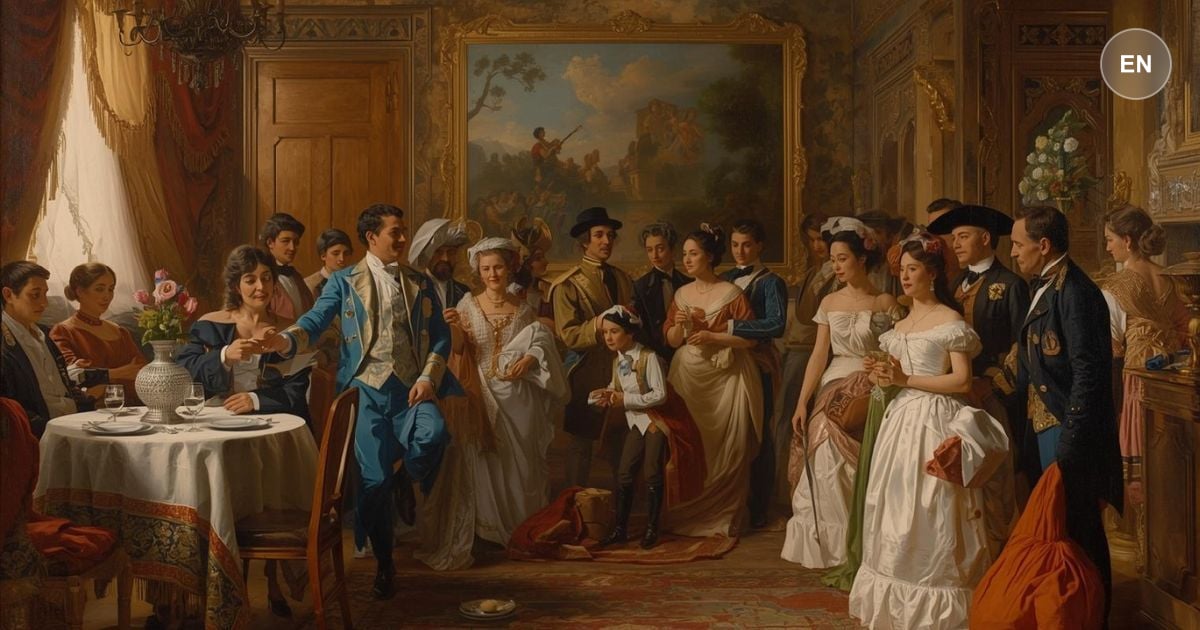
Morning after the cemetery, San Diego competes in supernatural gossip. Tertiary and Rosary sisters inflate visions to sell indulgences; a herder who saw only two men is slapped as heretic. Salvi preaches purgatory until pesos flow for masses, and fear becomes merchandise by the candle while the real conspiracy hides in plain sight, disguised as a miracle sale in the plaza while rifles are cleaned for eight o'clock, the hour when confession becomes a weapon and Tasio begs for one more lesson.
Don Filipo visits dying Tasio, who scolds his resignation during crisis yet delivers a fevered lecture on youth studying history, science, and law while friars sell stale doctrine. Tasio cites Galileo's E pur si muove, then collapses into despair at vice and begs Ibarra visit tomorrow because the Philippines is in darkness and no planet moves until minds do.
Rizal contrasts profitable fiction in the plaza with painful truth in a sickroom, showing how a town buys miracles while its sage dies unheard except by one friend who still believes in meetings when the hour for talk is almost gone, and Salvi counts coins while Tasio counts breaths, begging one more sunrise for a student who still builds schools.
Rizal shows us something devastating: institutions don't suppress truth because they're evil, but because truth often costs money while fiction can generate it. The cemetery incident becomes a supernatural fundraising opportunity because ghost stories bring in donations, admitting two men caused the disturbance brings in nothing. This pattern runs deeper than simple corruption. It's about incentive structures. The religious leaders aren't necessarily lying on purpose; they're responding to what their community rewards. Dramatic visions get attention, resources, and influence. Simple truth gets you ignored or labelled a troublemaker. We see this everywhere today. Hospital administrators prefer 'patient satisfaction scores' over honest discussions of medical errors. School districts celebrate test score improvements while quietly transferring struggling students. Social media algorithms amplify outrage and conspiracy because engagement drives ad revenue, while nuanced truth gets buried. The most insidious part is how this shapes what we even recognize as truth. When profitable fiction gets repeated enough, it becomes the accepted reality. The herder who saw two men gets shouted down as a heretic, not because people don't believe him, but because his version doesn't serve anyone's interests. Understanding this pattern is crucial for navigating modern life. It explains why whistleblowers get fired, why simple solutions get ignored for complex ones that benefit consultants, and why the most important conversations happen in car parks, not boardrooms.
Explore this chapter with AI to uncover deeper meaning and practical takeaways.
AI Discussion