
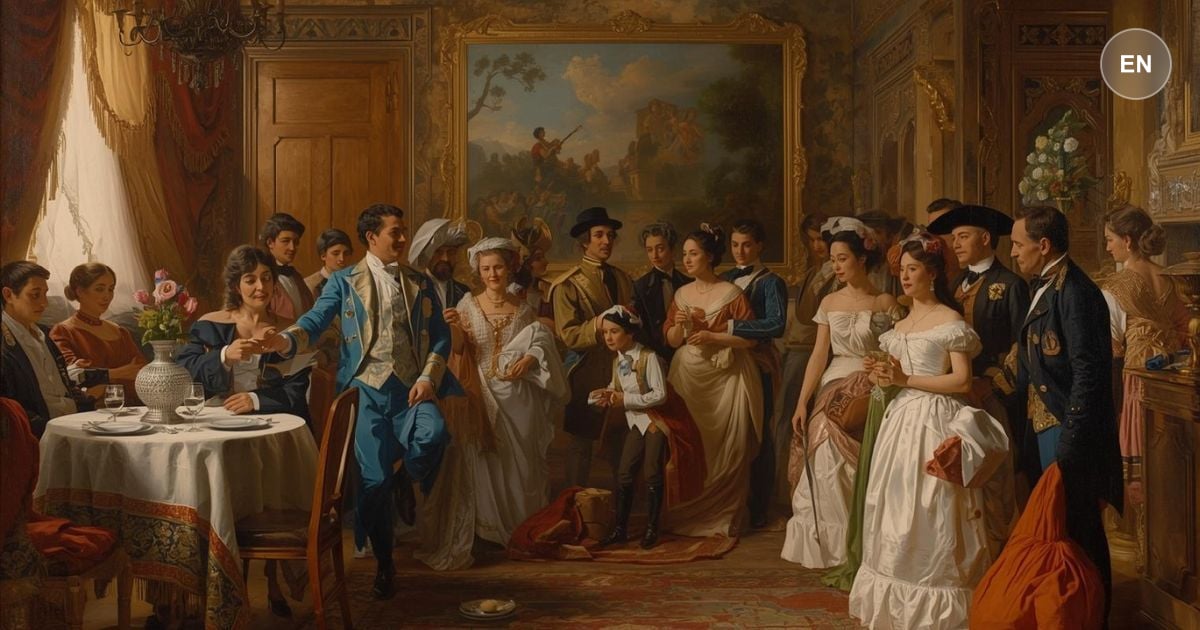
Padre Damaso weeps at Maria Clara's bedside with startling tenderness, then welcomes Linares and reads Carlicos's letter asking jobs and a wife. Choosing between evils, he drags the Spaniard to negotiate with Capitan Tiago while Salvi watches coldly, measuring which alliance will cost him least and whether the Madrid nephew will seal Maria Clara before Ibarra can speak.
Lucas tries Salvi next with a sob story about five hundred pesos from Ibarra; the curate sees through the act and orders him out. Lucas retreats muttering he will find whoever pays best, treating rebellion like a job fair and grief like merchandise any friar might stock if the price is right, already scouting which uniform will fund his next lie, while Damaso's tears convince the room he is still her second father though he helped break the engagement with his own threats.
Rizal contrasts masks: Damaso's genuine anguish misread as godfather love, Linares as pawn in a marriage plot, Lucas as failed provocateur shopping employers. Plans harden around Maria Clara's sickbed while Ibarra remains excluded and enemies test which friar will fund their schemes before the fever breaks or the engagement is broken by decree, and Ibarra still waits in the street like a beggar at his own betrothal feast.
Rizal shows us two kinds of emotional performance: Padre Damaso's mask hiding real love, and Lucas's fake grief hiding greed. Both men perform, but for opposite reasons. Damaso hides authentic feeling behind authority because showing tenderness might undermine his power. Lucas manufactures feeling because it's profitable. This distinction matters enormously in our daily lives. We live in a culture that often rewards performed emotion over authentic feeling, the boss who talks about 'caring for employees' while cutting benefits, the relative who shows up with flowers but never calls, the politician who tears up on camera but votes against relief funds. Yet we also encounter people like Damaso, whose gruff exterior protects genuine care they can't afford to show publicly. Healthcare workers often develop protective professional distance, but their masks slip during real emergencies, revealing deep investment in patient outcomes. Teachers might seem strict in class but break down when students face real crises. The key is learning to read the tells. Authentic emotion has weight, specificity, and consistency over time. Performed emotion often includes convenient timing, generic details, and immediate asks for specific help. When we can distinguish between these patterns, we make better choices about who deserves our trust and energy.
Explore this chapter with AI to uncover deeper meaning and practical takeaways.
AI Discussion