
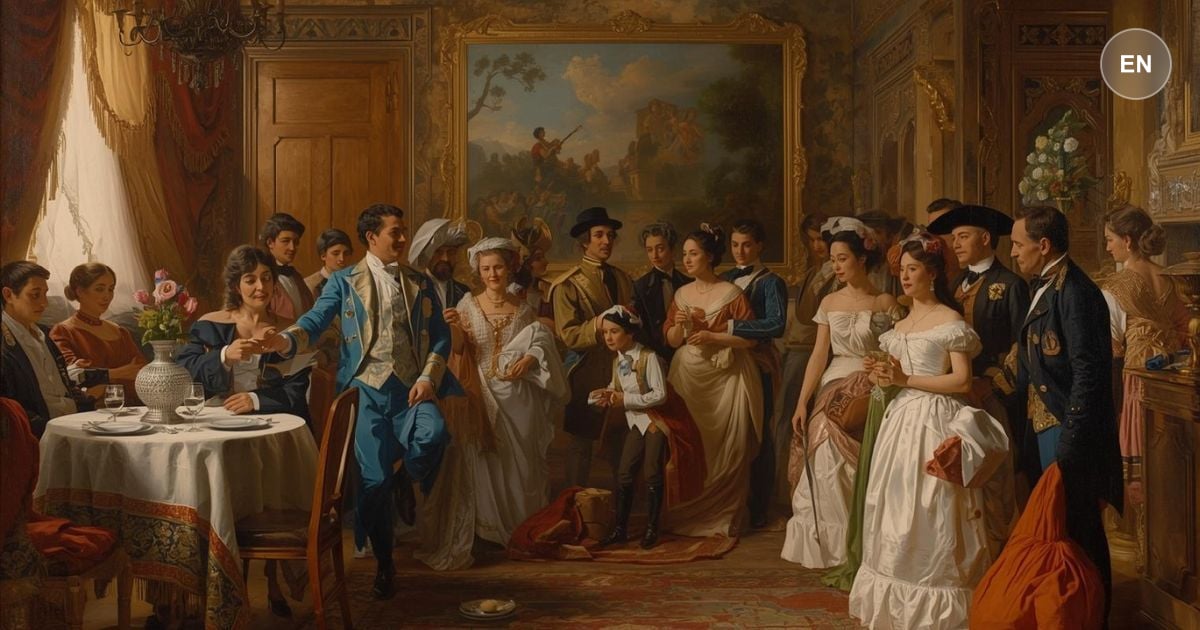
At night the fiesta procession mixes devotion, alguazil beatings, and comic saint rankings: John the Baptist in hides beside Francis in splendor, Tasio noting preachers outrank desert prophets in the colonial hierarchy of spectacle where costume equals holiness and alguazils clear the street with sticks as if faith required bruises, and even Tasio laughs at which apostle wears the costlier silver while the poor buy indulgences they cannot eat or bury.
Officials watch a loa from the gobernadorcillo's platform while Ibarra would rather hear Maria Clara at Tiago's window. Her Ave Maria stops the march; grief in song reaches him across the plaza as the Captain-General invites dinner talk about vanished boys and Ibarra wonders if he caused her sorrow by surviving the derrick.
Rizal contrasts sacred spectacle with authentic suffering, showing how colonial religion rewards display while real voices pierce the performance and hint at darker political crimes beneath the candles, the uniforms marching in step, and the saints ranked like officials on a payroll, and the Captain-General listens for names of boys no procession will mourn aloud, and Ibarra feels the procession's holiness curdle into theater while wax saints pass and real grief sings from a barred window.
Crisostomo represents every idealistic person who returns to their community with education and hope, only to discover that individual virtue can't fix systematic corruption. Rizal wrote this during Spanish colonial rule, but the pattern repeats: well-meaning people enter broken systems thinking their good intentions and credentials will create change, then face the crushing reality that the system is designed to absorb and neutralize reform efforts. The religious procession in the novel becomes a perfect metaphor, it looks holy and community-minded, but it's actually a tool of control that uses people's genuine faith against them. Today's equivalent might be corporate 'wellness programs' that preach work-life balance while demanding unpaid overtime, or politicians who hold prayer breakfasts while cutting social services. The tragedy isn't that Crisostomo lacks good intentions, it's that good intentions aren't enough when facing entrenched power structures that profit from dysfunction. The system doesn't need to destroy reformers; it just needs to exhaust them, make them complicit, or redirect their energy into harmless activities. Understanding this pattern helps us recognize when we're being managed rather than heard, and when our participation in 'positive' activities might actually be enabling the problems we're trying to solve.
Explore this chapter with AI to uncover deeper meaning and practical takeaways.
AI Discussion