
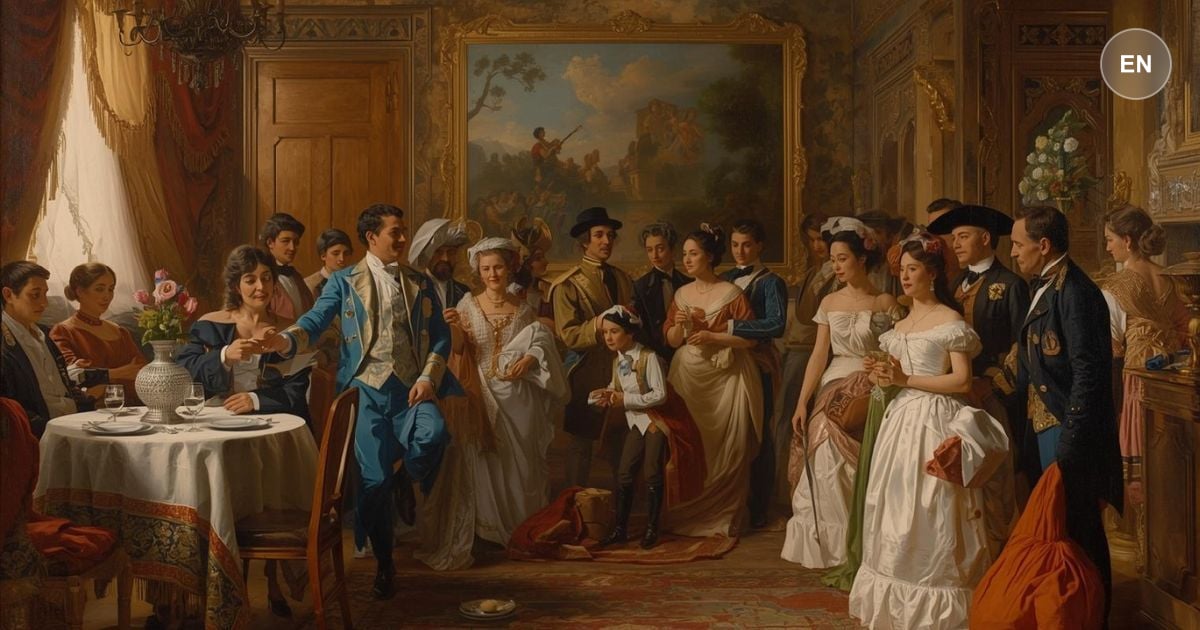
The Captain-General keeps friars waiting while he meets Ibarra and a Manilan who appealed to justice, treating churchmen like servants who forgot their place. He mocks Damaso, hints at sending the bully to Spain, and praises Maria Clara's charity to the leper while signaling that Justice can reward as well as punish when Madrid wishes to look enlightened before the fiesta ends.
Salvi's attempt to block the excommunicated youth fails; the governor offers protection, school support, and blessing on the engagement Ibarra still believes possible. The youth refuses Europe exile, affirming loyalty to his fathers' land, and the Captain-General instructs the alcalde to shield him from future molestation while friars calculate revenge in silence, knowing excommunication is a weapon they can sharpen again once the governor leaves.
Victory turns hollow when Maria Clara's door stays shut and Sinang says write instead of speak. Rizal pairs civil power challenging friars with personal love already under priestly siege, showing that a governor's favour cannot reopen a house Tiago has promised to close or undo tears shed before an image of the Virgin and that civil protection arrives too late for a door barred by fear and confession while the town cheers a governor it will never see again.
Rizal understood something brutal about institutional change: the moment you become useful to power, you become dangerous to everyone else. The Captain-General protects Ibarra precisely because his defiance of the friars serves the colonial government's agenda. This isn't altruism, it's strategy. The same pattern plays out in modern workplaces. When you document safety violations, speak up about harassment, or challenge corrupt practices, you might find unexpected allies in upper management. But your coworkers may start avoiding you. Your friends might stop confiding in you. The protection comes with isolation. This chapter forces us to confront an uncomfortable truth: sometimes doing the right thing means accepting that relationships will change. Maria Clara's silence isn't just personal rejection, it's the social cost of Ibarra's principles. The question isn't whether to stand up when you see something wrong. The question is whether you're prepared for the loneliness that often follows. Rizal shows us that institutional change requires individual courage, but individual courage requires accepting that not everyone will thank you for it.
Explore this chapter with AI to uncover deeper meaning and practical takeaways.
AI Discussion