
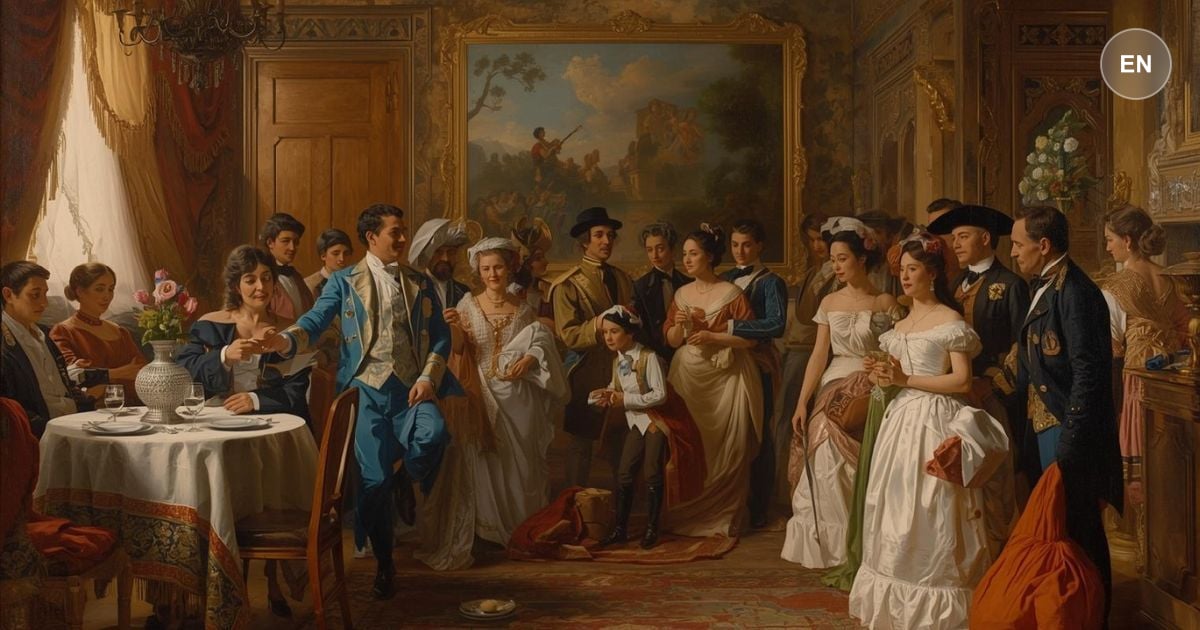
While stars still glitter in a sapphire sky, Maria Clara and four friends walk to the lake by torchlight with old women and servants carrying baskets, looking like goddesses of the night until the reader knows their names: Sinang, Victoria, and the others bound by laughter and strict chaperones. Ibarra's party follows, and the mothers insist men and women ride separate bankas until Albino's joke about five holes sends frightened women screaming and forces the young men aboard one boat, collapsing propriety with a single comic line on open water where honour and desire must share a hull.
Dawn brings salabat, songs, and Maria Clara's hymn on native land while a silent pilot steers with skill no guest can name. Officials toast, children laugh, and the picnic pretends the lake is only scenery, not the grave where Rafael Ibarra's body was thrown. At Capitan Tiago's fish corrals the nets come up empty until Leon murmurs that a cayman has torn the catch, turning flirtation into mortal fear and sending the party scrambling from the bank while the beast thrashes where supper should have been, and the women who mocked propriety an hour ago now cling to Ibarra as savior.
The pilot dives alone, ropes the beast, and is dragged into open water until Ibarra plunges after him without hesitation. Together they kill the reptile and win applause from guests who moments ago treated labor as scenery. Maria Clara trembles at the blood; the pilot tells Ibarra he owes his life, gratitude carrying sadness that hints at debt older than the lake. Ibarra remembers his father's bones in these waters and says he would rather rest beside them than drown alone. Rizal uses leisure to expose class choreography, how crisis strips social masks, and how Elias enters as skilled body beneath festivity, already hunted though no soldier has yet spoken his name at the feast. The party moves toward the forest meal with gaiety restored on the surface while Ibarra carries new debt to a stranger whose name the town will soon learn to fear when soldiers finally learn the pilot's name.
Rizal understood something we often forget: you don't really know someone until you see them under pressure. The fishing trip starts as pure social theater - everyone playing their assigned roles, following proper etiquette, maintaining careful distance between classes and genders. But when the cayman attacks, all that performance vanishes in seconds. The mysterious pilot's true skill emerges. Ibarra's loyalty overrides social calculation. Maria Clara's feelings surface despite propriety. Crisis doesn't create character - it reveals what was already there, stripping away the masks we all wear in normal times. This pattern plays out constantly in modern life. During the pandemic, we saw which neighbours checked on elderly residents and which ones hoarded supplies. In workplace emergencies, certain colleagues work all night to solve problems while others protect their own interests. Even small crises - a friend's car breaking down, a coworker's computer crashing before a deadline - reveal more truth about people than months of normal interaction. The key insight is learning to pay attention to these moments. When someone shows you their character under pressure, believe them. When crisis hits your world, examine your own first instincts too. Are you the person who steps forward or steps back? These moments of authentic response become the foundation for real trust and genuine relationships.
Explore this chapter with AI to uncover deeper meaning and practical takeaways.
AI Discussion