
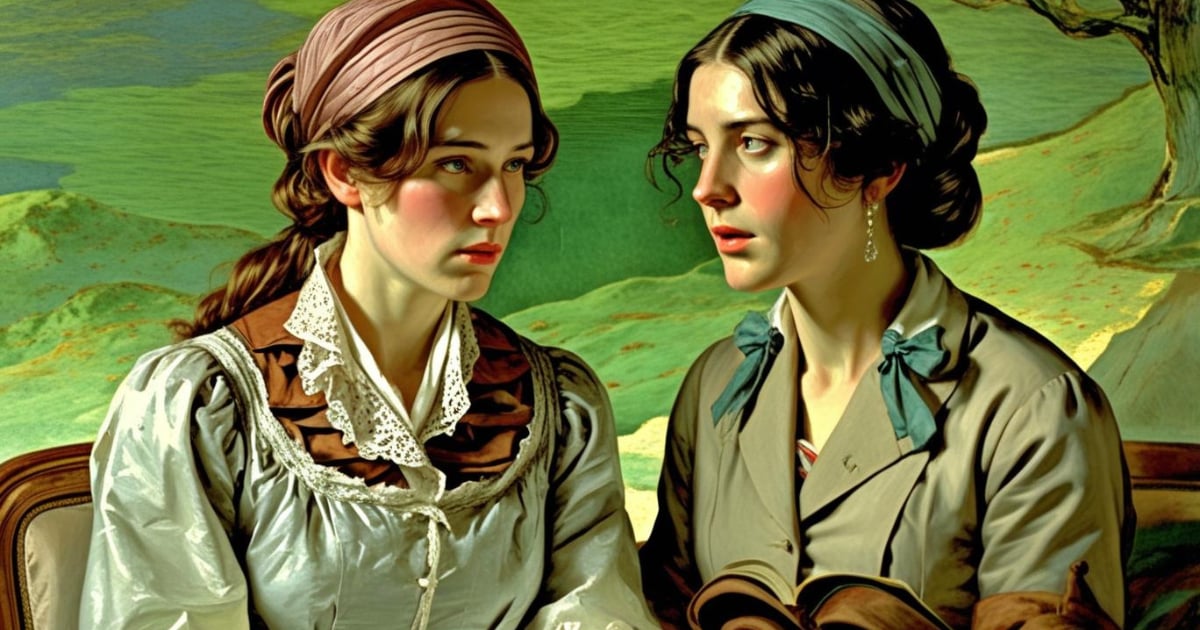
Casaubon spends weeks at the Grange while his Key to all Mythologies waits, having deliberately chosen courtship to secure female companionship, fancy, and tendance for declining years. When he tries to abandon himself to feeling, he finds an exceedingly shallow rill and concludes poets exaggerate masculine passion. Dorothea's ardent submission satisfies his previsions; he briefly wonders whether she lacks something, then decides tradition must be wrong.
She asks to read Latin and Greek as Milton's daughters did, promising not to be naughty or stupid. He permits copying characters to save his eyes. She wants masculine knowledge as ground for truth, not only wifely devotion, and wishes, poor child, to be wise herself. Lessons discourage her; Greek accents hint at secrets beyond woman's reason, while Celia sees other people's pretensions more clearly because she feels less.
Brooke interrupts the tutorial, declares classics too taxing for women, praises light music and pretty playing, and tells Casaubon to teach Dorothea quiet. Casaubon hates iterated tunes; Dorothea prefers the sobs of the Freiberg organ. Brooke shuffles out imagining Casaubon a future bishop because of a pamphlet on the Catholic Question. Eliot notes he will later denounce bishop incomes without remembering this hour, a quiet joke about minds that hold contradictory views at once.
This chapter is Eliot's double exposure: romantic Dorothea studying Greek, utilitarian Casaubon measuring passion, comic Brooke forecasting a deanery while history will make him jeer bishops later. The drought baptism joke is permanent literature. It teaches that mismatched inner weather can coexist with a fixed wedding date. Readers who pity only Dorothea miss Casaubon's solitude; readers who mock only Casaubon miss Dorothea's real wish to be wise. Hold both.
Explore this chapter with AI to uncover deeper meaning and practical takeaways.
AI Discussion