
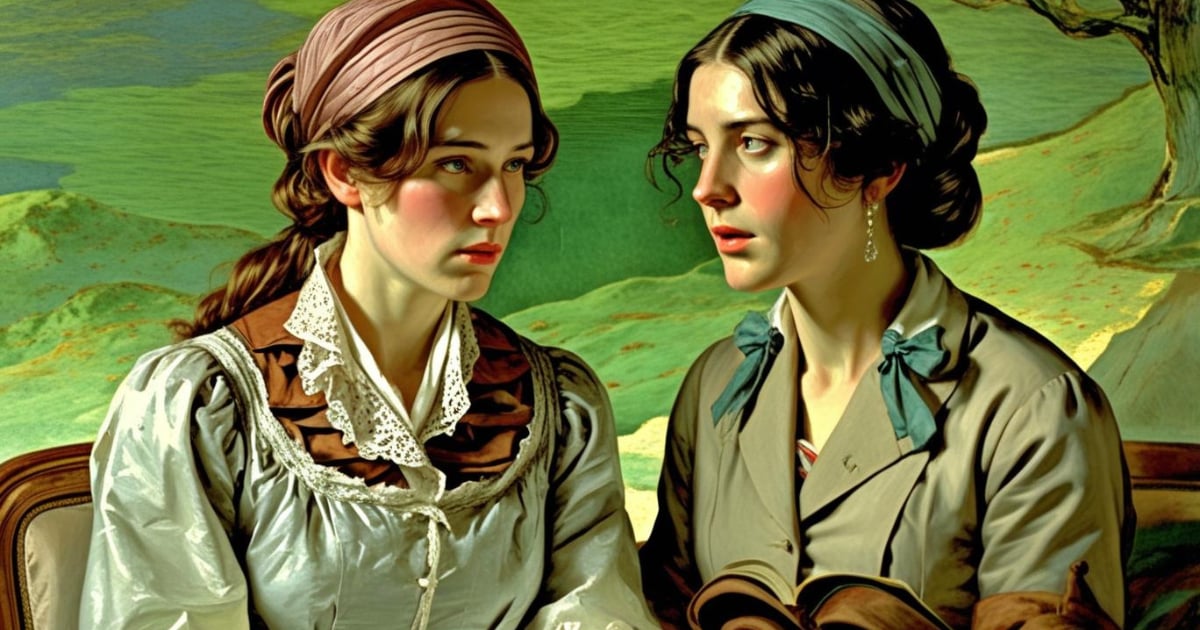
Mrs. Cadwallader's pony phaeton meets Casaubon's carriage at the Grange gate, and her morning already shows her method: haggle with Mrs. Fitchett over egg-eating fowls, swap church pigeons for wicked Spanish stock, then corner Brooke in the library about Whig candidacies, Catholic land, and his rumored parliamentary ambitions. She accuses him of Guy Fawkes politics and warns him against speechifying on the hustings until Celia's entrance lets him escape to his horses.
Celia states the fact without embroidery: Dorothea will marry Casaubon in six weeks. Mrs. Cadwallader calls it frightful, compares the match to a nunnery, wishes Celia joy of such a brother-in-law, and drives to Freshitt to tell Sir James. He drops his whip; she says Casaubon is no better than a mummy and a bladder for dried peas. Sir James urges Brooke to defer the wedding until Dorothea is of age; Mrs. Cadwallader knows Brooke cannot be squeezed into resolve and that Humphrey will find everyone charming, including bishops and trout streams. Before leaving she also arranges pastry lessons for her cook and mocks Casaubon's blood as cuttle-fish quarterings.
Eliot's long aside refuses conspiracy: Mrs. Cadwallader's matchmaking is a vortex of small social causes, not a hidden plot, like minute hairlets in a water-drop that make vortices for prey. Offended that Dorothea escaped the Sir James match she had prearranged, she throws her over and begins steering the baronet toward Celia, hinting that the younger sister admires him almost as much as a man expects. Sir James rides away fast, then turns back toward the Grange to hide hurt, congratulate if needed, and pay attention to Celia.
The chapter is less about one villain than about how provincial power works through talk, bargains, and wounded pride. Mrs. Cadwallader's epigrams travel faster than Brooke's evasions; Celia's plain facts land harder than his Latin tags. He had never made an offer and been rejected, which spares him one humiliation. Sir James cannot rescue Dorothea from her own choice, but he can still build cottages and redirect tenderness toward Celia. Eliot closes on pride, which helps mortals swallow disappointment and answer Oh, nothing between breakfast and dinner.
Eliot pauses the plot to defend Mrs. Cadwallader against readers who would call her malicious. The microscope passage is key: coarse interpretations miss the hairlets making vortices. She is not Iago; she is appetite for event, class comedy, and frankness. Sir James's return ride is equally important: Middlemarch values continuance. The chapter teaches that social pain is often digested quickly not because it is shallow, but because life must be served at dinner.
Explore this chapter with AI to uncover deeper meaning and practical takeaways.
AI Discussion