
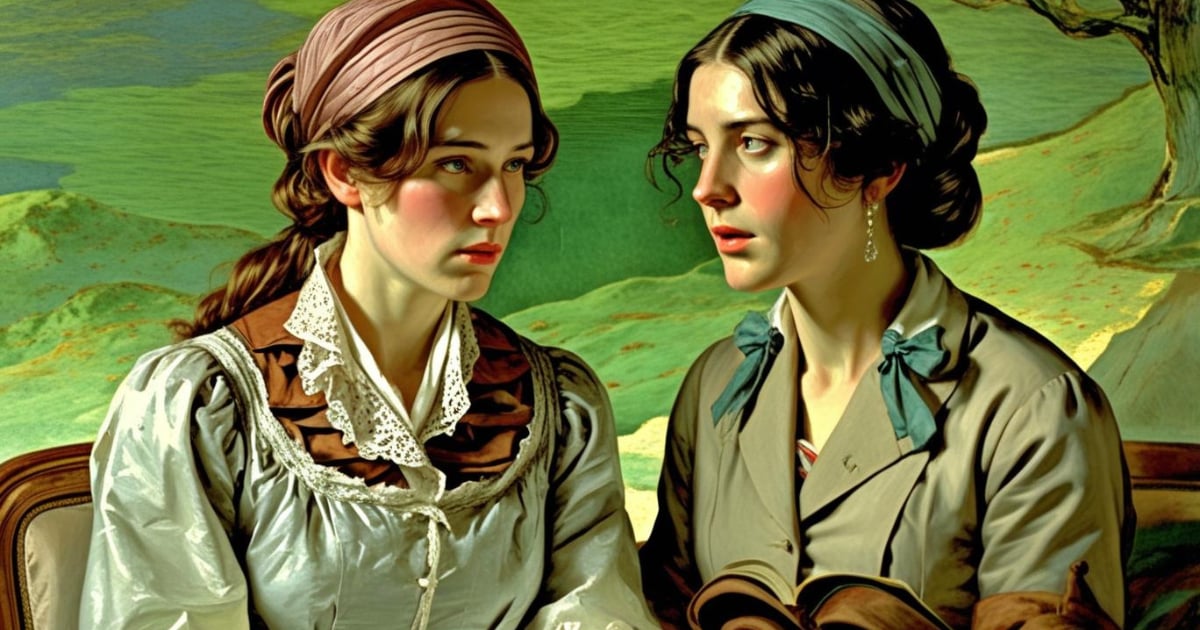
After Bulstrode's scene Will writes Dorothea asking one more visit before he leaves Middlemarch; he hates the indignity of a second farewell but needs her to know he is not a fortune-hunter after the codicil, the Dunkirk taint, and Bulstrode's five hundred a year. Dorothea is away carrying news to Freshitt; Sir James, unable to speak himself, sends Mrs. Cadwallader to repeat gossip linking Will with Rosamond Lydgate at the piano while Lydgate is out on his rounds and the house feels like a trap for scandal.
Dorothea defends Will publicly before the Cadwalladers, drives away in tears, and at the Grange learns Will is in the library while Sir James waits elsewhere in the house. They meet with suppressed overflow in the library: he explains the insult to his honour, the impossibility of seeking money under any pretext from Bulstrode or any man, and that what he cares for is forbidden even within reach; she, misreading partly, thinks of Rosamond yet feels sure no safeguard was needed against him and that his renunciation cost him more than her widow's fortune.
The footman ends the interview; they part with cold hands and sadder eyes before Pratt can announce another caller. Dorothea discovers joy that he loved her and renounced her for honour while the carriage passes him on the road toward Lowick Gate, his figure shrinking in the dust. Will spends the evening at the Lydgates singing with Rosamond and leaves next day, still bound to Middlemarch's machinery of rumor and Sir James's silent jealousy.
Eliot stages the farewell as mutual misunderstanding and partial revelation: Dorothea learns love in renunciation, Will keeps pride intact after Bulstrode's offer and Rosamond's codicil gossip, and the town's dead hand has not ended their story, only clarified its cost. She weeps in the carriage seeing him on foot; he walks toward Lowick Gate with his hat in his hand, and both carry lights changed without and within before their later union at Lowick Manor while gossip still links him to Rosamond's piano and Sir James keeps his jealous silence at Freshitt and waits to bar Will from the Grange.
Chapter LXII is the romance epilogue before union. The squyer epigraph frames Will's rank and hunger. Sir James's cowardly delegation to Mrs. Cadwallader shows how guardians use gossip when they cannot speak honestly. The library scene's window and portfolio echo Rome and Naumann's art, but here the art is renunciation. Dorothea's misread of Rosamond is Eliot's irony; the narrator's joy line is the true climax. Farebrother waits in LXIII; hospital and Raffles death wait in LXX. Dorothy should read LXII as motion toward union through honorable separation, not the union itself.
Explore this chapter with AI to uncover deeper meaning and practical takeaways.
AI Discussion