
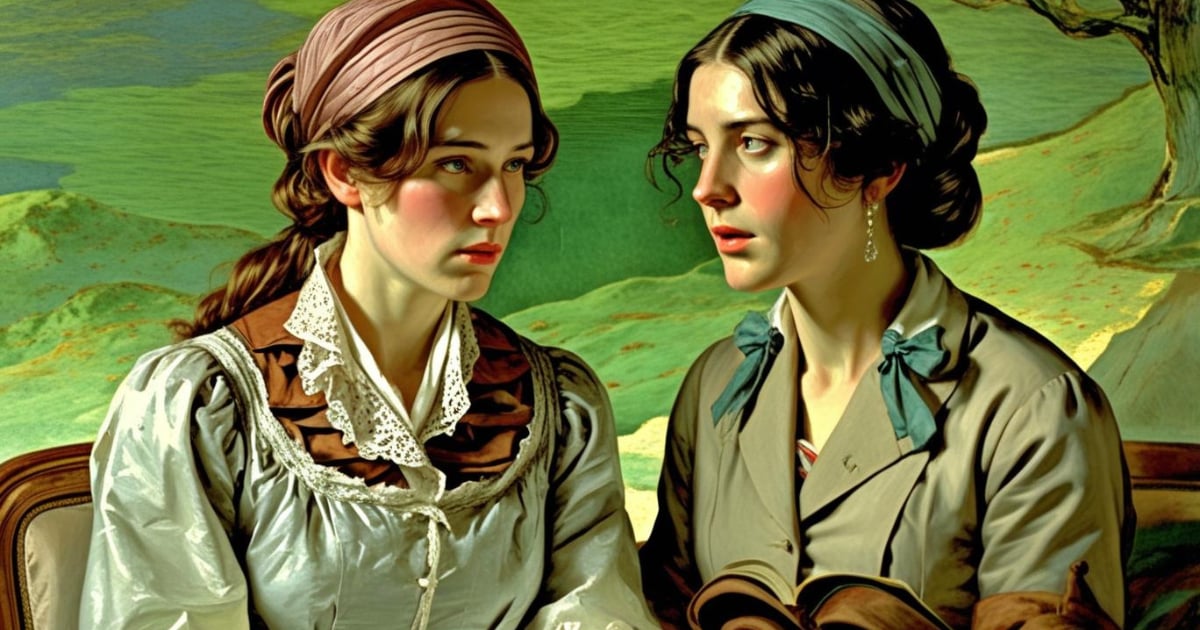
Late August turns Larcher's house sale into a Middlemarch festival: cold meat, cheerful bidding, Trumbull's encyclopedic praise of fenders and riddles, and society in motion under tents. Bulstrode asks Will Ladislaw, still lingering though he had meant to quit Middlemarch, to judge a Supper at Emmaus for Harriet Bulstrode; Will agrees because he cannot leave without seeing Dorothea again, and walks the room defiant under town suspicion of Polish emissary and Casaubon's cast-off cousin.
Trumbull auctions fenders, riddles, and prints with comic grandeur until Will wins the Emmaus for ten guineas and Bulstrode notes his judgment. In the marquee afterward a florid stranger stares at him and asks if his mother was Sarah Dunkirk. Will answers with fierce directness; Raffles backs off, then follows him in the street past the churchyard, boasting of abroad, naming Will's father ill and dissolute, hinting he knew why Sarah ran from a respectable thieving house, and offering drink at the Blue Bull while Will refuses to be drawn into the past.
Will escapes into Lowick Gate feeling dirt cast on him with scorn. He steels himself: even if the Dunkirk story is ugliest, his mother fled it; yet Dorothea's circle would colour their suspicions with fresh grounds and Casaubon's codicil already brands him a fortune-hunter. Trumbull's crowd has seen him bid; the auction's public glare and the stranger's private history converge on the same wound of class and origin.
Eliot's Spanish proverb counsels liking what we can get; Will cannot yet get Dorothea or a clean name in Middlemarch gossip. Raffles has connected Ladislaw to Bulstrode's buried past at Stone Court, and Will's defiant presence at the sale becomes the prelude to Bulstrode's attempted purchase of conscience and Will's refusal of tainted money. Town talk already calls him energumen and emissary; now a stranger at a marquee links his blood to thieving respectability, and he will linger only long enough for one more sight of Dorothea before the bar and London chambers. Keck's Trumpet and Hawley's talk follow him home while Stone Court waits to receive the next act of Bulstrode's long buried history.
Chapter LX is festival and ambush. Trumbull's fender sermon is pure Middlemarch acoustics; Will's defiant posture is pure Ladislaw. Bulstrode's polite request about the Emmaus is plot engine, not art criticism. Raffles arrives like a horse-dealer ghost of trade sins. Will's direct answer to the mother's name is character: he will not shuffle. Dorothy should read the auction as the town's public stage and the marquee as the trapdoor to LXI's confession.
Explore this chapter with AI to uncover deeper meaning and practical takeaways.
AI Discussion