
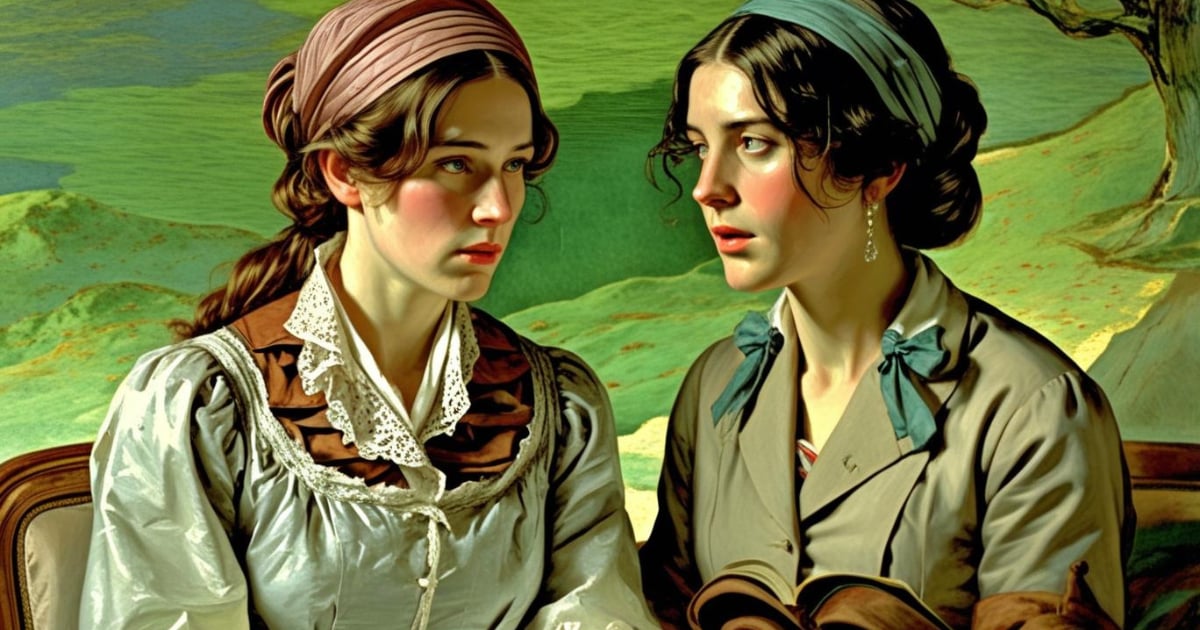
Dorothea has been at Freshitt nearly a week, sitting with Celia among baby's remarkable acts while Sir James has told Celia everything and urged delay before widowhood hardens into rumor. Dorothea cannot stay passive: as owner of Lowick with patronage of the living, she asks Brooke about appointing a successor and examining her husband's papers while still mourning at Freshitt. Brooke names Mr. Tyke as apostolic, says there is nothing in the will about the rectory or researches, and hurries away on political crisis before she can press further.
Celia, sure baby proves life is rightly ordered, tells Dorothea in neutral tones that Casaubon added a codicil stripping her property if she marries Will Ladislaw, not anyone else, then goes to look at the baby. Dorothea's blood rushes, then she turns cold. Everything changes aspect: repulsion from a husband with hidden thoughts, then a sudden yearning toward Will she had never named as lover.
Lydgate finds her marble-cold, says she should do what gives repose of mind, and tells Sir James she wants perfect freedom more than any prescription. The next day Sir James drives her to Lowick. She finds no personal word except the Synoptical Tabulation, sees Casaubon imagined her toiling under a promise to erect his tomb, and feels the grasp slipped yet any act that eludes his purpose revolts her, including justice for Will. Empty desks, unbroken silence around his last demand.
Lydgate then urges Farebrother over Tyke, honest about whist and card-playing, praising a man without venom or doubleness. Dorothea clings to teaching that pardons too much; Lydgate innocently mentions Will walking with Miss Noble like Daphnis in a comedy. After he leaves, Will's image and the codicil dispute the ground in her mind, and the Italian-with-white-mice insult feels like a dark travesty of the gladness she once named in the library rain. She has come home to desks, not dialogue, and the Synoptical Tabulation reads like a command from beyond the grave that would turn her widowhood into perpetual secretarial labor for a man who feared Will more than he feared death itself and leaves her alone with the codicil she has not yet read.
Chapter L pairs Celia's baby-wisdom with Dorothea's earthquake. Eliot is mercilessly funny about Bouddha in a Western form, then ruthless about empty drawers. The codicil makes half a justice to Will impossible because any gift would look like proving Casaubon right. Lydgate's Farebrother speech is amends for his Tyke vote and a landmine: he reintroduces Will as gentle Daphnis while Dorothea's cheeks burn. Dorothy who only hears scandal misses Dorothea choosing a wider Christianity and discovering desire under insult. Middlemarch teaches that the dead hand grips even when the fingers are gone.
Explore this chapter with AI to uncover deeper meaning and practical takeaways.
AI Discussion