
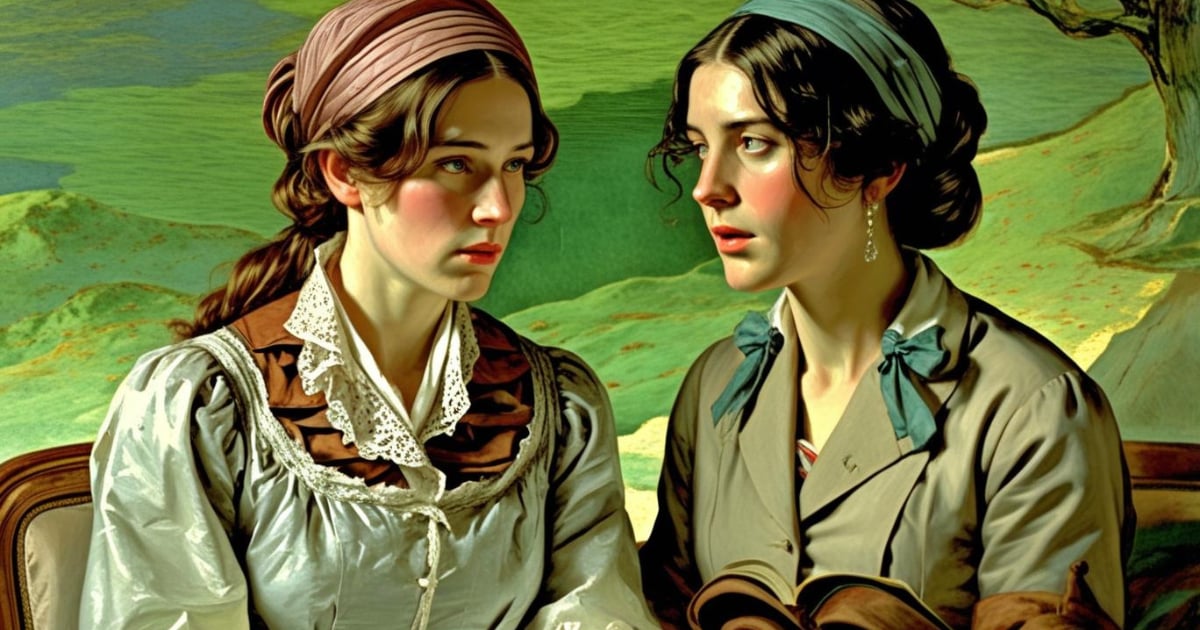
Driving home from Freshitt, Celia tells Dorothea what the household already knows: Sir James's man heard from Mrs. Cadwallader's maid that he means to marry the eldest Miss Brooke. Uncle Brooke expects it. Dorothea weeps, not from love lost but from disgust that anyone thought she encouraged him. She vows to be uncivil and abandon the cottages. Celia calls reform a fad; Dorothea feels scourged and accuses the county of petty souls.
Mr. Brooke meets them in the hall, guesses religion caused the tears, and mentions pamphlets on the early Church waiting in the library, with Casaubon's marginal notes. Dorothea reads as if scent had replaced a dry walk. By the fire he says Casaubon lunched at Lowick, mopes, wants a companion, and has asked permission to offer marriage. Dorothea answers at once: if he offers, she will accept; she admires and honours him more than any man she has seen.
Brooke mentions Chettam, age, health, and the noose of marriage; Dorothea wants a husband above her in judgment who will need her help. He hands her Casaubon's letter and tells her to think, though her mind is already made. Eliot ends with Brooke reflecting that no uncle who dined with dead celebrities can predict a girl who prefers Casaubon to Chettam. Woman remains a problem like an irregular solid.
Chapter IV pivots on contrast: tears in the carriage, then firelight and a letter pocket. Eliot shows how quickly moral humiliation can be replaced by intellectual ecstasy when the right document appears. Brooke is comic and kind, unfit to guard anyone, yet he does hand over truth. Dorothea's clarity about Casaubon is not shallow; it is complete within her value system. The reader's job is to hold both scenes: she was wrong about Sir James, and she may be wrong about Casaubon, without pretending the second mistake cancels the first insight.
Explore this chapter with AI to uncover deeper meaning and practical takeaways.
AI Discussion