
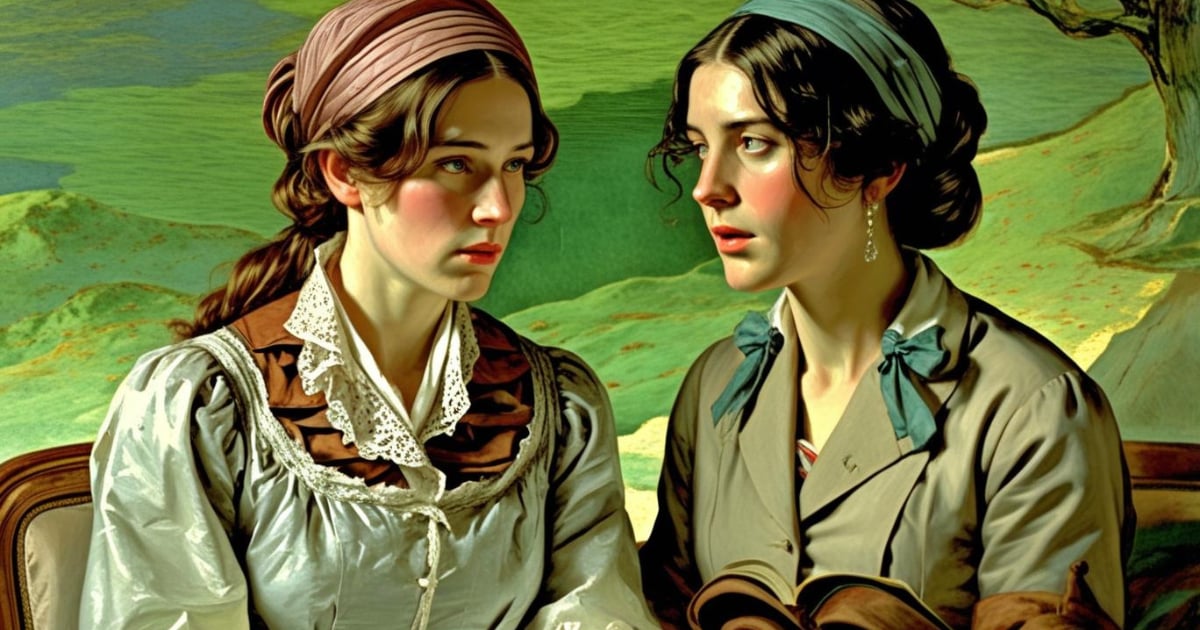
While Celia escapes to the vicarage, Dorothea and Casaubon talk all morning. He explains his great work: every mythical system in the world is a corruption of one originally revealed tradition. His notes already fill formidable volumes; the crowning task is to condense them to fit a little shelf. He speaks nearly as to a fellow-student, and Dorothea is captivated. Here, she thinks, is a living Bossuet and a modern Augustine who unites the glories of doctor and saint.
Casaubon stays longer than he intended. On a walk along the gravelled terrace he tells her, with diplomatic precision, that he feels the disadvantage of loneliness and needs the cheerful companionship youth can bring to serious toils. Dorothea hears and retains every word as if receiving a vocation. Eliot warns that signs are small measurable things but interpretations are illimitable in girls of sweet ardent nature, and every sign conjures wonder vast as a sky.
After he drives to Lowick, she walks through the wood imagining a future like marrying Pascal, studying to help his great works and housing tenants well at Lowick. Sir James Chettam interrupts her reverie with a Maltese puppy she rejects as parasitic, then warms when talk turns to cottage plans and landlords who deserve to be beaten from beautiful houses for letting tenants live in sties.
He takes her drawings to Lovegood, pleased with his progress. Celia sees the illusion: he thinks Dodo cares for him; she cares for plans. Casaubon returns, confirms Dorothea's first impressions, but diverts cottage talk to ancient Egyptian dwellings. She reads on, half blind to Sir James's courtship and half exalting work that may not survive contact with marriage. Dorothy should read Chapter III as projection before proof: ardent interpretation turns a morning visit into a vocation before Celia names what the servants already know about Sir James and the cottages that convinced everyone of a match that does not exist in Dorothea's heart. Eliot's warning stands: small signs, illimitable interpretation, and a girl who has not yet tested marriage against the Key she already worships from a morning's talk at the Grange.
Eliot is tender and ruthless in this chapter. Dorothea's desire to make life effective is real; so is her blindness. Casaubon is not a villain yet, only a dry man who speaks in one register and needs a listener. The comedy is that Sir James and Dorothea discuss pigsties with passion while the neighborhood will soon discuss weddings. The tragedy is that Dorothea already lives in a future where she assists a sage; she has not met the man who will eat soup and blink. When your heart is hungry for scope, the first grand theory can feel like providence. Pause on the person who owns the theory, not only on the theory itself.
Explore this chapter with AI to uncover deeper meaning and practical takeaways.
AI Discussion