
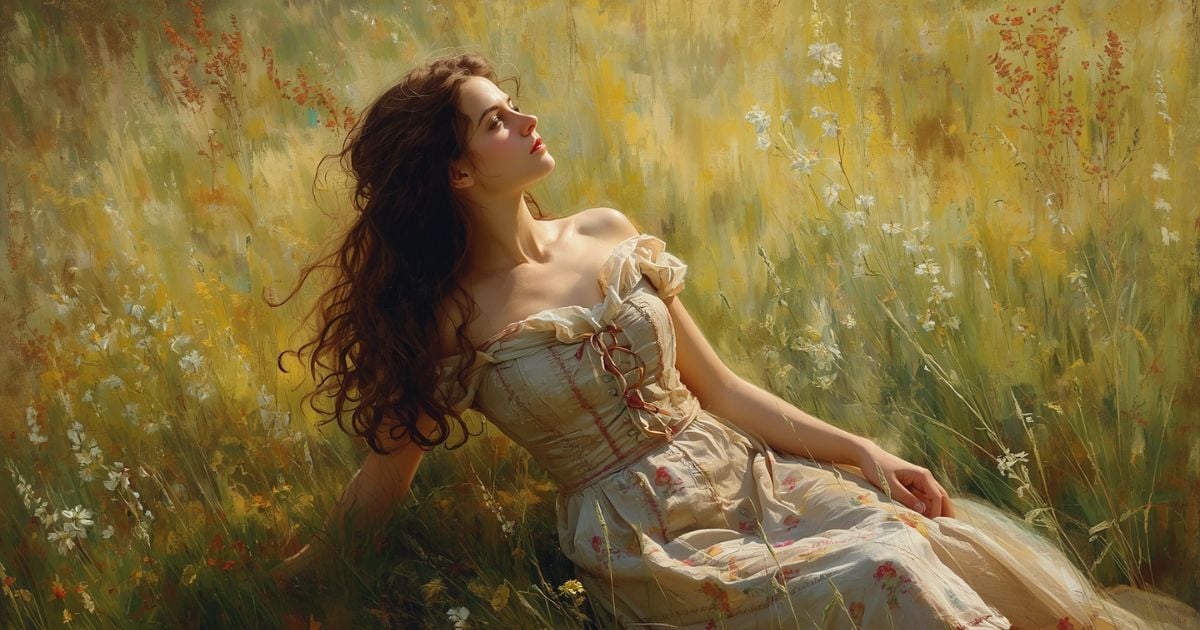
Old Rouault brings Charles money for the broken leg and a turkey. He tells Charles grief wears away slowly, piece by piece, and invites him back to the farm. Charles goes. Living alone gets easier. People pity him, his doctor practice grows, and he starts visiting the Bertaux whenever he wants. He checks his whiskers in the mirror and feels a little hopeful.
One afternoon he finds Emma sewing alone in a dark kitchen with sunlight coming through the shutters. She offers him a drink and they share small glasses of liquor. She shows him her bedroom, her old school prizes, and the garden bed where she puts flowers on her mother's grave. She talks about town, boredom, and her convent years. Her mood changes fast, from lively to tired. Charles goes home and cannot sleep. The same question keeps buzzing in his head: what if he married again?
Old Rouault needs money and sees Charles blush near Emma. When Charles finally tries to speak at the hedge, the farmer says he already knows the answer. He tells Charles to watch a window shutter for Emma's reply. The shutter opens. Yes. They wait through winter while Emma sews her wedding clothes. She wants a midnight wedding with torches. Her father wants a big village feast instead. There is a wedding of forty-three people who stay sixteen hours at the table, begin again the next day, and to some extent on the days after.
Courtship here mixes grief, dowry pressure, and fantasy. Charles is newly widowed; Rouault needs cash; Emma wants a life larger than the farm. None of them chooses from full clarity, which makes the wedding feel inevitable rather than chosen. The shutter signal and sixteen-hour tables close the chapter before Tostes disappointment arrives. Naming those pressures early does not erase them, but it prevents mistaking relief for destiny.
Explore this chapter with AI to uncover deeper meaning and practical takeaways.
AI Discussion