
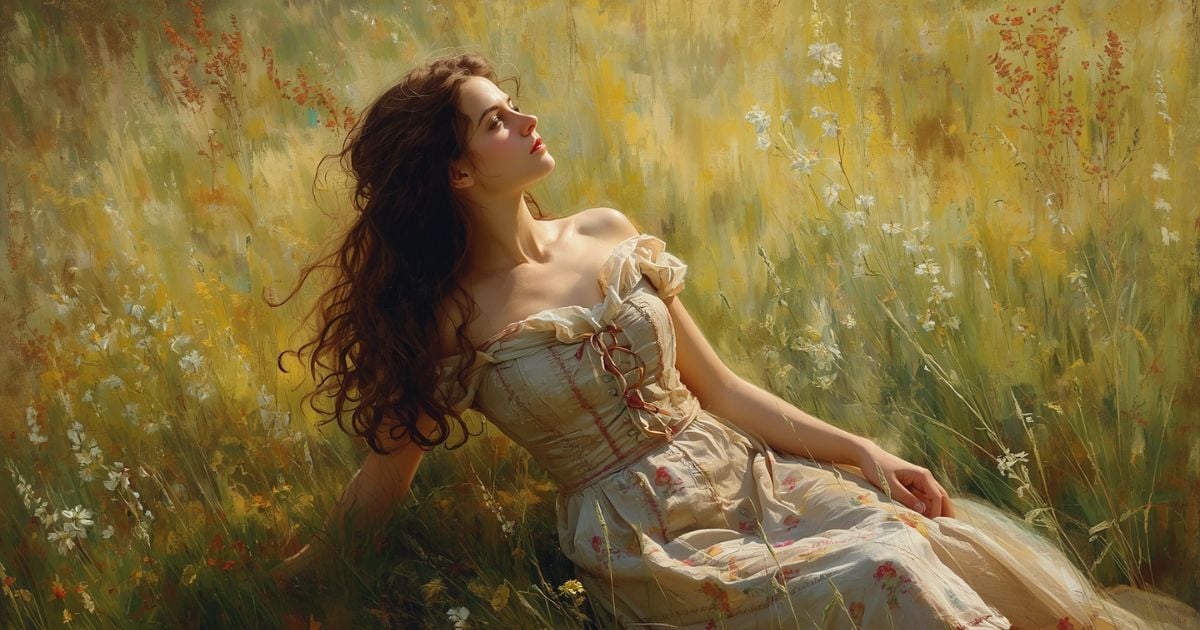
A letter arrives late at night asking Charles to ride to the Bertaux farm and set a broken leg. He leaves before dawn, still half asleep, and rides through cold flat country. The leg is a simple break. The farmer's daughter Emma is not simple. Charles notices her clean nails as she sews bandages. He notices her bold dark eyes. When he looks for his whip, they reach for it at the same time and their bodies brush. She turns red and hands it to him without speaking.
Charles keeps going back. He tells himself the visits are for medicine. He wipes his boots before entering and puts on black gloves. He notices her wooden shoes, her apron strings in the wind, and the silk parasol she opens during a thaw. His wife Heloise figures it out. She learns Emma went to a convent school and knows fancy things. She makes Charles swear on a prayer book never to return. He stops going, but now he tells himself the ban gives him permission to want Emma even more.
In spring Heloise's notary runs off with her money. Her rich life turns out to be mostly lies. A week later she coughs blood while hanging laundry and dies suddenly. Charles comes home, finds her dress still at the foot of the bed, and sits at his desk until dark. He thinks, She had loved him after all. He is sad, not free.
Charles Bovary creates an entire fiction about medical necessity to justify visiting Emma Rouault. He is not consciously lying; he genuinely believes his own story about professional duty. That is how desire gets packaged in respectable reasons until duty and longing feel the same. Héloïse names the pattern before Charles will. When her death clears the path, he still grieves the dress at the alcove instead of celebrating freedom. The question is whether you can name what you are chasing before fantasy chooses for you.
Explore this chapter with AI to uncover deeper meaning and practical takeaways.
AI Discussion