
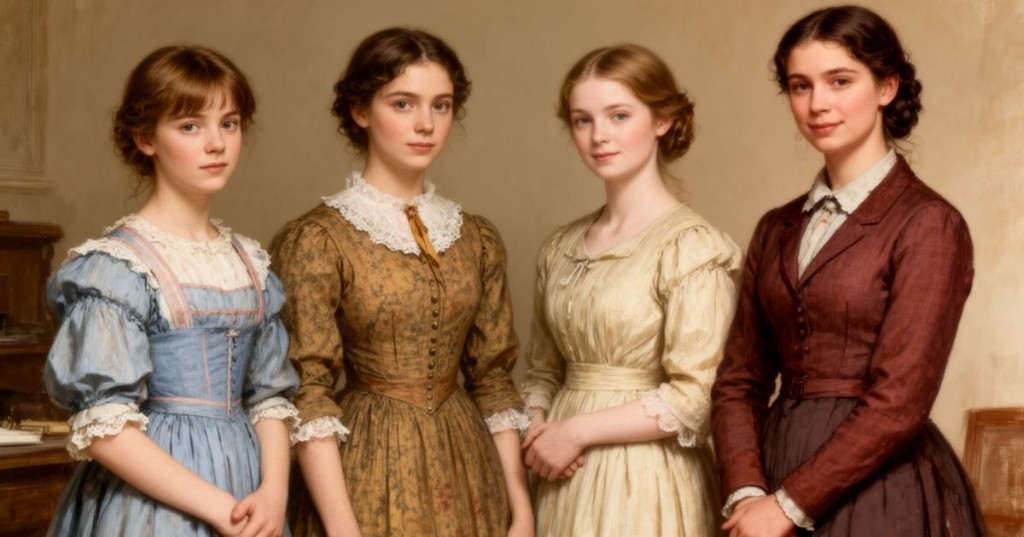
The day after Mr. March comes home, mother and daughters hover like bees around their queen, so full of joy that something still feels unfinished. Meg starts at the bell, blushes at John's name, and Jo shakes her fist at Brooke's umbrella in the hall. Laurie performs melodrama in the snow to tease her, and Jo warns that his old prank has spoiled Meg for easy sisterly talk.
Meg rehearses a calm refusal speech for Mr. Brooke, but when he arrives for his umbrella she forgets every word, admits she does not know her own mind, and lets feeling show. Aunt March hobbles in, forbids the match, and threatens to disinherit Meg if she marries a poor tutor. The lecture backfires: Meg declares she will marry whom she pleases, defends John's character, and discovers how much she cares only when the old lady insults him.
Jo expects to find Brooke banished and Meg triumphant; instead she walks in on Meg enthroned on his knee while he asks for congratulations. Marmee and Mr. March hear Brooke plead his plans with unexpected spirit, and the first family romance settles into engagement. Jo loves Meg too dearly to enjoy the change at once, yet even she must admit that sorrow and joy have crowded the same year, and Aunt March's money will not govern this choice.
Jo tries to give Meg space for her stiff little speech and opens the door with a grim face, but Meg loses her script the moment Brooke asks if she cares for him a little. A flash of coquetry from Annie Moffat's lessons makes her send him away petulantly, then Aunt March storms in, calls Brooke a penniless Cook, and vows to disinherit Meg if she accepts him. Meg answers with unaccustomed spirit, insisting John is good, talented, and loved by everyone whose opinion matters. Brooke, who has overheard, may stay; Meg whispers yes on his knee while Jo, expecting victory, runs upstairs in comic despair. Tea that evening feels like the first romance of the family beginning in the old room, even though Jo still hates waiting for the wedding day.
Aunt March represents a timeless figure: the authority who believes their status gives them the right to control others' life choices. In 1868, wealthy relatives wielded inheritance as a weapon. Today, it might be supervisors threatening job security, parents using financial support as leverage, or institutions using their power to pressure compliance. The psychology remains identical - when authority figures overreach, they often achieve the opposite of their intention. Aunt March's classist dismissal of John as 'this Cook' and her threats about inheritance don't persuade Meg; they clarify exactly what Meg values. Modern parallels abound: the boss who forbids office relationships often strengthens them, the parent who threatens to cut off college funding over a partner choice may push their child toward that very person, the institution that heavy-handedly enforces rules often creates underground resistance. The key insight is recognizing when opposition is about the opposer's need for control rather than genuine concern for your welfare. Aunt March isn't protecting Meg from a bad choice - she's protecting her own vision of how the family should operate. When authority figures reveal their true motivations through heavy-handed tactics, they lose their persuasive power and often strengthen what they're trying to destroy.
Explore this chapter with AI to uncover deeper meaning and practical takeaways.
AI Discussion