
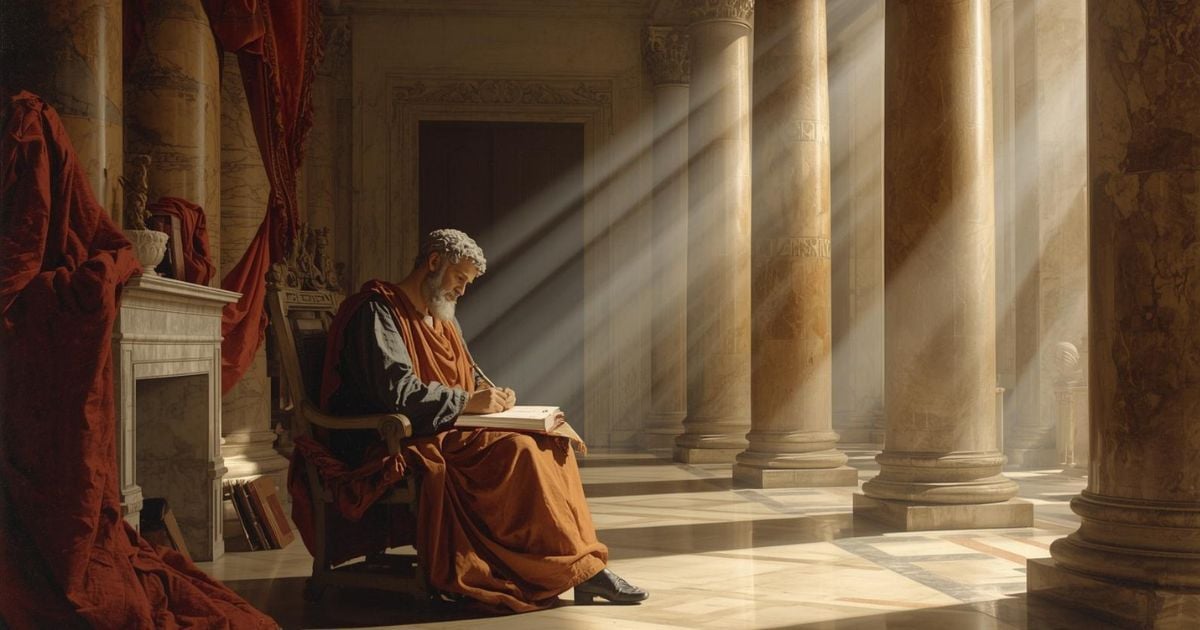
Lucilius is calling himself a nobody again. Seneca will not let it stand. Letter 44 dismantles the idea that birth, rank, or fortune determines a man's worth or limits his potential. Philosophy, he says, never looks into pedigrees. Its light shines for all. Socrates was no aristocrat.
Cleanthes worked a well and watered gardens for hire. Philosophy didn't find Plato already a nobleman, it made him one. Trace any lineage far enough and you'll find kings and slaves intermingled. The flight of time has jumbled everything. Fortune has turned it all upside down.
The question of who is well-born has one real answer: he who is by nature well fitted for virtue. The soul alone renders us noble, and it may rise superior to Fortune out of any condition whatsoever. The letter closes with a harder observation. Most people seek happiness while actually fleeing from it. They mistake the instruments of happiness for happiness itself and spend their lives gathering things that produce worry.
The faster you hurry through a maze, the worse you are entangled. The secret of the happy life is unshaken confidence and freedom from care, and no amount of acquisition gets you there.
Seneca wrote this letter in a society built on rigid class distinctions, where your family determined everything from your career to your legal rights. Yet he insisted that philosophy—the love of wisdom—was available to everyone regardless of birth. This wasn't just idealism; it was practical rebellion against a system that wasted human potential. Today we face a similar challenge. While we don't have official aristocracy, we have informal hierarchies that can be just as limiting. The kid from the 'wrong' neighbourhood gets written off. The worker without a degree gets ignored in meetings. The person with the 'wrong' accent gets judged before they speak. But here's what Seneca understood: competence is democratic. Wisdom doesn't check your credit score. Good judgment doesn't require a pedigree. The ability to solve problems, show up consistently, and treat people fairly—these qualities can emerge anywhere. The tragedy isn't that some people get advantages they didn't earn. The tragedy is when people with real potential convince themselves they don't belong in the conversation. Every workplace has untapped talent that gets overlooked because we mistake packaging for content. The question becomes: will you be someone who judges the cover, or someone who reads the book?
Explore this chapter with AI to uncover deeper meaning and practical takeaways.
AI Discussion