
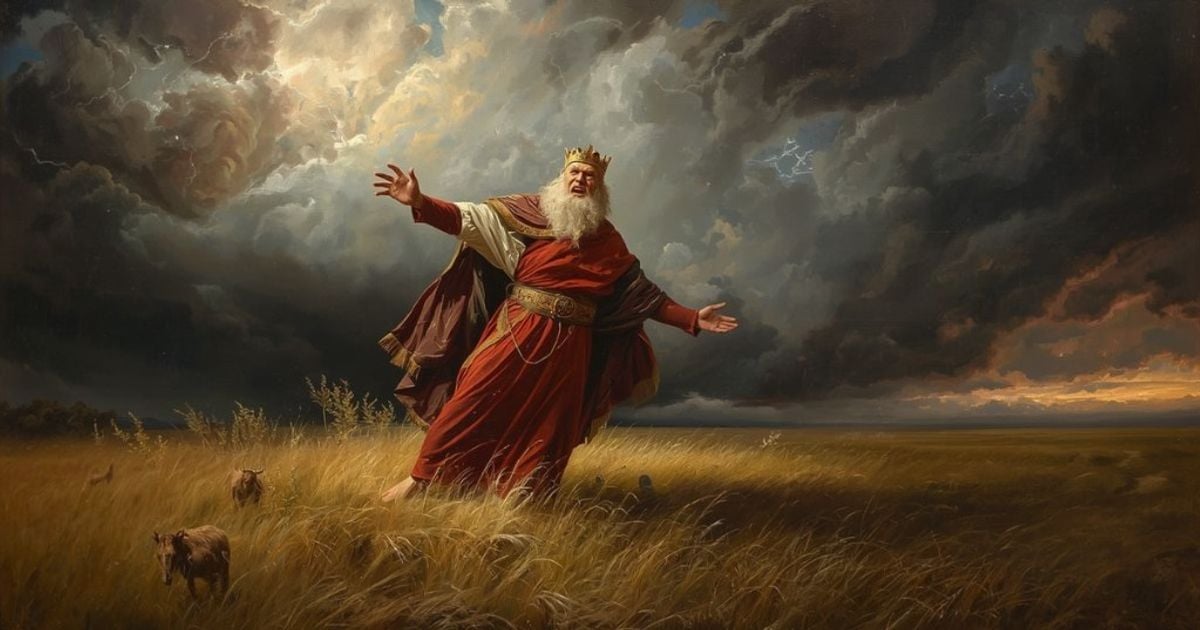
A short scene, but it opens Act III on the heath and establishes two things at once: where Lear is, and what is quietly moving beneath the surface of the kingdom.
Kent finds a gentleman in the storm and asks where the King is. The gentleman's answer is one of the play's most vivid descriptions. Lear is out in it: "contending with the fretful elements; bids the wind blow the earth into the sea, or swell the curled waters above the main, that things might change or cease." He is tearing at his white hair while the wind makes nothing of it. On a night when bears stay in their dens and wolves keep their fur dry, Lear runs unbonneted and "bids what will take all." The only one with him is the Fool, who "labours to out-jest his heart-struck injuries."
It is a scene of devastation rendered precisely: an old man who has lost everything trying to match the weather, because the weather at least cannot betray him.
Kent then turns the conversation. He tells the gentleman something larger is in motion. Albany and Cornwall are at concealed odds with each other. French forces, aware of England's disorder, have already landed secretly at English ports and are ready to show their banner. What has been done to Lear, the cruelty of both daughters, the hard rein both dukes have applied, is known in France.
He gives the gentleman a purse and a ring, and asks him to ride to Dover. If he finds Cordelia there, the ring will identify Kent. He wants word of the King's suffering delivered to her: "how unnatural and bemadding sorrow the King hath cause to plain."
They split up to search for Lear in the dark, agreeing that whoever finds him first will call out to the other.
The scene is spare and purposeful. While Lear rails at the storm and his daughters sit warmly indoors, something is shifting; slowly, quietly, from the outside in.
Shakespeare wrote King Lear during a time when the English monarchy was transitioning from Elizabeth I to James I, creating uncertainty about power and loyalty. The play explores what happens when traditional structures collapse and people must choose sides based on deeper values rather than immediate advantage. This theme resonates powerfully in modern America, where economic instability, workplace upheaval, and family stress regularly strip away social pretense. When a plant closes, a family business fails, or a medical crisis hits, we quickly discover who our real allies are. The people who show up aren't always the ones we expected. Sometimes it's the coworker who barely spoke to us but remembers a kindness we forgot we showed. Sometimes it's the neighbor who seemed distant but understands struggle from their own experience. The pattern Shakespeare identified holds true: genuine loyalty is built through consistent small actions over time, not grand gestures or promises. It emerges from shared values and mutual respect, not convenience or obligation. Crisis doesn't create character, it reveals what was already there. Understanding this pattern helps us invest our energy in building the right kinds of relationships before we need them. It also helps us recognize when we're surrounded by people who will abandon us the moment supporting us becomes inconvenient.
Explore this chapter with AI to uncover deeper meaning and practical takeaways.
AI Discussion