
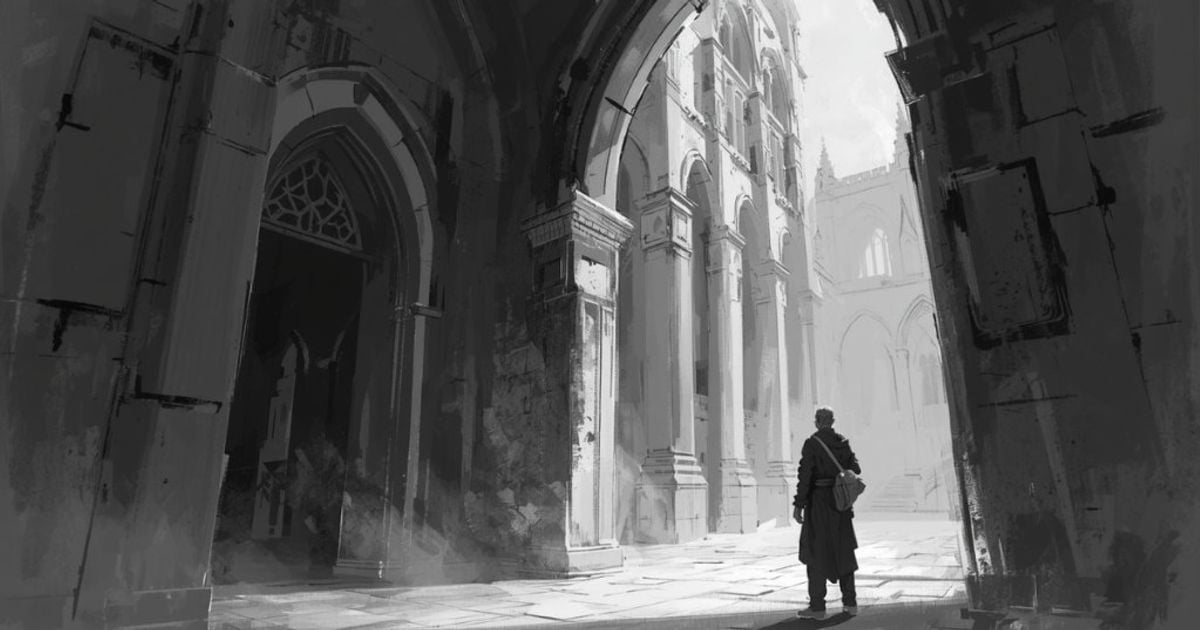
The day after the remarriage, a woman in shabby black stands in the rain at Jude's door. Father has turned her out. Two undergraduates winked at her. If he cannot take her in she must go to the workhouse or worse. He offers money. She wants the closet where he keeps tools. That would be a palace for me. He makes himself answerable to the landlord. A bed is thrown down in the lumber-room. She has a letter from Anny: the wedding was to be yesterday. He will not talk of it. On Sunday she asks to breakfast because her teapot is broken. His suspense wins. He pays her fare to Alfredston.
She comes back smiling. They are married. Sue burnt her best embroidery to blot him out. Arabella says she feels the same belonging. He leaves her and turns into a public house for the first time in months. She tells her father she will get married and settled again, then finds Jude in the private bar of the old tavern. She orders cherry brandy and keeps a little behind him. He says Sue has served him badly. To save her own soul she lets his go damn. Arabella puts her arm round his waist at closing time.
They go to her father's. This is the Martyrs' burning-place, he stammers, and he is giving his body to be burned. It wants Sue to understand such things. Hang her, Arabella hiccups, then says she feels she belongs to him in Heaven's eye. The door is unfastened in the dark. The entry is not unlike Cresscombe long ago. She pulls off his boots. First stair, second stair. He asks if they are in the old house by Marygreen, and where his books are.
Hardy understood something modern psychology confirms: manipulative people don't randomly appear in our lives—they have radar for vulnerability. Arabella doesn't show up when Jude is strong and stable; she materializes the day after his world collapses. This isn't coincidence. It's strategy. Predators study their targets, waiting for the moment when normal defenses are down. In 1895, this might have been news travelling through small town gossip networks. Today, it's social media posts about breakups, job losses, or family crises that signal opportunity. The mechanism remains identical: offer immediate relief for the crisis while positioning yourself to exploit the weakened state. What makes this particularly insidious is how it hijacks our better instincts. Jude's compassion—normally a strength—becomes the weapon used against him. His desperate need to understand Sarah's betrayal makes him pay for information that only deepens his wound. The alcohol doesn't cause his downfall; it's the final tool in a systematic dismantling that began with manufactured urgency and false helpfulness. Modern examples abound: the ex who resurfaces after your breakup, the 'helpful' coworker who volunteers for your project after you're overwhelmed, the loan officer who calls the day your medical bills arrive. The pattern transcends era because human vulnerability remains constant, and some people are professionally skilled at exploiting it.
Explore this chapter with AI to uncover deeper meaning and practical takeaways.
AI Discussion