
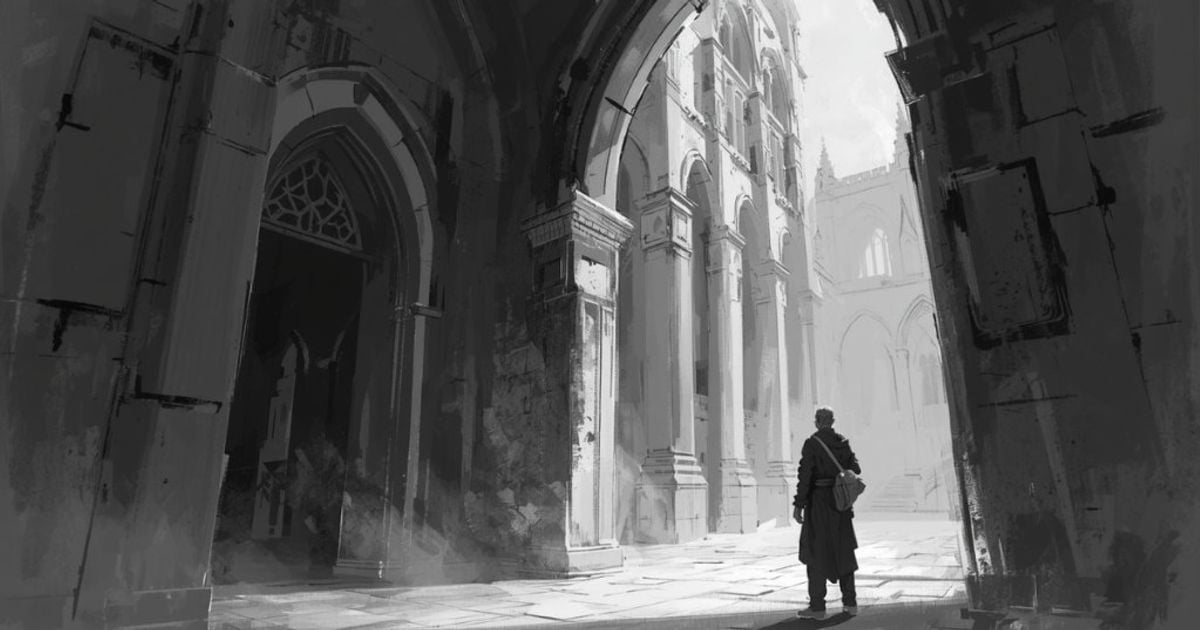
The next afternoon the Christminster fog still hangs. Sue's slim shape goes toward the station. Jude cannot work and cannot walk the way she will pass. She has asked Phillotson not to meet her. She wants to come to his hearthstone of her own will. A hired car sets her down half a mile from Marygreen. She lifts the latch without knocking. I've come, Richard. She cannot believe he forgives his wife. My children are dead, and it is right that they should be. They were sacrificed to teach her how to live. He kisses her cheek. She shrinks. He feels the old aversion. She asks how soon they can have the marriage. Tomorrow morning, if she is sure. She wants it done quick.
On the bureau flap she sees the licence and gives a little cry, like a condemned person seeing a coffin. Mrs. Edlin lays out an embroidered night-gown. Sue tears it and feeds the fire. It is adulterous. It was bought to please Jude. Mrs. Edlin says she ought not to marry this man again. She is in love with the other still. Yes I must. I am his already. On the green Gillingham tells Phillotson the pear has dropped into his hand. Stick to her. A little judicious severity. Mrs. Edlin crosses to say Sue is forcing herself. Phillotson stiffens. It is her wish. A great piece of laxity will be rectified.
In the morning fog she looks like the lily her name means, smaller than in health. Widow Edlin will not come. At the church Sue whispers, You do wish me to be yours? When the vicar reaches What God hath joined, a woman's voice answers, God hath jined indeed. The vicar congratulates them on a noble and mutually forgiving act. All's well that ends well. Back at the schoolhouse she pretends at housewifery and is timid at his approach. He says he will not intrude on her personal privacy any more than before. It is for their good socially. Sue brightens a little.
Hardy exposes a dangerous psychological trap that transcends his Victorian era: the belief that suffering equals virtue. Sue's extreme religious guilt convinces her that marrying a man who repulses her will somehow purify her soul and resurrect her dead children. This twisted logic—that the most painful choice must be the right choice—reflects a deeper human tendency to turn self-punishment into a false religion. We see this pattern everywhere today: the parent who becomes hypercontrolling after their child is hurt, destroying family peace in the name of protection; the worker who accepts abuse because they feel they 'deserve' punishment for past mistakes; the person who stays in toxic relationships believing their suffering is penance. Hardy understood that trauma doesn't just wound us—it rewires our moral compass, making destruction feel like devotion. The most insidious part is how righteous it feels. Sue genuinely believes she's being virtuous by forcing herself into emotional suicide. This chapter serves as a warning system: when tragedy strikes, your brain will offer self-punishment as a solution. True healing requires rejecting this false equation between pain and virtue. The question becomes: are you honouring what you've lost by building something better, or are you just feeding your guilt with endless suffering?
Explore this chapter with AI to uncover deeper meaning and practical takeaways.
AI Discussion