
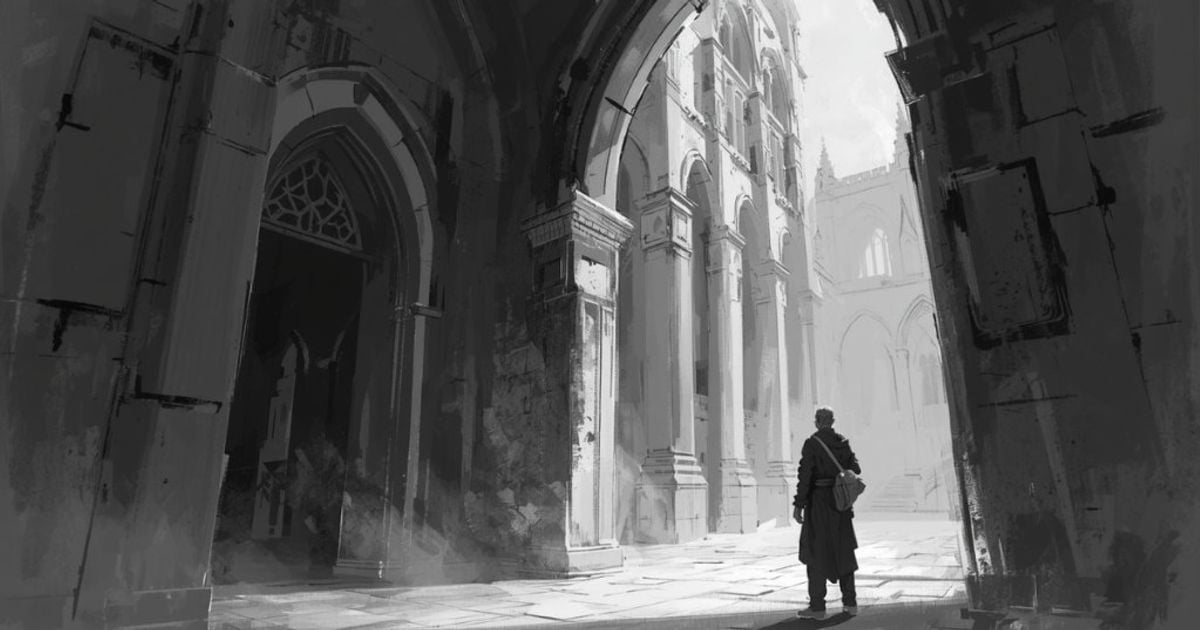
Jude returns to Melchester, a dozen and a half miles from Sue, telling himself nearness is a chance to worst the Enemy as the early Church did. He studies for the priesthood in a fever, knowing too many passions to make a good clergyman. He joins a village choir as a bass. One Easter practice they learn a Wessex hymn, The Foot of the Cross. The harmonies move him. He decides the composer must have suffered and would understand him.
He can ill afford the Sunday of crooked railways to Kennetbridge. He stalks a man in a slouched hat: a hungry soul in pursuit of a full soul. The musician is frank until the talk turns to money. The hymn has not made a five-pound note. Music is a poor staff; he is going into the wine business and hands Jude a red-lined list of clarets. When he sees Jude is poor, the manner cools. Jude cannot open his confidences and takes an embarrassed leave.
The slow train home is fireless. At his lodging a letter has arrived minutes after he left. Sue is contrite: she was horrid to forbid him, he must come by the eleven-forty-five that very Sunday and dine at half-past one. He almost tears his hair. He writes that he will not wait a week. She delays until Thursday before Good Friday, the earliest she can welcome an assistant-teacher's visitor. He gets leave from the cathedral works, pay stopped, and goes.
Hardy understood something psychology confirms today: emotional hunger makes us terrible judges of where real connection exists. Jude creates an elaborate fantasy about a hymn composer understanding his soul, while Sue—who actually gets him—sends a sweet invitation he completely misses. This pattern repeats endlessly in modern life. We pour our hearts out to bartenders, hairdressers, or social media strangers while the people who love us wonder why we've gone quiet. The cashier at the grocery store hears about our marriage problems while our spouse gets silence. We bond with random parents at school pickup about parenting struggles but snap at our own kids trying to share their day. This happens because strangers feel safer—they can't reject us completely since they don't know us completely. They become blank canvases for our hopes rather than complex humans with their own needs and judgments. But these fantasy connections never nourish us the way real relationships can. Hardy shows us the cost: while Jude chases his projection of the perfect mentor, he misses Sue's actual attempt to connect. The pattern reveals itself once you see it: the further someone is from our daily life, the more meaning we project onto them. The closer someone is, the more we take their attempts at connection for granted.
Explore this chapter with AI to uncover deeper meaning and practical takeaways.
AI Discussion