
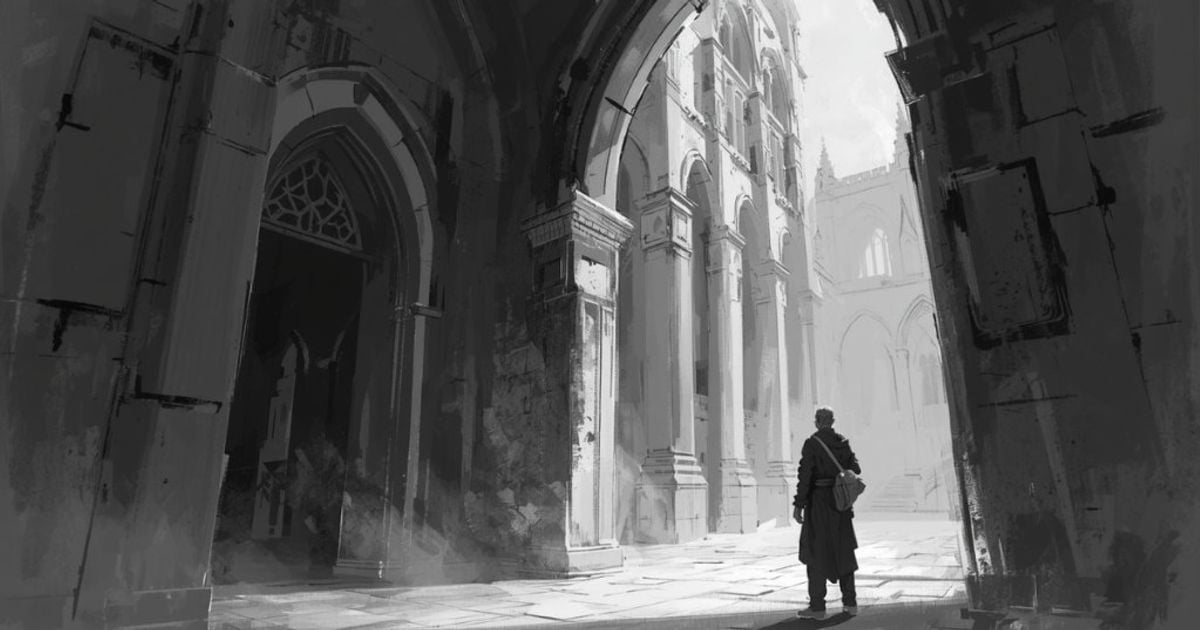
After the wedding Jude cannot stay in the silent lodging. He changes into work clothes so he will not drink, then hears a voice in the cathedral and runs home at the last stroke. Nobody has been for him. He opens the front door and sits like a midsummer watcher. She does not come. Melchester lamps turn to drab paint. News that Aunt Drusilla is dying arrives with a builder's offer of permanent work. He writes Sue to meet him at Alfredston Road on the Monday he returns from Christminster.
The city looks more beautiful and more empty. Sue's old chair in the scroll shop stands vacant. The stone-yard is a place of vanished dreams. In a half-hour of worthlessness he meets Tinker Taylor and they go into the renovated tavern where he once said the Creed for whisky. Taylor leaves. In the bevelled glass Jude sees the barmaid tidy her hair. The face is Arabella's. She is in black with daffodils, joking with a clean-shaven Mr. Cockman, and tells him she left a husband in Australia. When the compartment empties Jude steps forward. I thought you were underground years ago, she says, and offers a Scotch on the house.
She has been back from Sydney three months and took the job thinking him dead. She passes as having a living husband for reasons she will not name. He agrees to return at nine. The law still makes them one person. Meeting her means missing Sue at Alfredston. After the Great Bell he drinks a night-cap she pours, then she takes his arm in a hat with a black feather and names the nine-forty to Aldbrickham, where nobody will know them for one night. As you like, he says. They reach a third-rate inn in time for a late supper.
Hardy understood something that modern psychology confirms: predators have radar for vulnerability. Arabella doesn't randomly encounter Jude—she appears when he's emotionally shattered and legally powerless to refuse her claims. This isn't coincidence; it's pattern recognition on her part. She knows desperate people make poor decisions. Today, this same dynamic operates everywhere. The coworker who becomes 'helpful' right after your divorce. The family member who reappears when you get an inheritance. The ex who texts during your current relationship crisis. The payday loan offers that flood your mailbox after a job loss. These aren't random events—they're calculated moves by people who understand that crisis creates opportunity. The vulnerable person thinks they're getting help or second chances. The opportunist knows they're getting leverage. Hardy shows us that legal obligations and emotional readiness operate on completely different timelines. Just because you're married doesn't mean you're ready to reconcile. Just because someone offers help doesn't mean they're helping. The key insight is learning to recognise your own vulnerability windows—those periods when major stress, loss, or transition temporarily impairs your judgment. During these times, any significant decision should come with a waiting period, a trusted advisor, and the question: 'Would I agree to this if I felt strong?' Understanding this pattern isn't about becoming cynical—it's about protecting yourself when you're least able to see clearly.
Explore this chapter with AI to uncover deeper meaning and practical takeaways.
AI Discussion