
A letter arrives signed Susanna Florence Mary Bridehead, the full name unused since her first note. She and Phillotson will marry in three or four weeks. He has said there is no object in waiting now she is not at the training school. Wish me joy, she writes, and he must not refuse. Jude can eat no breakfast. Everything seems turning to satire. O Susanna Florence Mary, he says at his bench: you don't know what marriage means. He wonders whether his own confession pricked her into proving the school wrong. He determines to play the Spartan.
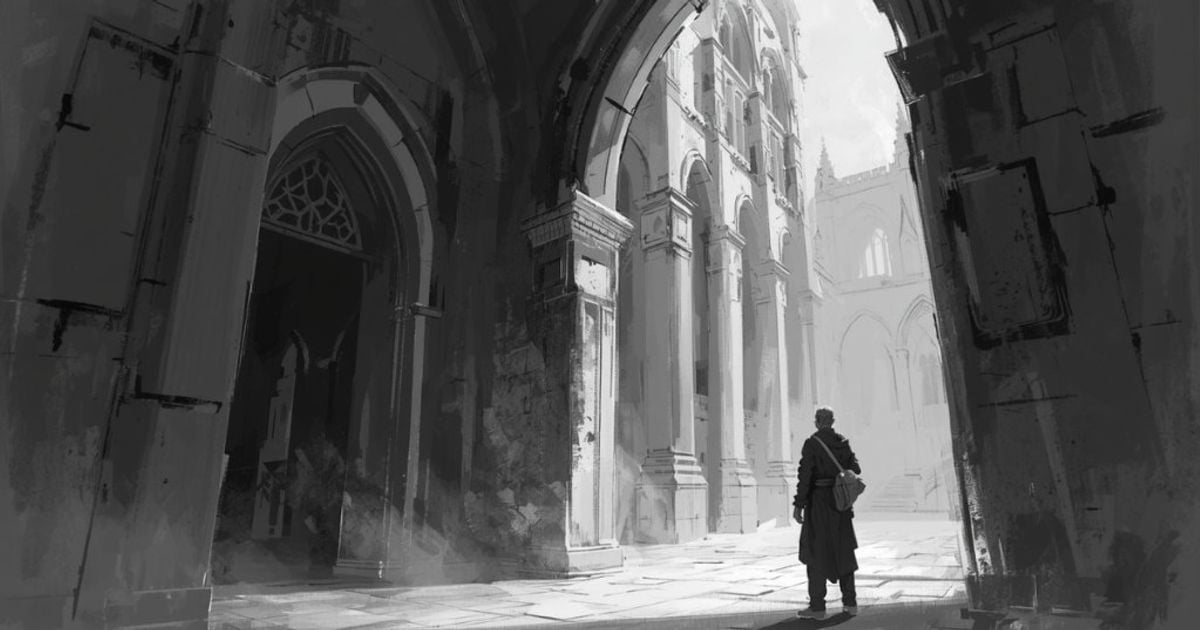
A second note asks the question: Jude, will you give me away? He is her only married relation on the spot. The prayer-book, she adds, hands her over like a she-goat. He agrees, offers his lodging as the house she should marry from, and moves to larger rooms. She lives on another floor. Their occasional supper is mechanical. On the wedding morning they breakfast together, and she takes his arm through the mud to St. Thomas. They walk the nave to the altar rail like a couple just married, two hours early, because she likes to do things like this.
Phillotson's train is early. She tells him they have been rehearsing. Jude buys two or three yards of white tulle and throws it over her bonnet as a veil. At the real service he wishes he had not undertaken the business. She can hardly command herself when he gives her to Phillotson. After the meal she looks back from the pavement with a frightened light in her eyes. On the carriage-step she claims a forgotten handkerchief. Jude follows. Her lips part as if she will avow something. She goes on. The sentence stays unspoken.
Hardy shows us something brutal about human psychology: when we're about to make a decision we know is wrong, we often drag the people who love us into it. Sue forces Jude to give her away not because she needs him there, but because she needs him to share the weight of her mistake. This isn't conscious cruelty—it's psychological self-protection. By making Jude complicit, she can tell herself the decision was somehow mutual, or that if he really loved her, he would have stopped her. This pattern plays out constantly in modern relationships. The friend who insists you help them stay in a toxic relationship, then blames you when it implodes. The family member who demands you support their destructive choices, then resents you for not intervening. The coworker who asks you to cover for their mistakes, then gets angry when consequences arrive. In each case, someone facing a choice they know is wrong recruits others to share the burden. Healthcare workers see this daily—patients who force family members to make medical decisions they're afraid to make themselves. The mechanism is always the same: spread the responsibility, dilute the guilt, create shared culpability. Recognising this pattern is crucial for protecting yourself and others. Sometimes the most loving thing you can do is refuse to participate in someone's self-destruction. When someone asks you to help them do something that feels wrong, you're not just being asked to help—you're being recruited as an accomplice. The question becomes: what do we owe the people we love when they're determined to hurt themselves?
Explore this chapter with AI to uncover deeper meaning and practical takeaways.
AI Discussion