
Sue names a grand day and will not have ruins. Jude offers Wardour Castle for its Corinthian rooms and pictures, and every detail of the outing throws off a sparkle he refuses to examine. The guard takes them for lovers and gives them a compartment to themselves. That's a good intention wasted, she says. He thinks the remark unnecessarily cruel.
They walk the high country toward another line, and he cuts her a crook that makes her look like a shepherdess. She tires; a shepherd and his toothless mother take them in with boiled bacon and greens, and separate beds once Jude says they are not a married couple. Sue rather likes it: outside all laws except gravitation and germination. He answers that she only thinks she likes it; she is quite a product of civilisation. She names the Ishmaelite inside her. He calls her an urban miss. She looks severe and turns away.
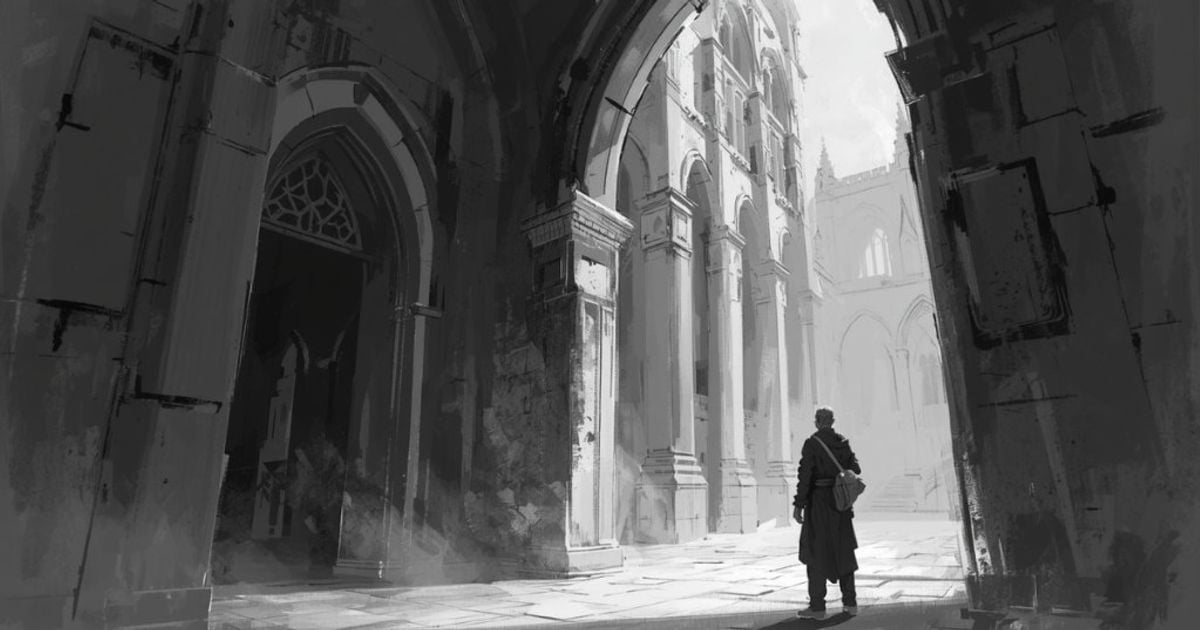
In the morning the Close looks like a nunnery she must re-enter. I expect I shall catch it, she murmurs, then remembers a new photograph of herself and gives it to him at the gate. The porter's glance is already ominous. She passes in, looking back, and waves.
Sue Bridehead represents one of literature's most perceptive character studies: the person who needs to see themselves as unconventional while remaining fundamentally conventional. She declares herself an 'Ishmaelite' living outside society's laws, yet her every action reveals deep conformity to social expectations. This False Freedom Pattern dominates modern life in ways Hardy could barely imagine. Today's version posts radical content online while avoiding difficult conversations with family. They buy from ethical brands while working for unethical companies. They complain about 'the system' while never risking anything to change it. The mechanism operates through self-deception and audience capture—we perform rebellion for others (and ourselves) rather than living authentically. Real freedom isn't about dramatic declarations or aesthetic choices. It's about making decisions that align with your values when nobody's watching, even when those choices cost you something. The healthcare worker who actually advocates for patients despite potential career consequences. The construction worker who refuses unsafe conditions despite needing the job. The parent who has honest conversations with their kids despite family pressure. Hardy shows us that performed rebellion is just another form of conformity—conforming to the image of being unconventional. The question becomes: where in your life are you performing freedom instead of practising it?
Explore this chapter with AI to uncover deeper meaning and practical takeaways.
AI Discussion