
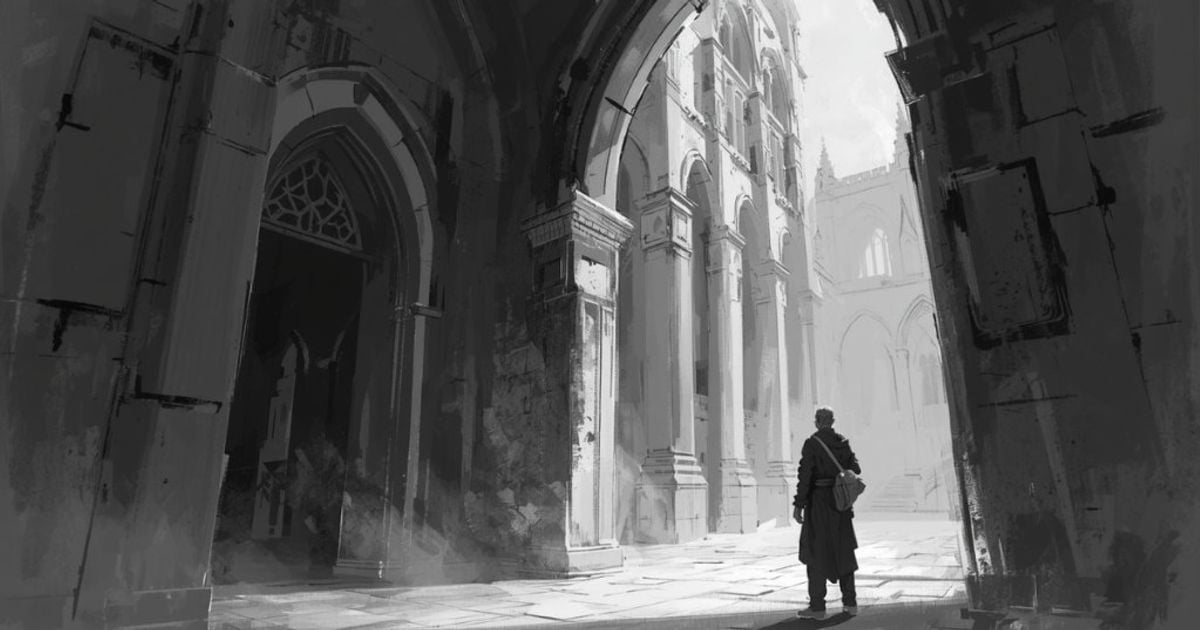
A new thought arrives while Jude is still shabby at Marygreen: a man can preach and do good without double-firsts. The bishopric, he now sees, was mundane ambition masquerading in a surplice. A village curacy might be the purgatorial course a remorseful man can earn. He does nothing to advance it for a stagnant stretch of headstones, a returned purchase to the farmers who still nod.
Sue's letter creates the human interest the new intention needed. She has a Queen's Scholarship and is entering the training college at Melchester, where there is also a theological college. He tells himself the ecclesiastical city suits humble study, and concedes that his excessive interest is of her making. Christmas passes. A second letter, passionate and lonely, begs him to come at once. Phillotson advised the school; she wishes she had never listened. Jude packs with a lighter heart.
In the Close she is clipped and pruned by discipline, yet an under-brightness still shows. She is hungry on college rations; he feeds her, and she examines his mason's fingers as if buying a glove. When he names the umbrella, she admits she has promised to marry Phillotson in two years and take a double school. He says it is right. His eyes do not. Next day he edges into cathedral repairs, takes lodgings that would not disgrace a curate, unpacks photographs of his own carvings, and hires a harmonium for chant practice.
Hardy understood something that modern psychology confirms: we're incredibly good at creating noble narratives for decisions driven by less admirable motives. Jude's pivot from bishop to curate sounds like spiritual maturity, but it's really romantic pursuit with a religious cover story. This pattern shows up everywhere in working-class life. The factory worker who becomes a union organiser after being passed over for supervisor, claiming it's about justice when it's really about staying relevant. The nurse who switches to home health after hospital politics crush her advancement, saying she prefers one-on-one care when she's really avoiding workplace conflict. The mechanic who opens his own shop after being fired, framing it as entrepreneurial spirit when it's really fear of being fired again. None of these pivots are necessarily wrong—sometimes the redirected path is actually better. But the self-deception is dangerous because it prevents honest self-assessment. When you can't see your real motivations, you can't make genuinely good choices. You end up like Jude, following someone else's life while telling yourself you're following your calling. The key is developing what Hardy shows us: the courage to look at our own motivations without flinching, even when what we find there isn't particularly flattering.
Explore this chapter with AI to uncover deeper meaning and practical takeaways.
AI Discussion