
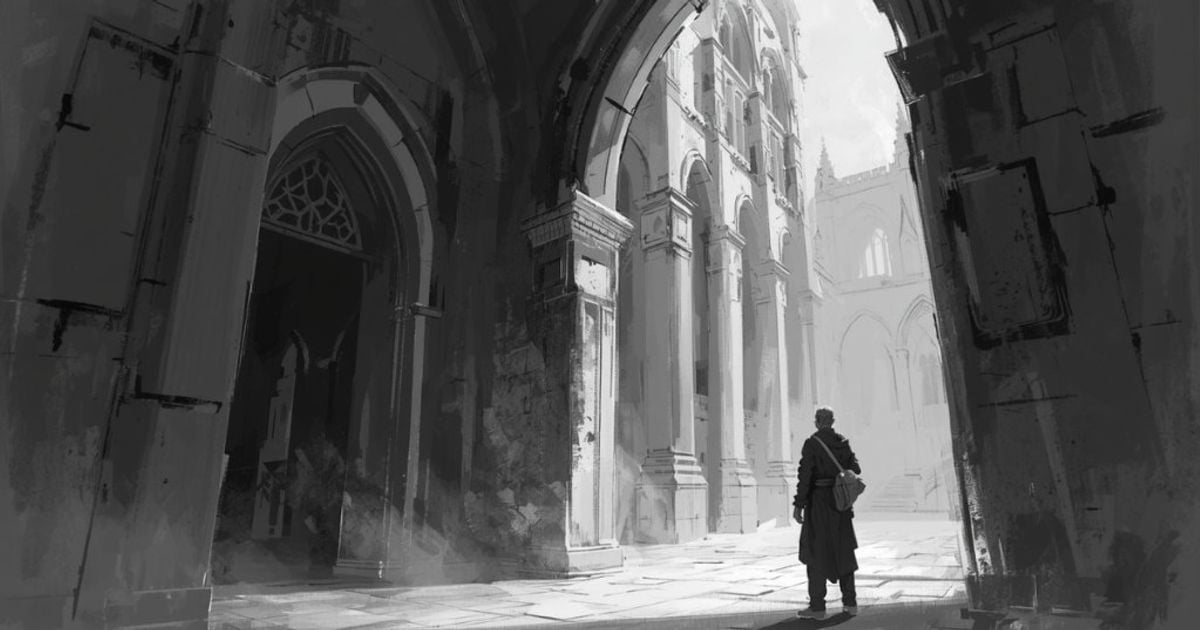
Jude is lettering a monument inside a church when he sees Sue in the thin congregation with Miss Fontover. He dares not confront her in the holy spot and goes back up the ladder. Lonely evenings feed the obsession. He tries to pray against it in an empty village church and cannot ask to be delivered when he wants to be tempted. He tells himself it is not erotolepsy this time, but a wish for intellectual sympathy.
Sue comes to the yard asking for him, misses him, and leaves a note: she has only just learned he is in the city, reproaches him for hiding, and says she will soon go away. He names a meeting at the Martyrdoms cross. She will not meet him on that mark and calls him further on. They walk to Lumsdon and find Phillotson still a village schoolmaster, thinner, who does not remember the boy from Marygreen.
The halo around the old teacher falls at a stroke. Walking home, Jude finds Sue so vibrant that an exciting thought makes her walk ahead of him, and he sees that her friendliness is not love. She must leave because Miss Fontover stamped the statues to bits. He offers to ask Phillotson for a teaching post, returns the next evening with arguments about her fitness that he knows nothing about, and writes that she has agreed to come. It does not occur to the schoolmaster that the ardour is anything but family cooperation.
Hardy understood something that modern psychology has confirmed: we're remarkably skilled at rewriting our motivations in real-time. Jude genuinely believes he's helping Sue advance her career when he arranges her teaching position, just as we convince ourselves our interventions are purely altruistic. This isn't conscious deception—it's psychological self-protection. Admitting we want something inappropriate or selfish forces uncomfortable choices, so our minds automatically generate acceptable explanations. The construction worker who reports safety violations might claim it's about worker protection when it's really about settling a grudge with the foreman. The nurse who insists on following every protocol to the letter might say it's about patient care when it's actually about avoiding the responsibility of making judgment calls. The parent who gives their adult child 'helpful advice' about their relationship might frame it as concern when it's really about maintaining control. Hardy shows us that the danger isn't in having mixed motives—it's in being blind to them. When we can't see our real motivations, we can't make conscious choices about whether to act on them. We end up pursuing selfish goals while maintaining a sense of moral superiority, often hurting the very people we claim to help. The skill isn't eliminating self-interest—it's developing the courage to see it clearly.
Explore this chapter with AI to uncover deeper meaning and practical takeaways.
AI Discussion