
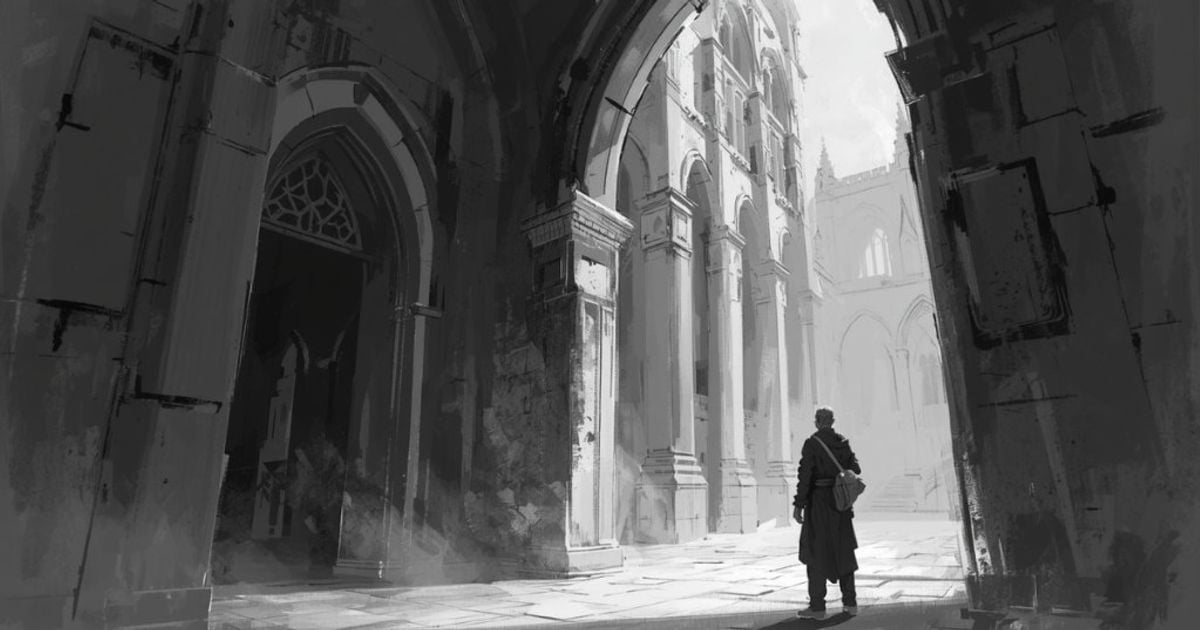
Three years later Jude walks the last miles into Christminster with his tools on his back, taking up the start his marriage interrupted. A photograph of cousin Sue Bridehead on his aunt's mantel helped tip longing into motion; she would not give him the picture. He takes a cheap room in a suburb later nicknamed Beersheba, opens a map under a lamp, and wanders the colleges after dark, touching mouldings and letting the wind stand in for dead scholars.
A bell clangs a hundred-and-one strokes as the gates shut. He stays out, feeling the carvings, because ten years of imagining the place outweigh one night's rest. He talks aloud to poets and theologians until a policeman asks what he is doing sitting so long on a plinth-stone. Back in his room he reads, then falls asleep to borrowed voices: Arnold on the beautiful city, a hymn that teaches him to live so he may dread the grave as little as his bed. The night makes him a guest of the place. The policeman makes him a workman on a stone.
Morning breaks the spell. He starts up thinking he has overslept, then remembers the living aims the night had buried. His sweet-faced cousin is here all the time, and his old schoolmaster too. The words about the schoolmaster have less zest than the words about Sue.
Hardy understood something we still struggle with today: the seductive power of believing that changing our location will change our lives. Jude's midnight communion with Christminster's ghosts reveals both the genuine inspiration that places of learning can provide and the dangerous fantasy that simply being there will transform us. This pattern shows up everywhere in modern American life. We see it in the person convinced that moving to Nashville will make them a songwriter, or the one certain that relocating to Los Angeles will launch their acting career. We see it in the parent who believes getting their child into the right school district will solve family problems, or the worker who thinks transferring to corporate headquarters will cure their impostor syndrome. The pilgrimage trap works because it gives us something concrete to pursue while avoiding the messier work of addressing what's actually missing inside us. Hardy shows us that Christminster feels magical at night because darkness hides reality—the class barriers, the financial pressures, the social codes that will still exist in daylight. The city can't give Jude what he really needs: a sense of belonging and worth that comes from within. This doesn't mean external goals are worthless, but rather that they work best when we pursue them from a foundation of self-knowledge rather than self-escape. What places or achievements have you invested with transformative power, and what internal work might you be avoiding by focusing on reaching them?
Explore this chapter with AI to uncover deeper meaning and practical takeaways.
AI Discussion