
Harthouse settles into Coketown politics by mastering genteel listlessness and the assumed honesty in dishonesty. His doctrine, that virtue and cynicism differ only because cynics admit nothing means anything, lands on Louisa with bitter ease. Dickens asks what was left in her soul for Harthouse to destroy that Gradgrind had not already dismantled. Bounderby installs himself in a foreclosed country house fifteen miles out, boasting among Nickits's furniture that he once slept in market baskets while the ruined owner played Latin at Westminster.
In a leafy opening where Louisa watches fallen leaves, Harthouse engineers a private talk through Tom. He asks if Tom bets, loses, and draws money from her; she admits it without complaint or regret, describes selling trinkets after marriage to pay Tom's early debts, and confesses he has wanted as much as a hundred pounds she cannot give. Harthouse then rebukes Tom for ingratitude toward the sister who has sacrificed everything, until tears rise from a deep well in Louisa and her heart fills with pain that finds no relief.
Tom joins them in the garden, sullen and carving names on trees. Later, among Bounderby's reduced roses, he breaks down to Harthouse: old Bounderby and Gradgrind leave him no money, Louisa married for his sake and should coax their husband, yet sits like a stone. Harthouse offers to be his banker. Tom turns white and cries, For God's sake, don't talk about bankers, then clutches his hand and calls him a true friend while Harthouse thinks, whelp, what an ass.
At dinner Tom kisses Louisa and says they are fond of each other. She smiles, but Harthouse reads the truth: so much the less is the whelp the only creature she cares for. The chapter stores its gunpowder in confessions, flattery, and a loan not yet taken.
Harthouse watches Louisa's face change when Tom is named and learns the route in. He writes off the Bounderbys as great fun to his brother, then devotes his leisure chiefly to their house while Bounderby boasts that highly connected company is welcome if his wife wants it. The chapter never shows him giving Tom the money yet; it shows the fuse being set.
Chapter XXIII stores pressure rather than releasing it. The title fits: confessions, flattery, and Tom's panic at banker talk are all fuse.
Harthouse is lazy evil. He has no energetic wickedness, only appetite and skill. He learns Tom's route to Louisa, confirms her hundred-pound gap, and rebukes the brother with just enough truth to unlock tears.
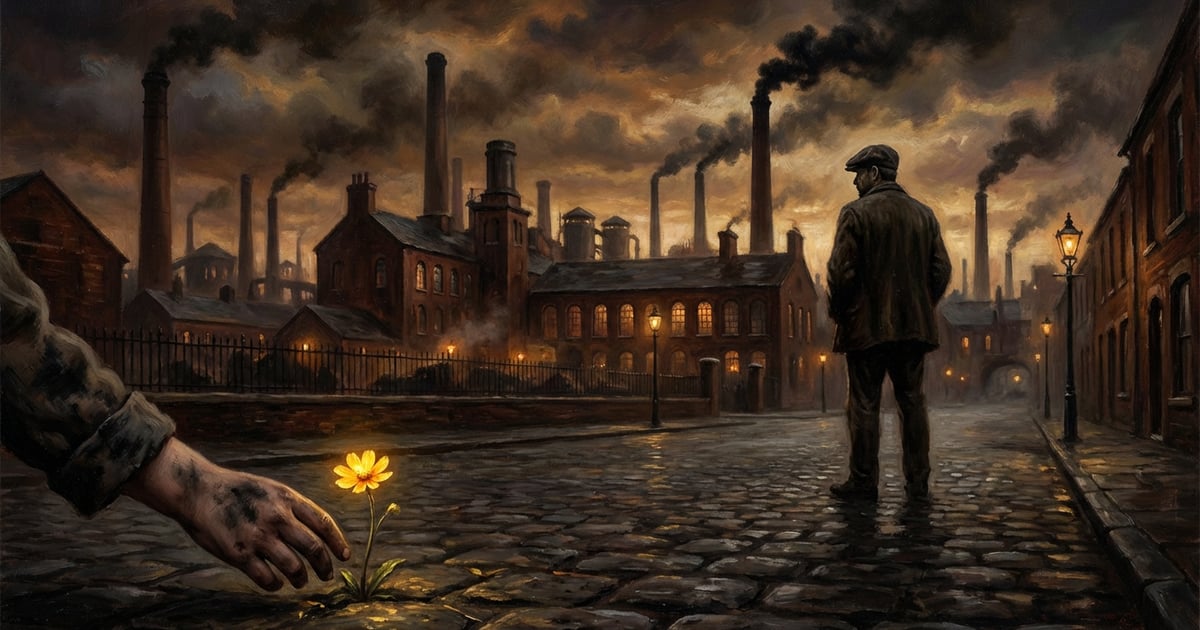
Bounderby's country house matters. Foreclosed elegance, cabbage in the flower beds, stories about market baskets: the setting says Coketown's money can buy trees but not honesty inside the family.
Tom's whiteness when offered banker money is the chapter's loudest alarm for readers who remember his Bank scheme with Stephen. Louisa's dinner smile redirects affection from Tom to Harthouse. Explosion is next.
Explore this chapter with AI to uncover deeper meaning and practical takeaways.
AI Discussion