
Dark falls as Stephen leaves Bounderby's house and finds Rachael walking with the mysterious old woman from his earlier visit. Mrs Pegler has read of the marriage in the paper and come again to see Bounderby's wife, who has not left the house since noon. Stephen invites them to tea at his lodging. The meal is modest and decent: fresh bread, lump sugar, Rachael borrowing a cup. Mrs Pegler names herself, speaks of a lost son she will not discuss, and panics when the landlady whispers Bounderby, begging to hide until Louisa and Tom arrive.
Louisa has never entered a Hand's dwelling before. She knows workers by the thousand, by supply and demand, by crime percentages, but scarcely as separate lives until she looks from the few chairs and books to Stephen, Rachael, and the room itself. She asks whether a bad name will shut Stephen out everywhere, learns he passed a promise to Rachael that kept him from the union and earned suspicion on both sides, and lays a bank note on the table. Rachael will not press him to take it. Stephen weeps, then accepts two pounds as a loan he vows to repay with lasting thankfulness. Tom watches from the bed until he pulls Stephen into the hall and whispers a scheme: after work until he leaves town, hang about the Bank without looking purposeful; the light porter may bring a note if Tom can do him a good turn. Mrs Pegler weeps admiring Louisa from the corner. Stephen walks Rachael toward her street and they part on their old agreement: no public meetings before he goes, letters instead, a hurried blessing in a common street the narrator calls sacred.
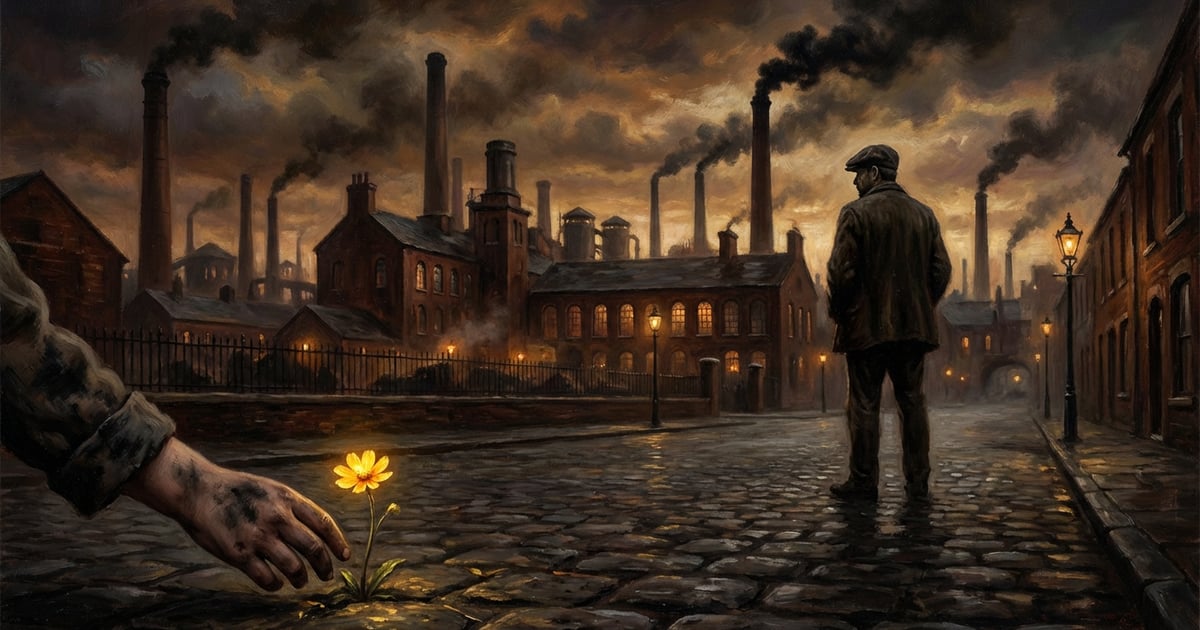
Stephen finishes his loom, waits two hours outside the Bank on three evenings, receives nothing, and leaves Coketown at dawn with his bundle. He passes Rachael's corner though it is not on his way, looks back once at chimneys and briefly golden windows, then takes the high road where trees arch over him. Dickens closes with a warning that if romance is driven from workers' souls, reality will turn wolfish.
Chapter XXII is called Fading Away, and the fade belongs to Stephen's place in Coketown, not to Louisa's spirit. He is fired, blacklisted, and walking toward exile while Mrs Pegler's comic pilgrimage turns ominous and Tom's whispered Bank scheme begins.
The tea scene is Dickens at his sharpest socially. Magnates claim Hands live like princes because Stephen can buy lump sugar. Louisa's visit breaks the economic abstraction: she has read about workers as supply and demand, then meets Stephen, Rachael, and a room with few chairs.
The money moment refuses sentimentality. Rachael will not persuade. Stephen weeps and takes two pounds as debt. That grace under humiliation is the chapter's counterweight to Tom screwing Stephen's coat in the dark hall.
Stephen's departure at dawn, looking back at chimneys and golden windows, closes Book the Second's reaping movement. The utilitarian warning at the street corner reminds us that systems which starve imagination may face wolfish reality.
Explore this chapter with AI to uncover deeper meaning and practical takeaways.
AI Discussion