
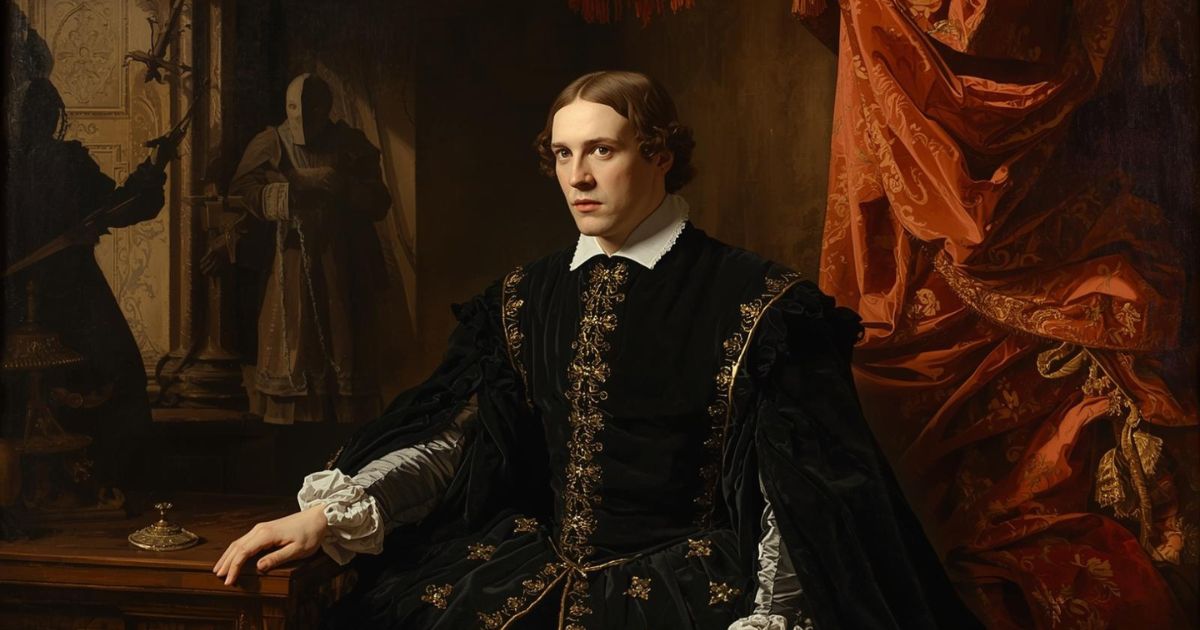
On the cold castle battlements at midnight, Hamlet waits with his friends Horatio and Marcellus for his father's ghost to appear. While they wait, the sounds of King Claudius's drunken party echo from inside the castle. Hamlet explains that Denmark has a reputation for heavy drinking, and this embarrasses the whole country in the eyes of other nations. He reflects on how one bad trait can overshadow all of a person's good qualities - a single flaw can ruin someone's entire reputation.
Then the ghost appears, looking exactly like Hamlet's dead father in full armour. Hamlet is terrified but determined to speak with it, calling it by various names - father, king, royal Dane. He demands to know why his father has risen from the grave.
The ghost beckons Hamlet to follow it to a private place. Horatio and Marcellus desperately try to stop him, warning that the ghost might lead him to a cliff or drive him mad. But Hamlet breaks free from their restraining hands, threatening to kill anyone who tries to stop him.
He follows the ghost into the darkness, leaving his friends with no choice but to follow at a distance. Marcellus delivers the famous line: 'Something is rotten in the state of Denmark.' This chapter marks the point of no return - Hamlet is about to learn the truth that will change everything.
Shakespeare understood something profound about human psychology: when we're in emotional pain, our judgment shuts down and we become willing to follow anyone who promises answers. Hamlet knows the ghost might be evil, knows it could destroy him, but his desperate need to understand his father's death overrides every rational warning from his friends. This same pattern destroys people today. The grieving parent who empties their savings following a psychic's promises. The desperate job seeker who falls for the multilevel marketing pitch. The heartbroken person who believes the ex who keeps promising to change. The mechanism is always identical: emotional desperation creates tunnel vision, and manipulators know exactly when to strike. They don't approach us when we're strong and thinking clearly—they wait until we're vulnerable, then offer exactly what we most want to hear. Shakespeare shows us that even intelligent, educated people like Hamlet fall for this pattern. The ghost doesn't have to drag Hamlet anywhere; it simply beckons, and his own desperation does the rest. Understanding this pattern doesn't make us weak—it makes us human. But recognising it can save us from following dangerous guides into darkness when we're most vulnerable to their promises.
Explore this chapter with AI to uncover deeper meaning and practical takeaways.
AI Discussion