
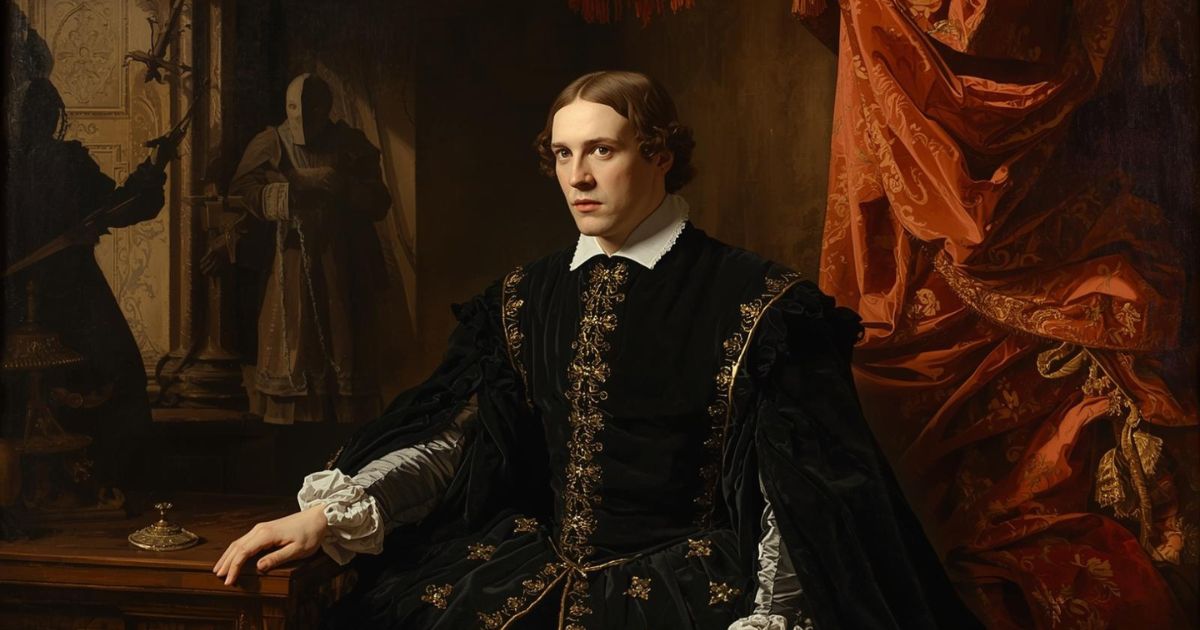
Laertes prepares to leave for France but first warns his sister Ophelia about Hamlet's romantic interest. He tells her that princes can't marry for love - their choices affect entire kingdoms. His advice sounds protective, but it's really about family reputation and his own assumptions about women's weakness. When their father Polonius arrives, he gives Laertes classic parental wisdom: be yourself, choose friends carefully, listen more than you speak, and never borrow or lend money.
These famous lines ('To thine own self be true') sound noble, but Polonius immediately contradicts himself by interrogating Ophelia about Hamlet and forbidding her from seeing him. Both men claim to protect Ophelia while actually controlling her. Polonius dismisses Hamlet's declarations of love as manipulation, calling them 'springes to catch woodcocks' - traps for naive birds.
Ophelia, caught between her brother's warnings and her father's commands, can only promise to obey. This scene reveals how families often disguise control as care, especially toward women. The men assume they know better than Ophelia about her own feelings and Hamlet's intentions.
Their 'wisdom' reflects their fears about family honour and social position more than genuine concern for her happiness. Shakespeare shows how advice can be a weapon, and how those who preach virtue don't always practice it themselves.
Shakespeare wrote this scene in a world where women had virtually no legal rights—fathers and brothers literally owned their daughters' and sisters' futures. Yet the emotional pattern he captures transcends those historical constraints. Polonius and Laertes both genuinely believe they're protecting Ophelia, but their protection serves their own needs first. In our time, we see this same dynamic everywhere: the parent who won't let their adult child make their own financial mistakes, the friend who gives endless relationship advice while avoiding their own issues, the supervisor who micromanages 'for quality control' while really protecting their own job security. The most insidious part is that the controllers often can't see their own motivations. They experience genuine concern and interpret their anxiety as wisdom. This makes the pattern nearly invisible to them and difficult to challenge. The person being 'protected' faces an impossible choice: accept the control or risk being labeled ungrateful, naive, or selfish. Shakespeare shows us that this dynamic hasn't changed in four centuries because it's rooted in universal human fears about losing face, losing control, or being proven wrong. The question isn't whether people should care about each other—of course they should. The question is whether our care serves the other person's growth or our own comfort.
Explore this chapter with AI to uncover deeper meaning and practical takeaways.
AI Discussion