
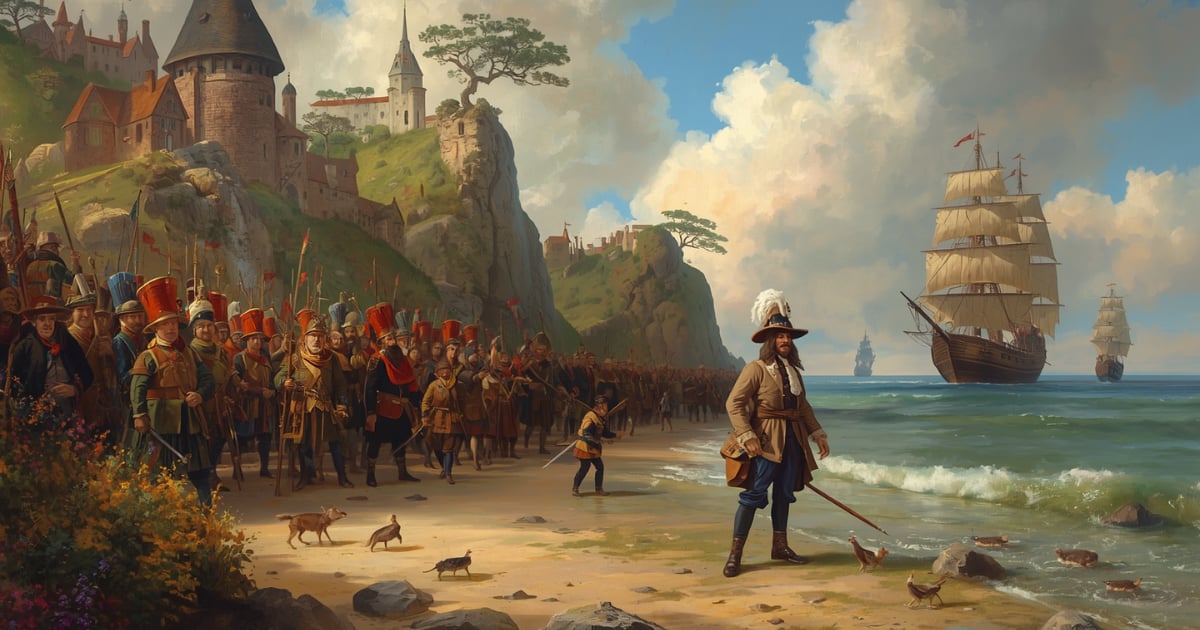
Three miles with the gray horse brings Gulliver to a wattled longhouse where horses sit on mats and run domestic business. He still assumes civilized people have trained ordinary cattle exceptionally well, brings out trinkets for the master, and pinches his arms to check whether magic is deceiving him. The gray's authority keeps rougher horses from mistreating him. The reversal lands in the side building: Yahoos chained and eating raw flesh.
A sorrel servant lines Gulliver up beside the largest one, and master and servant repeat Yahoo until the resemblance horrifies him. Clothes hide the likeness from the horses; ass flesh and hay make him retch. He points at a passing cow and gets milk instead. At noon a visiting steed dines with circular mangers and orderly oats boiled in milk.
Gulliver removes his gloves when the gray wonders about his forefeet, learns a few words, and invents oat cakes with milk to survive. That evening the master gives him straw six yards from the Yahoo kennel. The hierarchy is fixed: he is the dressed exception in their household, not the guest who belongs. By nightfall he sleeps on straw within yards of the Yahoo pen, still unable to name what the horses already see in his face.
Swift's genius move was making the horses civilized and humans savage, forcing readers to question what 'civilization' actually means. In Gulliver's world, the Houyhnhnms have order, reason, and dignity while the Yahoos are violent, greedy, and crude. Sound familiar? We still use this same framework to decide who deserves respect and who doesn't. Think about how we talk about 'professional behaviour' versus 'acting ghetto.' How certain accents sound 'educated' while others sound 'trashy.' How some neighbourhoods are 'up and coming' while others are 'rough.' We've created a whole vocabulary for deciding who gets to be seen as fully human and civilized. The uncomfortable truth Swift forces us to face is that these distinctions are often arbitrary, based more on power than actual behaviour. A CEO who destroys pension funds is still invited to country clubs, while a teenager who shoplifts is labeled a 'thug.' The real question isn't whether we're civilized, but who gets to decide what civilization looks like. When we see ourselves reflected in the 'uncivilized', when we recognise our own capacity for selfishness, violence, or stupidity, we have a choice. We can deny it and maintain our superiority, or we can admit that the line between civilized and savage runs through every human heart.
Explore this chapter with AI to uncover deeper meaning and practical takeaways.
AI Discussion