
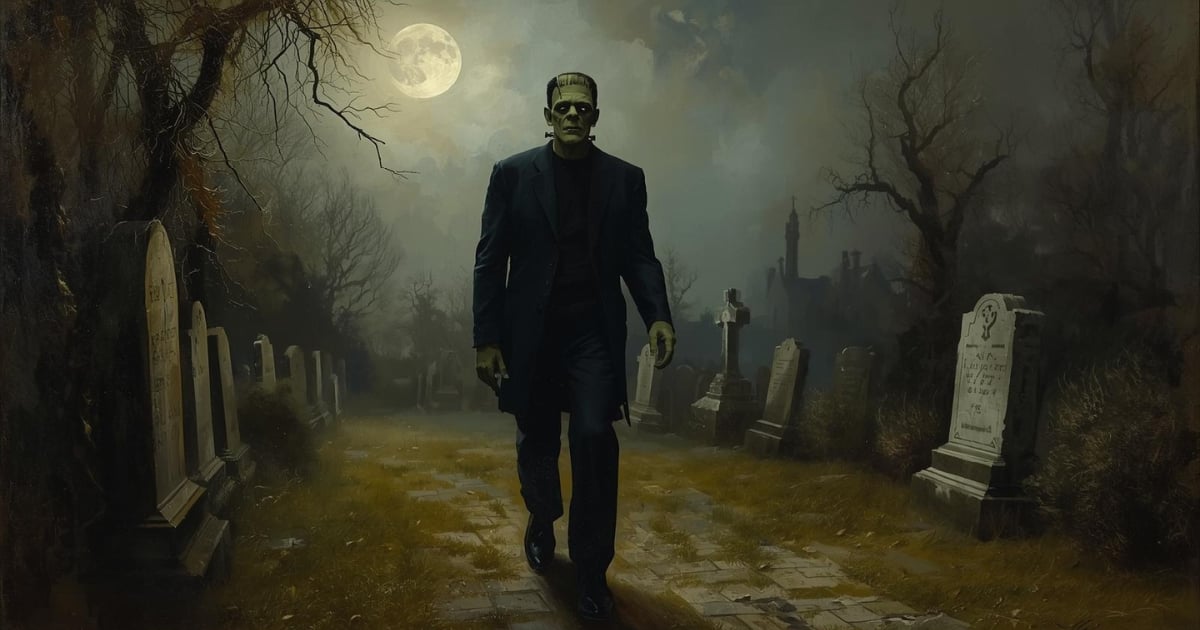
Revenge is the only faculty left that will hold a shape. Victor leaves Geneva with money and a few of Caroline's jewels. Night finds him at the cemetery where William, Elizabeth, and his father lie. He kneels and swears by the earth and by Night to pursue the daemon until one of them perishes. A fiendish laugh answers. A whisper, close to the ear: I am satisfied, miserable wretch. You have determined to live, and I am satisfied. The moon shows the shape fleeing with more than mortal speed.
The chase begins as a clue and becomes a continent. He follows the windings of the Rhone and loses the track. By a strange chance he sees the fiend hide in a vessel bound for the Black Sea and takes passage on the same ship; the being escapes, he knows not how. Tartary and Russia. Peasants, scared by the apparition, name the path. Sometimes the pursued leaves a mark so the pursuer will not despair and die. Cold, want, and fatigue are the least pains. When hunger sinks him, a coarse peasant repast is waiting in the desert. He tells himself the spirits he invoked have set it there. Words appear on bark and stone: my reign is not yet over; you live, and my power is complete; I seek the everlasting ices of the north; you will find a dead hare; eat and be refreshed. Sleep is the only joy. In dreams the father, Elizabeth, and Clerval still live, and vengeance dies until morning makes it a task again.
The ocean appears as ice, not as the blue south. He does not weep as the Greeks wept at the Mediterranean; he kneels and thanks the guiding spirit. A sledge and dogs close the gap to a day's journey. Villagers say a gigantic monster arrived the night before, armed with a gun and pistols, put a cottage to flight, took their winter food, seized a drove of trained dogs, and went onto a sea that leads to no land. They conjecture he must perish in the breaking ice. Victor buys an ocean sledge and a stock of provisions. He cannot guess how many days pass. Mountains of ice bar the way; the ground sea thunders. By the quantity of food consumed he guesses three weeks. A dog dies on a sloping ice mountain. A dark speck on the dusky plain is the other sledge and the distorted form within. He gains to a mile. Then a ground sea: the ice splits with the shock of an earthquake, and a tumultuous sea rolls between him and the enemy. He is left drifting on a scattered, lessening piece of ice. Dogs die. He is about to sink when he sees Walton's ship riding at anchor. He had no conception that vessels came so far north. He destroys part of the sledge to make oars. If the ship had been going south he would have trusted the sea rather than abandon the purpose. It is going north. He is taken aboard exhausted, and he asks Walton to swear that the creature shall not live. Hear him not. He is eloquent. Call on the names of William, Justine, Clerval, Elizabeth, the father, and the wretched Victor, and thrust the sword. I will hover near and direct the steel.
Walton writes to Margaret. The tale has an appearance of the simplest truth; Felix's letters and the apparition seen from the ship do more than asseverations. Victor will not give the particulars of the formation. Are you mad. Would you also create a demoniacal enemy. He finds Walton's notes and corrects them so a mutilated narration will not go down to posterity. He believes the dead visit him, and that faith gives his reveries a solemnity Walton almost takes for truth. Walton has found the friend he wanted on desert seas and fears he has gained him only to lose him. Even where later friends are excellent, Victor says, no man can be to him as Clerval was, no woman another Elizabeth. September: mountains of ice, lives endangered through Walton's mad schemes, a possible mutiny. On the 5th a deputation of sailors demands a solemn promise: if the vessel is freed, turn south at once. Walton has not yet conceived of returning. Victor, half lifeless, rises, eyes sparkling. Did you not call this a glorious expedition. It was glorious because it was full of dangers. Be men, or be more than men. This ice is not made of such stuff as your hearts may be; it is mutable and cannot withstand you if you say that it shall not. Walton tells them to retire and consider. He would rather die than return shamefully; he fears that will be his fate. On the 7th he consents to return. On the 9th the ice begins to move. On the 11th the south is free and the sailors shout. Victor wakes and asks the cause. Do you then really return. I cannot lead them unwillingly to danger. Do so if you will, Victor says; I will not. He tries to spring from the bed and faints. The surgeon says he has not many hours.
The last counsel is not the old burning hatred, he says, but a claim that he was right to refuse the second creature. In a fit of enthusiastic madness he created a rational being and was bound to seek that being's happiness. Another duty was paramount: duties to his own species. The creature showed unparalleled malignity; he ought to die. When actuated by selfish motives Victor asked Walton to finish the work; he renews the request now as reason and virtue. Yet he cannot ask Walton to renounce country and friends, and he dares not require what he still may be misled by passion to want. Seek happiness in tranquillity and avoid ambition, even the apparently innocent one of distinguishing yourself in science and discoveries. Why do I say this. I have been blasted in these hopes, yet another may succeed. He presses Walton's hand. The eyes close. A gentle smile passes from the lips.
Midnight. A hoarser human voice in the cabin where the remains lie. Over the coffin hangs a gigantic, distorted form, one vast hand like a mummy. Walton calls him to stay. That is also my victim, the being says. What does it avail that I now ask thee to pardon me. He is cold; he cannot answer. Walton, remembering the dying request, is held first by curiosity and compassion, then by indignation: you throw a torch into a pile of buildings and sit among the ruins and lament the fall. The creature will not have that reading. Do you think I was then dead to agony. After Clerval he returned to Switzerland heart-broken; he pitied Frankenstein; pity became horror; then he found the maker daring to hope for happiness while he himself was barred from those feelings, and he recollected the wedding-night threat. When she died he was not miserable. Evil thenceforth became his good. Am I to be thought the only criminal, when all humankind sinned against me. Why do you not hate Felix, who drove his friend from the door. Why not the rustic who sought to destroy the saviour of his child. He grants he is a wretch. He has murdered the lovely and the helpless. He will not be the instrument of future mischief. He will quit the vessel on the ice raft, seek the most northern extremity of the globe, and collect a funeral pile so that no curious and unhallowed wretch can create another such as he has been. Once he would have wept to die; now death is the only consolation. Farewell. He springs from the cabin-window onto the raft. He is soon borne away by the waves and lost in darkness and distance.
Victor's transformation reveals a crucial distinction that affects everyone who's been wronged: the difference between seeking justice and feeding revenge. Justice has clear goals, accountability, prevention, restoration. It has boundaries and endpoints. Revenge, however, becomes an identity that demands constant feeding. When Victor dedicates his entire remaining life to hunting his creature, he's crossed that line. He's no longer seeking to prevent future harm or find closure; he's found a new purpose in his pain. This pattern shows up everywhere in working-class life. The employee who gets unfairly fired and spends years plotting against their former boss instead of finding better work. The parent who turns a custody dispute into a war that damages their children. The neighbour who escalates a property dispute until it consumes their entire relationship with their community. The medical patient who makes fighting one bad doctor their full-time mission, missing opportunities for actual healing. What makes this particularly dangerous is how righteous revenge feels. Victor's creature did murder everyone he loved, his anger is completely justified. But justified anger can still destroy us if we let it become our only identity. The question isn't whether we have the right to be angry, but whether that anger is serving our actual goals or just feeding itself. When trauma strips away our roles and relationships, revenge offers a seductive substitute identity because it feels meaningful and productive. But it's a hollow meaning that ultimately isolates us as completely as our original loss did.
Explore this chapter with AI to uncover deeper meaning and practical takeaways.
AI Discussion