
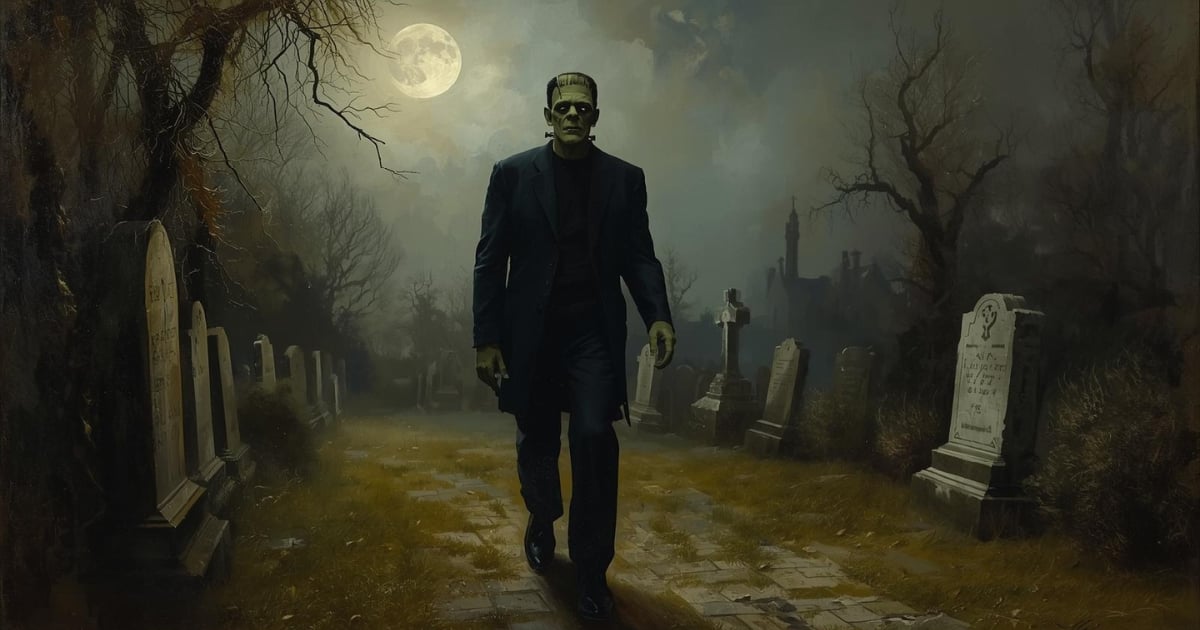
Eight o'clock. They walk the shore and go in. The wind rises in the west; a heavy storm of rain. Victor's right hand is on a pistol in his bosom. Elizabeth asks what he fears. This night, and all will be safe; but this night is dreadful. He sends her to the bedroom so she will not see the combat. He walks the passages. No trace. Then a shrill scream.
The whole truth rushes in. She is thrown across the bed, hair half covering the face, the murderous mark on her neck. The shutters are back. At the window the creature grins and points at the corpse with a fiendish finger, then leaps into the lake. Victor fires and misses. Boats and nets find nothing. Most of the searchers think it a form conjured by fancy.
No horses. He rows for Geneva in the rain and throws down the oar. The fish play as they did when she watched them. Alphonse and Ernest still live. The tidings take the springs of existence from the old man; in a few days he dies in Victor's arms. Chains and darkness; they have called him mad; months in a solitary cell. Liberty returns with revenge. He tells a Genevan magistrate the whole history, dates marked, no invective. The man listens as one listens to a tale of spirits, then will not act. Who can follow an animal through ice caves. Victor's rage looks like the old martyr frenzy. The magistrate soothes him as a nurse soothes a child. Victor breaks from the house to think of some other mode of action.
Victor's tragedy reveals a dangerous myth embedded in how we think about love and protection. He believes that keeping Elizabeth ignorant will keep her safe, but his secrecy makes her the perfect target. This isn't just a gothic horror plot device, it's a pattern that destroys real relationships every day. Parents hide financial crises from teenagers, leaving kids unprepared when the family loses their home. Healthcare workers avoid difficult conversations with families, preventing informed decisions about treatment. Spouses conceal addiction struggles, stopping partners from getting help or protecting themselves. In each case, the 'protector' creates exactly the vulnerability they feared. The mechanism is always the same: fear drives us to control information, believing knowledge will harm those we love. But information is power, and powerless people cannot protect themselves. Victor's monster exploits this perfectly. Elizabeth's ignorance makes her defenseless. The chapter forces us to examine our own protective instincts. When we say 'they don't need to know,' are we really protecting them, or are we protecting ourselves from their reaction? True protection requires partnership, not isolation. It means sharing the burden, sharing the planning, sharing the truth. The strongest defense comes from informed allies, not ignorant bystanders.
Explore this chapter with AI to uncover deeper meaning and practical takeaways.
AI Discussion