
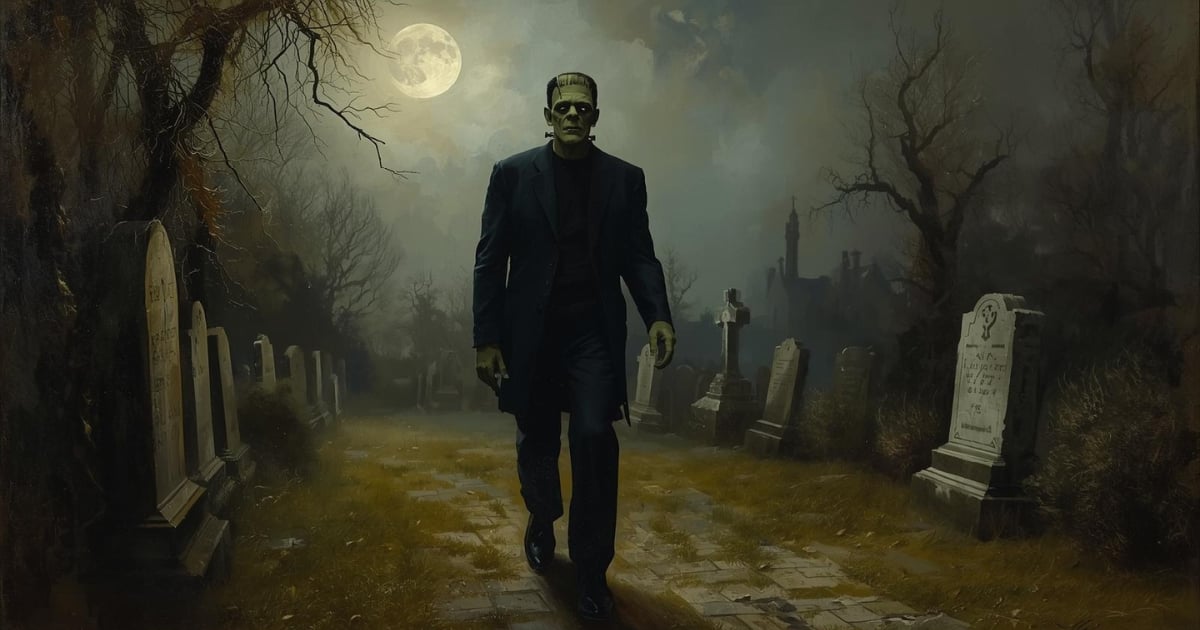
One evening the moon rises from the sea. He sits idle in the laboratory and, for the first time, the wickedness of the promise bursts on him. She has sworn nothing. She might refuse a compact made before her birth. They might hate each other. She might turn toward the superior beauty of man. Children would be a race of devils. Future ages might curse him as their pest, the man who bought his own peace with the species.
He looks up. The daemon is at the casement, a ghastly grin. Victor tears the unfinished female to pieces. A howl of despair, and the being withdraws. Hours later the door opens. You have destroyed the work. I left Switzerland with you. I crept along the Rhine. Do you dare destroy my hopes. Victor breaks the promise. The creature answers: you are my creator, but I am your master. Shall each man find a wife, and I be alone. Revenge henceforth dearer than light or food. I shall be with you on your wedding-night.
Victor hears a death-warrant for himself. He thinks of Elizabeth's tears, not of her throat. He packs the relics with stones, sails out four miles, and casts the basket when a cloud covers the moon. Sleep in the skiff; a northeast wind; thirst; land at last, a neat harbour, English spoken. It is the custom of the Irish to hate villains. A man taps his shoulder: Mr. Kirwin, a magistrate, and the death of a gentleman found murdered last night. Innocent, he thinks, and follows. He must pause before he can tell what the room contains.
Shelley wrote Frankenstein during the Industrial Revolution, when scientific progress was outpacing moral consideration. Victor's broken promise to his creature reflects society's pattern of abandoning commitments when they become inconvenient. Today, we see this same pattern everywhere: employers who promise job security until profits dip, healthcare systems that promise patient care until costs rise, politicians who promise reform until special interests intervene. The modern epidemic isn't just promise-breaking, it's justified promise-breaking. We've become experts at moral rationalization, transforming selfish betrayals into ethical stands. A manager doesn't say 'I'm scared of losing control', they say 'I'm protecting the team's stability.' A parent doesn't say 'I'm too tired to keep my word', they say 'I'm teaching responsibility.' This pattern creates what Shelley understood: monsters. Not literal creatures, but people transformed by betrayal into enemies who know exactly where we're vulnerable. The healthcare worker who breaks their promise to advocate for patients creates bitter families who remember every face in that hospital. The friend who shares secrets 'for your own good' creates someone who knows all their weaknesses. Shelley's genius was showing that the real horror isn't the monster, it's the creator who abandons their responsibility and then wonders why everything falls apart.
Explore this chapter with AI to uncover deeper meaning and practical takeaways.
AI Discussion