
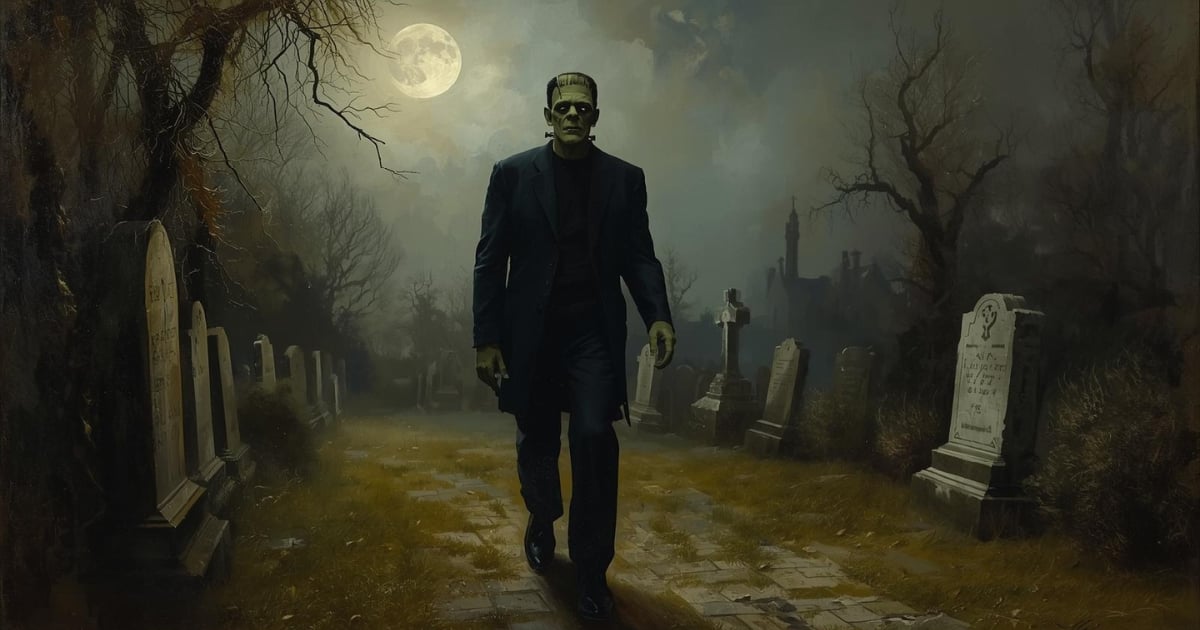
London is months of letters to natural philosophers. Company is irksome. William and Justine have sealed a barrier with blood. In Clerval he sees his former self: languages, a plan for India, European colonisation and trade. Victor collects materials. Every thought devoted to the new creation is an extreme anguish, a drop of water falling on the head.
A Scottish acquaintance writes from Perth. They leave London on the 27th of March: Windsor forest, Oxford and the memory of Charles I, Hampden's tomb, a moment of liberty that the iron eats again. I am a blasted tree; the bolt has entered my soul. Matlock caves make Henry say Chamounix, and Victor hastens on. Two months in Cumberland and Westmorland. Henry could pass his life here. Victor waits for letters from Elizabeth and his father and hardly dares to open them. Sometimes he will not quit Henry for a moment, lest the fiend expedite remissness by murdering the companion.
Edinburgh, then Perth. He tells Clerval to enjoy himself and let this be their rendezvous. He may be absent a month or two. Henry would rather walk the solitary rambles than sit with strangers. Victor takes one of the remotest Orkneys: a rock, five gaunt inhabitants, three huts, a vacant one with the thatch fallen in and the door off its hinges. Mornings he labours. Evenings, if the weather allows, he walks the stony beach. The first creation was frenzy with the eyes shut. This one is cold blood. He fears to raise his eyes. He fears to wander from the sight of the few fellow creatures on the island. The labour is already considerably advanced. He looks toward completion with a hope he dares not question, and with forebodings that sicken the heart.
Victor Frankenstein is brilliant, but his intelligence becomes a liability because he assumes his enemy thinks like him, rationally, directly, man-to-man. The creature, however, understands something Victor doesn't: the deepest wounds come from attacking what someone loves, not what they expect to defend. This reveals a crucial blind spot in how we think about protection and conflict. We often assume threats will be logical, direct, and aimed at us personally. But the most devastating attacks, whether from manipulative people, systemic problems, or even our own blind spots, usually come sideways. They exploit our assumptions about how conflict works. In working-class life, this pattern shows up everywhere: the coworker who smiles at you while undermining you with management, the landlord who focuses your attention on one issue while quietly violating your rights in another area, the family member who creates drama in one relationship to distract from their behavior in another. The pattern also applies to larger systems, politicians who get us arguing about one issue while quietly changing laws about something else entirely. Victor's tragedy isn't just personal; it's a warning about the danger of tunnel vision in any high-stakes situation. When we're convinced we know where the threat is coming from, we stop looking elsewhere. The question becomes: what are you so busy defending that you've stopped protecting what actually matters most?
Explore this chapter with AI to uncover deeper meaning and practical takeaways.
AI Discussion