
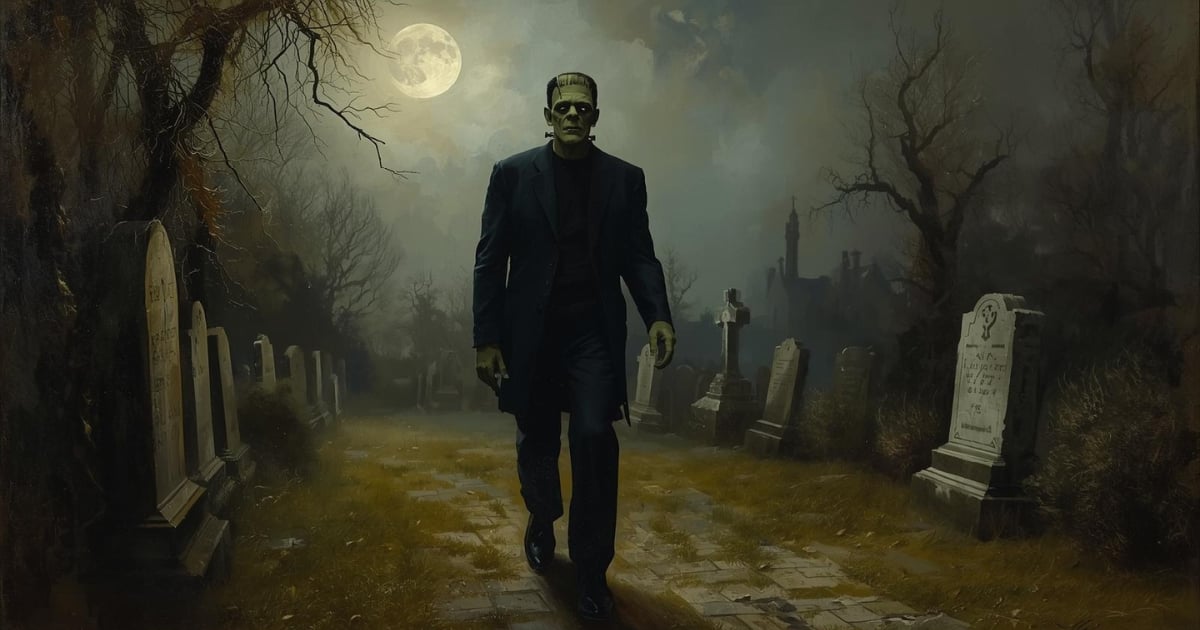
The being finishes and waits. Victor cannot arrange his ideas around the demand: a female, the interchange of sympathies, a right the maker must not refuse. Rage returns with the last part of the tale. I do refuse it. No torture shall extort consent. Shall I create another whose joint wickedness might desolate the world.
The creature chooses reason, then both reason and threat. He is malicious because he is miserable. If he cannot inspire love he will cause fear, and chiefly toward the arch-enemy who made him. Then the milder picture: a creature of another sex, as hideous as himself; the vast wilds of South America; acorns and berries; a bed of dried leaves. Victor is moved, then hardens. How can a being who longs for human sympathy keep that exile. The creature swears by the earth and by the maker: with a companion, evil passions will have fled.
Victor calculates ice-caves and precipices, a power no man can hunt. Justice due to the creature and to mankind, he tells himself, demands compliance. He consents on a solemn oath to quit Europe and every neighbourhood of man. The being swears by the sun and the blue sky, then descends the mountain faster than an eagle. Night at the halfway fountain: stars, dark pines, a broken tree. Victor weeps and asks the winds to crush sensation. Morning at Chamounix; home to Geneva without answering a question. He loves the family to adoration, and to save them he takes up the most abhorred task as the only fact that still feels like life.
Frankenstein's creature presents Victor with an impossible dilemma: he's been abandoned and has become dangerous, but he's also articulate, reasoning, and capable of making promises about future behavior. This mirrors situations we face constantly, the employee who was poorly trained and became difficult, the family member who was neglected and turned bitter, the friend who was dropped during hard times and became resentful. The creature's eloquent speech reveals someone who understands right and wrong but has been pushed beyond normal moral boundaries by complete isolation. His demand for a companion isn't just about loneliness, it's about having someone who won't flee in horror, someone who might help him stay connected to his better nature. Victor must weigh his responsibility as the creator against the safety of others, knowing that continued rejection might make the creature even more dangerous. In our own lives, we encounter people who approach us like the creature approached Victor, angry but not yet completely destructive, demanding but still capable of reason. The question becomes: how do we distinguish between someone who deserves another chance and someone who's too far gone? How do we balance our responsibility for past neglect against our obligation to protect others from potential harm? Sometimes the most dangerous thing we can do is continue abandoning someone who's already been abandoned too much.
Explore this chapter with AI to uncover deeper meaning and practical takeaways.
AI Discussion